Added to cart
Alkaline · Heavy Duty · Class 8Tank Approved

FerroCarb

Safe on ferrous and stainless. Brutal on what’s stuck to them. Carbon, paint, rust and lead deposits — dissolved in one hot bath while valves, heads and blocks come out dimensionally untouched.

Ring grooves to drawing dimensionOne bath, four soils1:3 · 70–80 °C ultrasonic
From $114.50 inc GST · 5 L & 20 L · 200 L trade
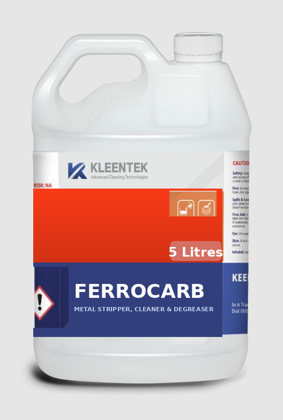
ferrocarb container
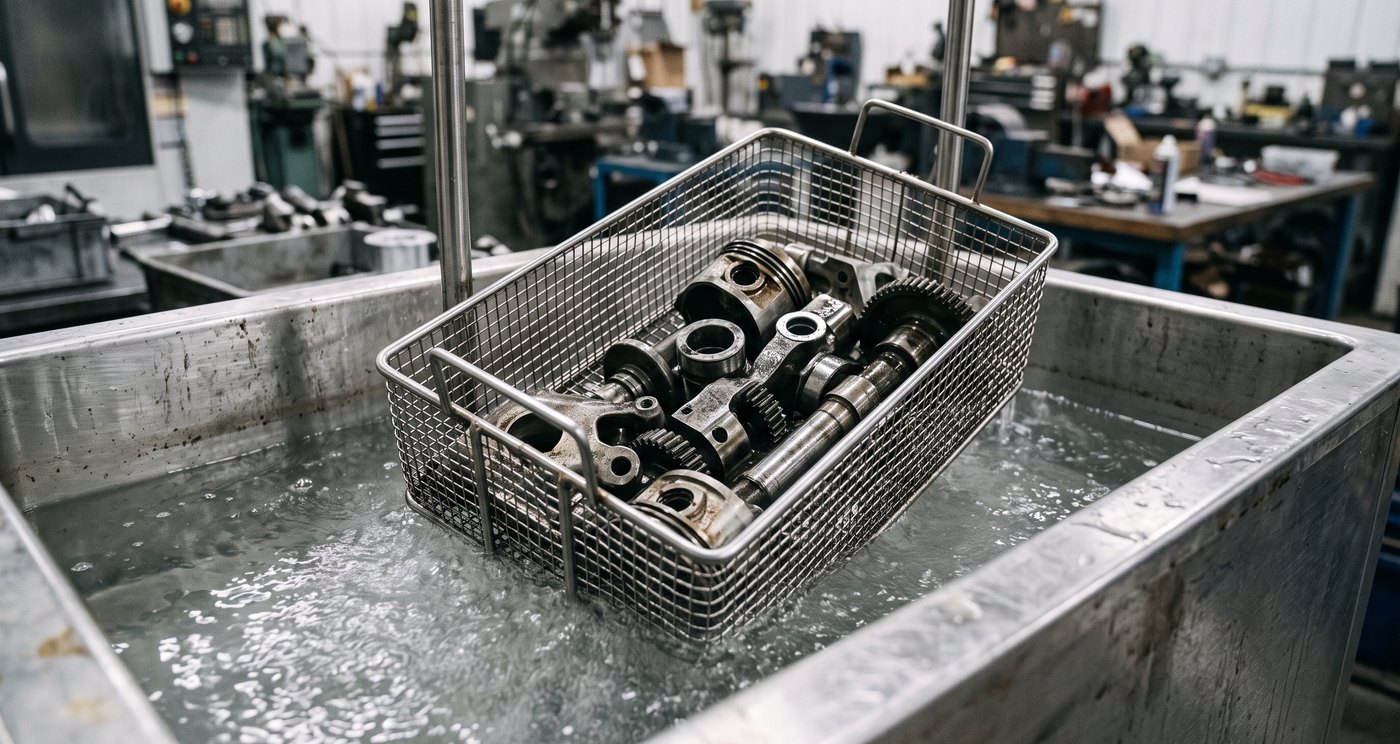
Machined steel components in a stainless mesh basket being lowered into an ultrasonic cleaning bath
The chemistry is half the process. It wets the tank and the part so cavitation can form at the surface, and it holds the soil once the ultrasound has lifted it.Illustration generated by Misonics.
Why Reconditioners Standardise On It

One bath. Four soils. Zero scraping.

Every engine that comes in high-hour carries the same four passengers: coked carbon in the ring lands and ports, baked paint on the block, surface rust where coolant and weather got in, and lead deposits through older valve gear. The traditional answers — scraping, wire wheels, blasting — all remove metal along with the soil, and on a gauged component that is the beginning of the end.

FerroCarb dissolves all four in a single hot immersion: a concentrated blend of surfactants, sequestrants and caustic alkali running 1:3 at 70–80 °C in the ultrasonic tank. Parts go in black and come out bare, clean metal — ring grooves at drawing dimension, gasket faces unscored, threads intact. It even decarbonises rubber moulds and strips steel anilox rollers.

The economics are blunt. A head that takes forty minutes of hand scraping takes a basket cycle unattended — and the scraper finds the soft surfaces the operator never meant to touch. Across a rebuild shop’s week, FerroCarb is the difference between cleaning being a bottleneck and cleaning being a stage.

It earns its cautions: this is genuine Class 8 industrial chemistry that will attack aluminium, zinc and tin rapidly. That is not a flaw — it is what “strong enough for baked carbon” means. Alloy work goes to the Alloysolve system; everything ferrous comes here.

Temperature & The Sweet Spot
ULTRASONIC SWEET SPOT 75 °C 70–80 °C ultrasonic 80–90 °C immersion 20 °C100 °C Cleaning rate

Run 70–80 °C with ultrasonics — cavitation adds the agitation immersion needs the extra 10 °C for. Below 60 °C the chemistry is loafing.

Dose: 1 part FerroCarb : 3 parts water (≈25%). On heavily oiled parts, knock the gross oil off first — then every litre spends its strength on the carbon you bought it for.
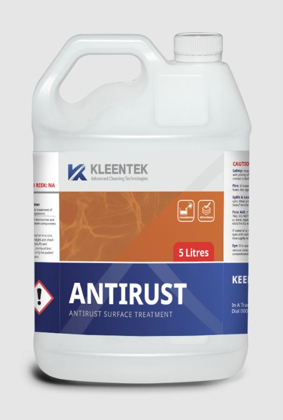
Buy FerroCarbinc GST
5 L$114.50
20 L$390.50
200 LPOA
$114.50
Class 8 DG — carrier surcharge applies, quoted at checkout. Depot pickup avoids it.
Complete The Job
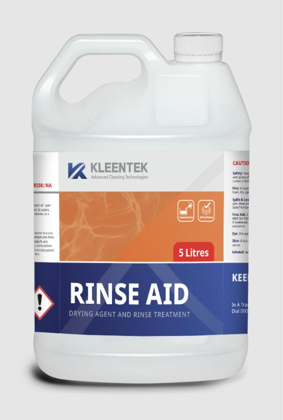
Anti-RustStops the flash rust FerroCarb makes inevitableView & buy →RegeniKThe ash stage — DPFs and exhaust partsView & buy →Rinse AidSpot-free final rinse before dryingView & buy →
Proven In
Specified in Misonics engine-rebuild trial processes · GHS 7 SDS · ADG labelling UN 1814 PG II
Formal approvals register — [to be added]
Run It Right

The FerroCarb process — from black part to protected part

FerroCarb does the violence; the stages around it decide how good the result stays. Four steps, done properly.

Why Flash Rust Happens

You just made the steel perfect for rusting

A FerroCarb-cleaned part is chemically active: the protective film of oil, oxide and old coating is gone, the surface is warm, wet and microscopically clean — and any dissolved ions left from rinsing act as electrolyte. That is the exact recipe for corrosion, which is why bright steel can show rust bloom within the hour.

DI water in the final rinse removes the electrolyte and slows it — but clean steel in air still rusts. Protection is a stage, not an option.

Protection Options — Match To The Next Process
In-rinse inhibitorAnti-corrosive dosed into the final rinse before hot-air drying — protection applied and dried in one pass. Best for production flow.
Anti-Rust dipOur toll-made dewatering protective — the standard between-process hold for ferrous parts.
Paintable filmBrulin corrosion inhibitor that can be painted over — no removal step before coating.
Water-displacing sprayWD-40-type displacing film for parts going to storage — drives moisture out and seals.

The right choice depends on what happens next — assembly, coating, storage or machining — because some films must come off again. Say what the next step is and we specify the protection with the chemistry.

Applications

Where FerroCarb earns its keep

Material Compatibility

Know before you dip

Ferrous metalsNo significant corrosion in prescribed use
Stainless steelSafe in prescribed use
PE · PVC · PTFESubstantially unaffected
Cadmium, copper & alloysSlowly attacked — limit exposure
Many plastics & paintsDegraded — that is half the point
Aluminium · zinc · tinRapid attack — never (use Alloysolve)
Glass & ceramicsWill be etched
Per prescribed use — the cleaning trial confirms on your parts; the TDS governs. Full range matrix →
Classification & Transport

Dangerous goods — handled properly

8CORROSIVE
DANGER · GHS 7 classified
Skin Corrosion 1A · Eye Damage 1 · Acute Tox. Oral 4

How much FerroCarb do I need?

Tank volume → dilution → drums, with top-up margin
Documents & Safety

The paperwork, on the page

Safety Data Sheet (SDS)
FerroCarb — Australian GHS SDS for your chemical register and risk assessments. PDF, 288 KB.
View SDSDownload
Technical Data Sheet (TDS)
Properties, composition, dose and compatibility at a glance. PDF, 83 KB.
View TDSDownload
Compliance & registration
SDSGHS 7 / Safe Work Australia — Ferrocarb-SDS.pdf Download
TDSTo be supplied Request
LabellingADG-compliant DG labelling, UN 1814 PG II
AICISListing confirmation — [to be added]
PPE at the tank
Chemical glovesFace shield / gogglesApronVentilationEye-wash at station
Hazard identification
DANGERHazardous per Safe Work Australia GHS 7
Skin Corrosion 1ASerious Eye Damage 1Acute Toxicity Oral 4
Hazard statements
H302Harmful if swallowed.
H314Causes severe skin burns and eye damage.
Key precautions
P102Keep out of reach of children.
P103Read carefully and follow all instructions.
P260Do not breathe dust, fume, gas, mist, vapours or spray.
P264Wash hands, face and all exposed skin thoroughly after handling.
P270Do not eat, drink or smoke when using this product.
P280Wear protective gloves/protective clothing including eye/face protection.
Compliant with the product SDS — full document available for your chemical register.
PPE & exposure controls
  • National Occupational Exposure Limits: TWA STEL NOTICES ppm mg/m3 ppm mg/m3 Potassium hydroxide 2 Peak - limitation Product Name:
  • Ferrocarb Reference No: KT-CC-FRC Issued: 2026-01-01 Version: 1.2 Safety Data Sheet Triethanolamine 5 Sen As published by Safe Work Australia.
  • TWA - The time-weighted average airborne concentration over an eight-hour working day, for a five-day working week over an entire working life.
  • STEL (Short Term Exposure Limit) - the average airborne concentration over a 15 minute period which should not be exceeded at any time during a normal eight-hour workday. ‘Sen' Notice - sensitiser.
  • The substance can cause a specific immune response in some people.
  • An affected individual may subsequently react to exposure to minute levels of that substance.
  • These Exposure Standards are guides to be used in the control of occupational health hazards.
  • All atmospheric contamination should be kept to as low a level as is workable.
  • These exposure standards should not be used as fine dividing lines between safe and dangerous concentrations of chemicals.
  • They are not a measure of relative toxicity.
Compliant with the product SDS — full document available for your chemical register.
First aid
  • If poisoning occurs, contact a doctor or Poisons Information Centre (Phone Australia 131 126, New Zealand 0800 764 766).
  • Inhalation: Remove victim from exposure - avoid becoming a casualty.
  • Remove contaminated clothing and loosen remaining clothing.
  • Allow patient to assume most comfortable position and keep warm.
  • Keep at rest until fully recovered.
  • Seek medical advice if effects persist.
  • Skin Contact: If skin or hair contact occurs, remove contaminated clothing and flush skin and hair with running water.
  • If swelling, redness, blistering or irritation occurs seek medical assistance.
  • For gross contamination, immediately drench with water and remove clothing.
  • Continue to flush skin and hair with plenty of water (and soap if material is insoluble).
Compliant with the product SDS — full document available for your chemical register.
Storage & handling
  • Handling: Avoid eye contact and skin contact.
  • Avoid inhalation of vapour, mist or aerosols.
  • Storage: Store in a cool, dry, well-ventilated place and out of direct sunlight.
  • Store away from foodstuffs.
  • Store away from incompatible materials described in Section 10.
  • Store away from sources of heat and/or ignition.
  • Keep container standing upright.
  • Keep containers closed when not in use - check regularly for leaks.
  • This material is classified as a Class 8 Corrosive as per the criteria of the "Australian Code for the Transport of Dangerous Goods by Road & Rail" and/or the "New Zealand NZS5433:
  • Transport of Dangerous Goods on Land" and must be stored in accordance with the relevant regulations.
Compliant with the product SDS — full document available for your chemical register.
Disposal
  • Persons conducting disposal, recycling or reclamation activities should ensure that appropriate personal protection equipment is used, see "Section 8.
  • Exposure Controls and Personal Protection" of this SDS.
  • If possible material and its container should be recycled.
  • If material or container cannot be recycled, dispose in accordance with local, regional, national and international Regulations.
Compliant with the product SDS — full document available for your chemical register.
Transport & dangerous goods
  • Classified as Dangerous Goods by the criteria of the “Australian Code for the Transport of Dangerous Goods by Road & Rail" and the "New Zealand NZS5433:
  • Transport of Dangerous Goods on Land".
  • UN No: 1814 Dangerous Goods Class: 8 Packing Group:
  • II Hazchem Code: 2R Emergency Response Guide No: 154 Limited Quantities 1L Proper Shipping Name:
  • POTASSIUM HYDROXIDE SOLUTION Segregation Dangerous Goods:
  • Not to be loaded with explosives (Class 1), dangerous when wet substances (Class 4.3), oxidising agents (Class 5.1), organic peroxides (Class 5.2), radioactive substances (Class 7) or food and food packaging in any quantity.
  • Note 1: Concentrated strong alkalis are incompatible with concentrated strong acids.
  • Note 2: Concentrated strong acids are incompatible with concentrated strong alkalis.
  • Note 3: Acids are incompatible with Dangerous Goods of Class 6 which are cyanides.
  • Exemptions may apply.
Compliant with the product SDS — full document available for your chemical register.
FerroCarb FAQ

Asked at the tank

Why do my parts flash rust after cleaning?
Because the clean worked. FerroCarb strips the oils, oxides and old coatings that were passively protecting the steel — leaving chemically active bare metal, warm and wet. Any dissolved salts left by tap-water rinsing act as electrolyte, and corrosion starts within minutes to hours. It is not a product fault; it is what freshly cleaned ferrous metal does. Rinse in DI water to remove the electrolyte, then protect — inhibitor in the final rinse, an Anti-Rust dip, or a water-displacing film for storage.
Do I really need DI water for rinsing?
Best practice, not mandatory. Tap water rinses the chemistry off but leaves chlorides and minerals on the surface — the electrolyte that accelerates flash rust and can spot the finish. DI water leaves nothing behind. If DI is not practical, rinse tap then protect promptly — the inhibitor matters more than the rinse grade.
Which anti-rust option should I use?
Match it to the next process. Going to assembly soon: in-rinse inhibitor or the Anti-Rust dip. Going to paint or coating: a paintable inhibitor film so there is no removal step. Going to storage: a water-displacing spray film. Some films must be removed before the next operation — tell us the next step and the protection specifies itself.
Can I put the corrosion protection in the rinse before hot-air drying?
Yes — and for production work it is the best pattern: anti-corrosive dosed in the final rinse, parts straight to hot-air dry, protection cured onto the surface in one pass. No extra stage, no window for rust bloom between rinse and dry.
How long can parts sit in the FerroCarb tank?
Run cycle times, not overnight soaks. Ferrous metals tolerate the bath well in prescribed use, but copper and cadmium-bearing parts are slowly attacked, and extended unattended immersion is poor practice with any Class 8 chemistry. Clean, rinse, protect, move on.
Can I clean aluminium heads if I am careful?
No. FerroCarb attacks aluminium rapidly — not stains it, dissolves it. Alloy heads, pistons and casings go to the Alloysolve system, which exists precisely for that job.

Not sure it fits your parts?

Send them in. The trial runs FerroCarb — with cycle, temperature and result documented — before you commit to a drum, let alone a process.

Talk to an engineer Back to the Range