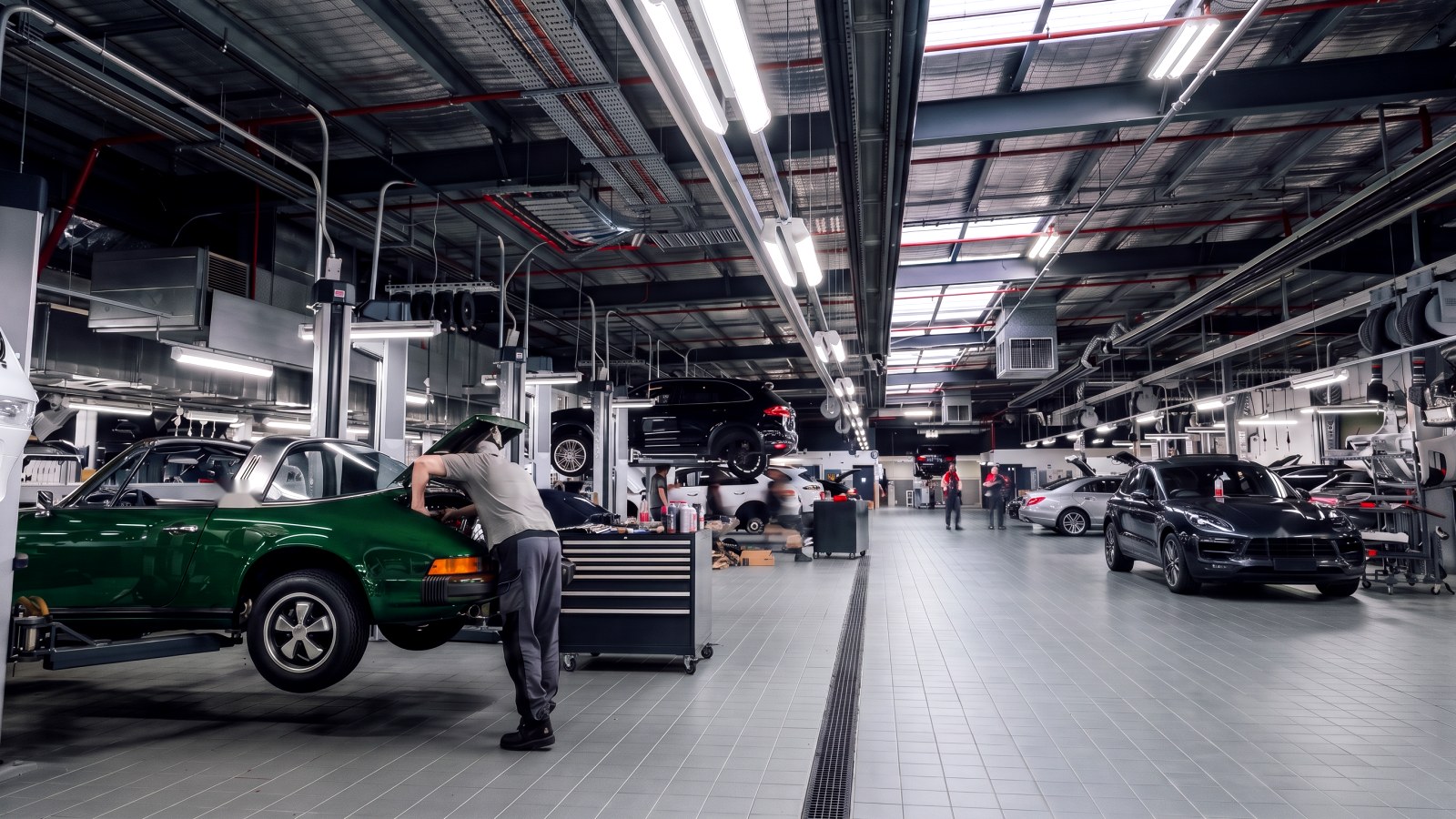
Every rebuild lives or dies on cleanliness: carbon out of ring grooves, varnish out of galleries, brake dust off hydraulics — without abrading a single machined surface or leaving media where it can circulate.
Misonics systems serve engine reconditioners, transmission shops, motorsport teams and fleet workshops — from bench units for carburettors to platforms that take a block and crank.
In ring grooves, ports, valves and piston crowns — the rebuild-critical soil.
Through galleries, valve bodies and hydraulic components.
Embedded in calipers, ABS components and hydraulic hardware.
On mating faces where scraping damages the surface.
In new-machined components ahead of assembly.
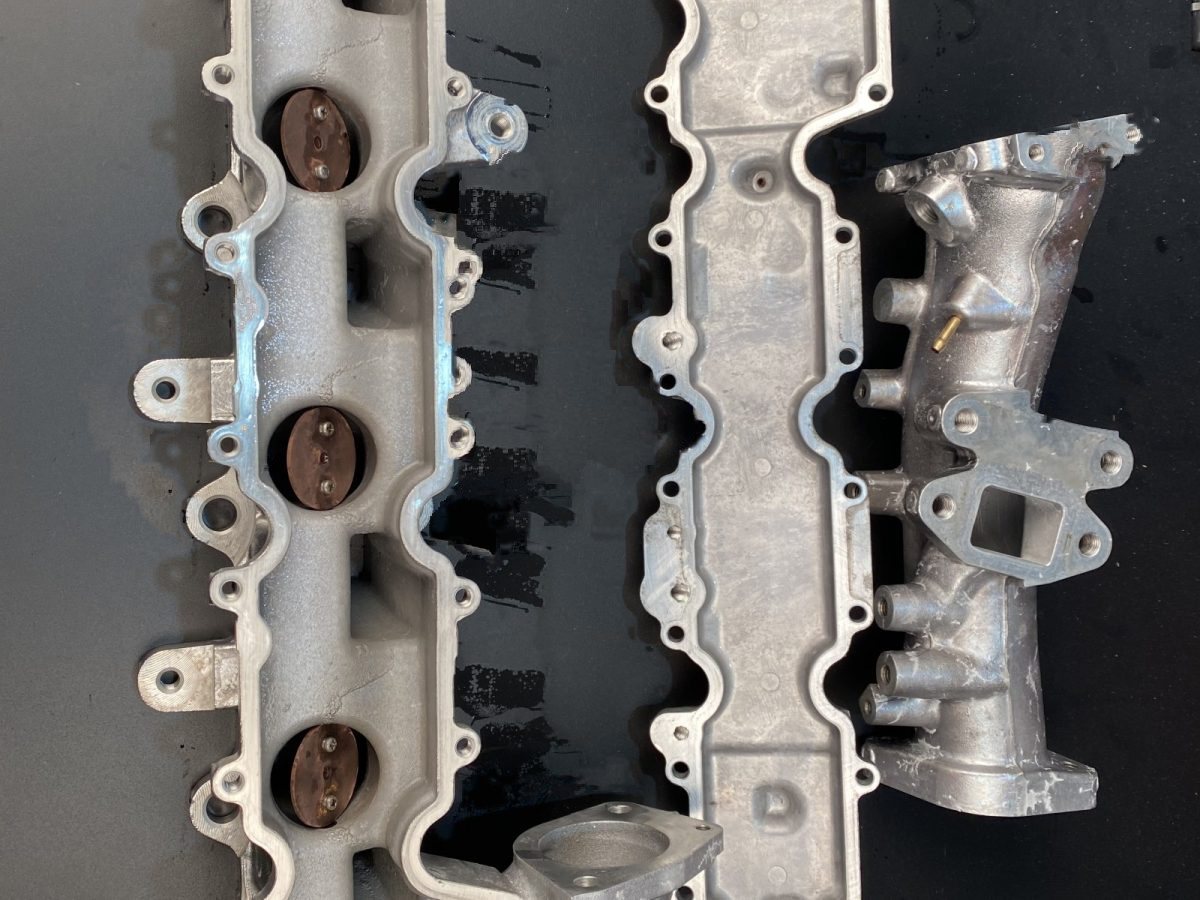
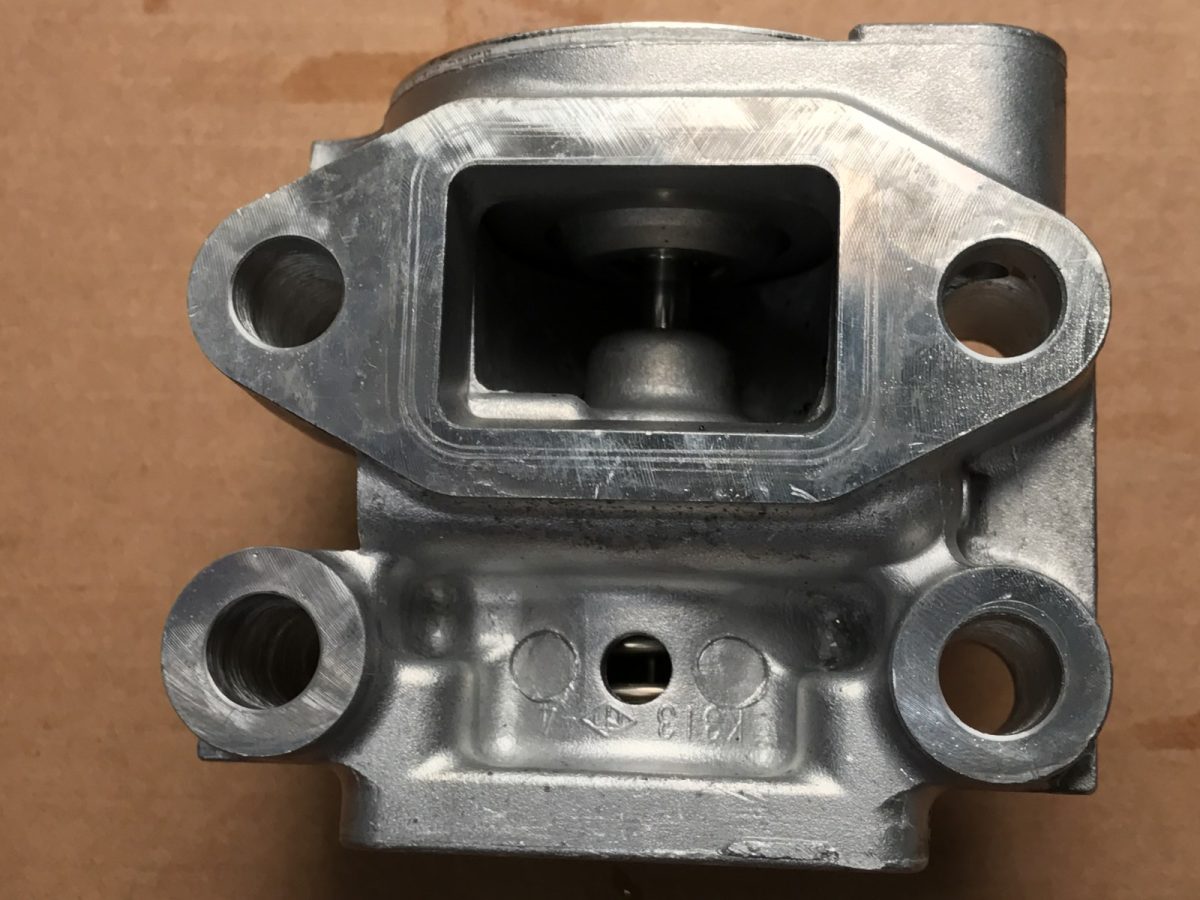
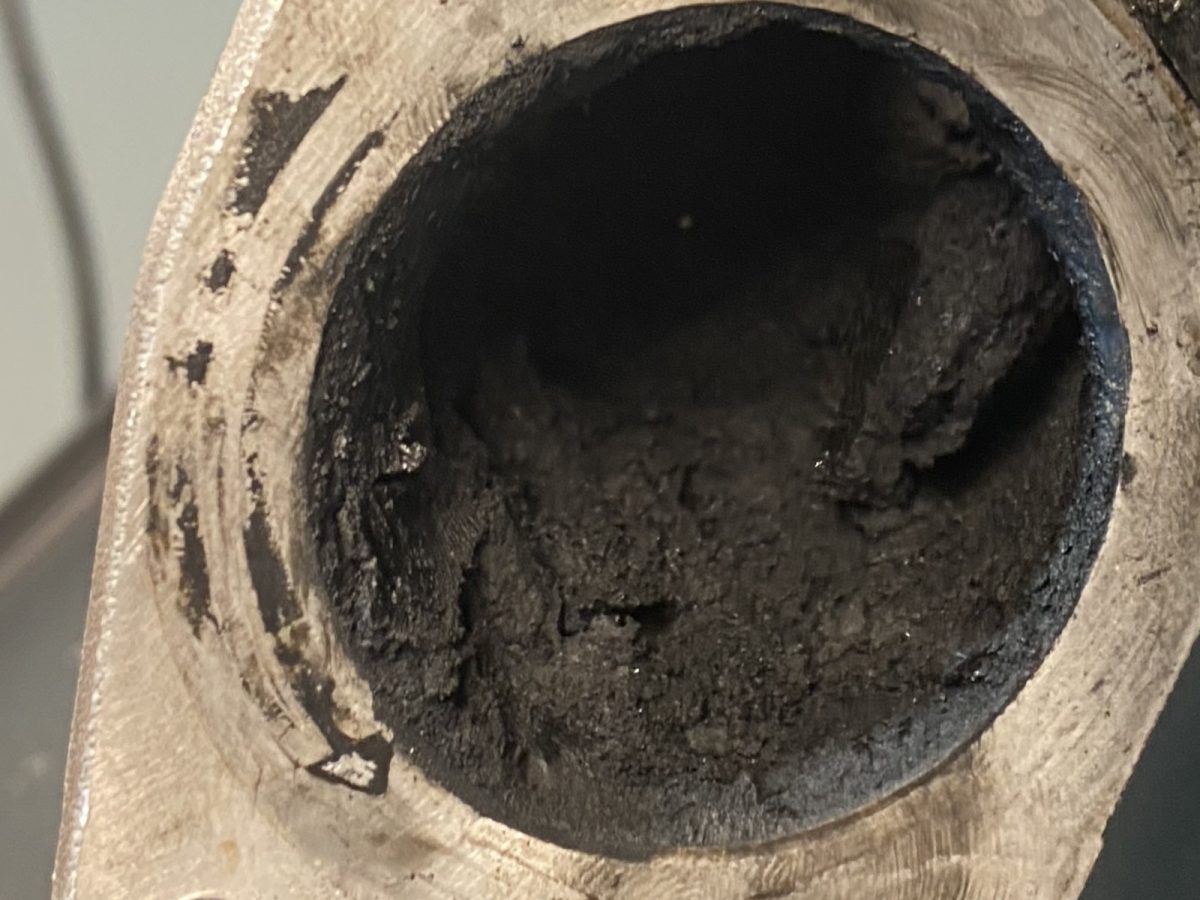
Diesel inlet manifolds and throttle bodies from real service, photographed as received and after the immersion cycle. Drag the handle across to compare.
Throttle body bore. Coke bridging the bore and sitting on the butterfly seat. No bead blast, no scraping — the casting comes out with its machined finish intact.
Same trials, photographed separately


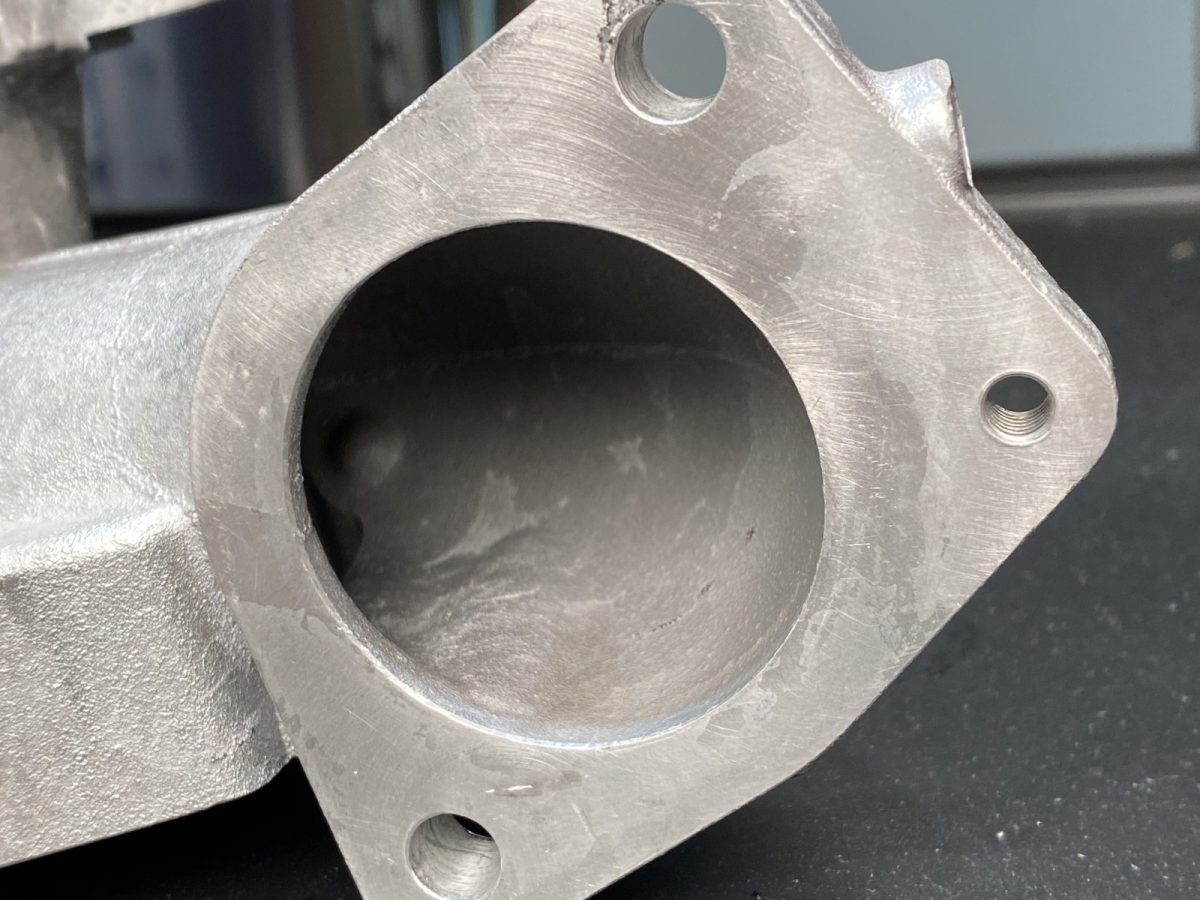
Manifold flange port. The port that was closing up on itself. Airflow is the whole job of this casting, and it is measurable before and after.


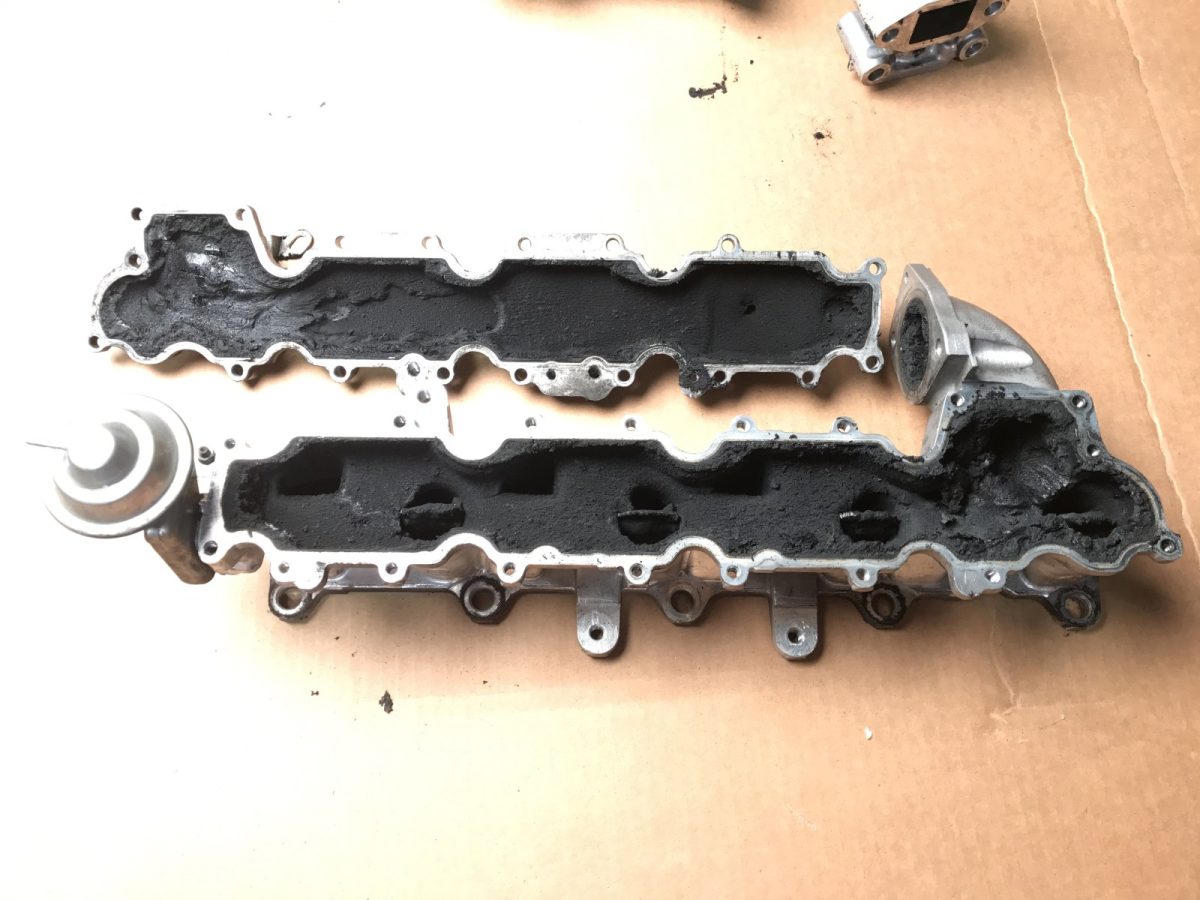
A pair of manifolds, as received. Both banks together, exactly as they arrived on the bench. Cleaned as a set, so the engine gets a matched pair back.


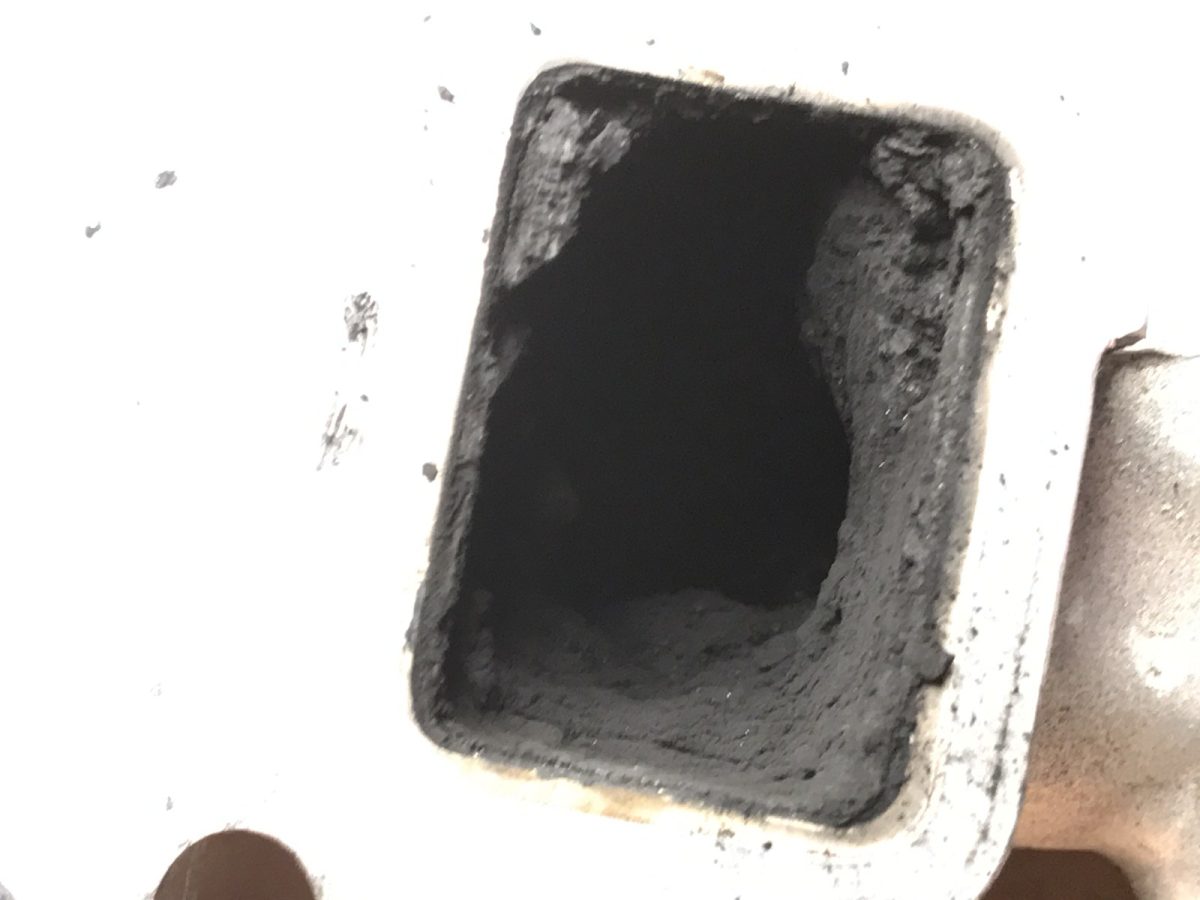
Rectangular inlet port. Hard carbon in a port that no rotary tool can reach without cutting metal.
Blocks, heads, cranks, pistons, rods — carbon and varnish out of galleries and grooves without media damage.
Carburettors, injectors, throttle bodies, intake components — restored flow without disassembling every passage.
Transmission valve bodies, ABS components, calipers and hydraulic hardware — clean to inspect and rebuild.
Bubble collapse at the liquid–metal boundary lifts contamination from passages, galleries and cavities without anything touching the surface. Nothing abrades, nothing embeds, no metal is removed.
The VarioSonic G5 tracks the transducer array as temperature and load shift — conversion efficiency up to 95%.
Eliminates standing-wave hot and cold zones across a loaded basket.
Stored recipes and logged cycles — audit evidence produced as a by-product of running.
Multi-stage filtration and weir oil capture hold results steady as the bath loads.
Most faults identified — many resolved — without a site visit.
Heavy 316 stainless tanks, tested before despatch, every wearing part replaceable.
From manually loaded single-tank units to automated lines — and engineered systems where the catalogue ends.
Aluminium-safe inhibited alkaline chemistry is the workhorse — aggressive on carbon, safe on castings and plated surfaces, with oil separation keeping the bath alive through workshop volume.
| Component category | Specific parts / assemblies | Compatible materials |
|---|---|---|
| Engine | Blocks, heads, cranks, pistons | Cast iron, aluminium |
| Fuel | Carburettors, injectors, pumps | Zinc castings, aluminium, brass |
| Transmission | Valve bodies, housings, gears | Aluminium, steels |
| Brakes | Calipers, ABS valves, cylinders | Cast iron, aluminium |
| Motorsport | Uprights, hubs, dampers | Magnesium, titanium, aluminium |
| Electrical | Connectors, sensors housings | Plated finishes |
Where an application needs validation, we clean sample components in our laboratory, document the result, and specify the machine around the verified process. If ultrasonics is the wrong answer, the trial shows that too, and we will tell you.
Turbine blades, injectors and actuators — dimensionally safe, audit-ready, Boeing-approved chemistry.
Traction motors, bogie components and brake assemblies for rolling-stock overhaul.
Heat exchangers, injectors and seawater-side components — salt, scale and marine growth.