Added to cart
ProtectiveTank Approved

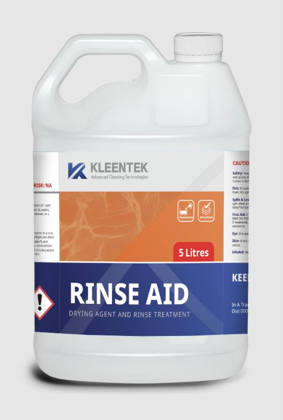
Rinse Aid

The last stage your finish quality remembers

Sheeting rinse additive — water drains instead of beading, parts dry spotless.

Sheeting action — no droplets, no spotsProtects coating adhesion downstreamFrom $66 — rounding-error insurance
From $66.00 inc GST
rinse aid container
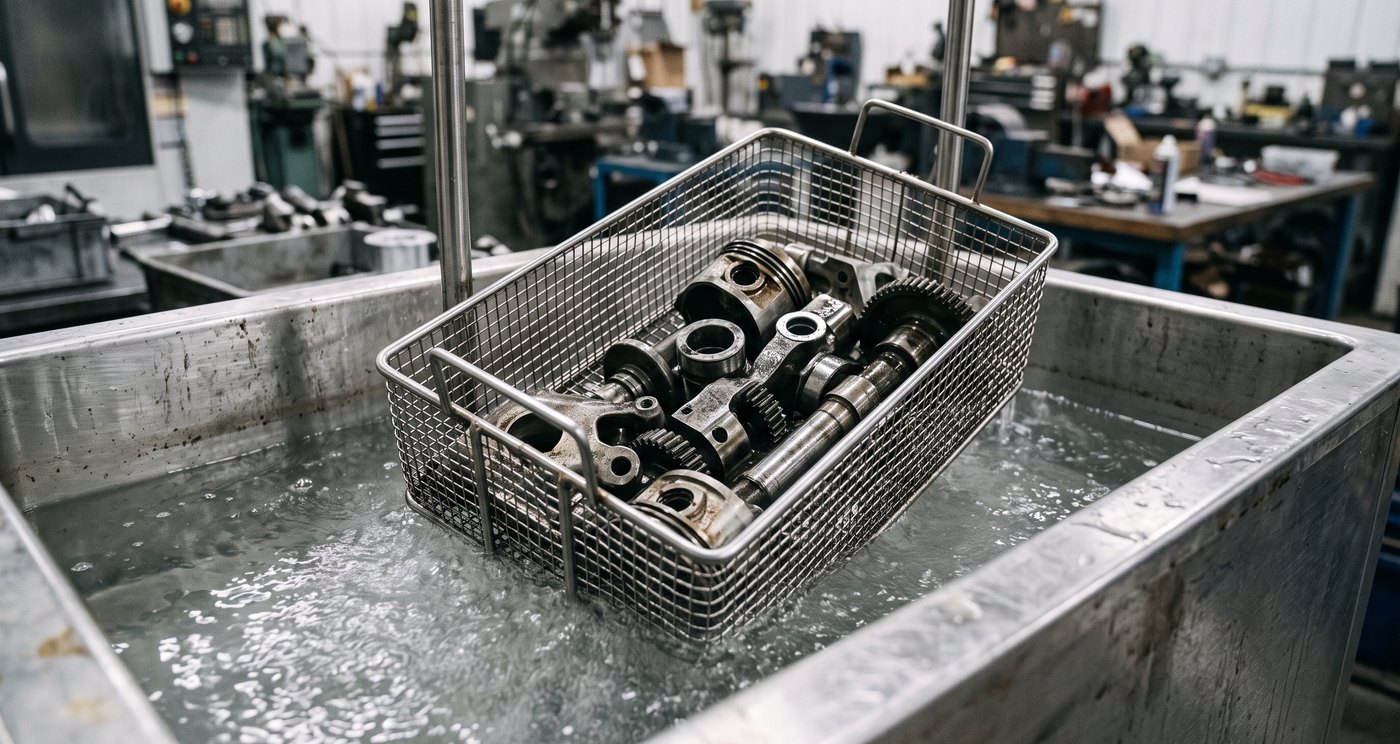
Machined steel components in a stainless mesh basket being lowered into an ultrasonic cleaning bath
The chemistry is half the process. It wets the tank and the part so cavitation can form at the surface, and it holds the soil once the ultrasound has lifted it.Illustration generated by Misonics.
Why It Wins

The last stage your finish quality remembers

Water spots are minerals the droplet left behind — and on presentation surfaces, pre-coating parts and food hardware, they are defects. Rinse Aid changes the physics: surface tension drops, water sheets and drains instead of beading, and what little remains evaporates without a mark.

Dosed lightly into the final rinse, it pays for itself in rework not done: no re-washing spotted batches, no wiping, no coating adhesion questions over invisible mineral rings. From $66 a drum, it is finish-quality insurance at rounding-error cost.

Pair it with heated rinse and hot-air drying and parts come off the line customer-ready — the small stage that quietly upgrades every stage before it.

Applications

Where it earns its keep

Final rinse sheeting — spot-free drying on presentation surfaces.

ManufacturingFood & Beverage
Temperature & Dose
SWEET SPOT 57 °C45–70 °C (indicative)20 °C100 °C

Dose: Per TDS. The trial sets your exact process values; the TDS governs.

Run It Right

The working process

Finishing Neighbours

Right product, right job

This Page

Rinse Aid — spot-free

Sheeting final rinse.

Also Consider

Anti-Rust

Corrosion protection for ferrous parts

View →
Buy Rinse Aidinc GST
5 L$66.00
20 L$247.50
200 LPOA
Complete The Job
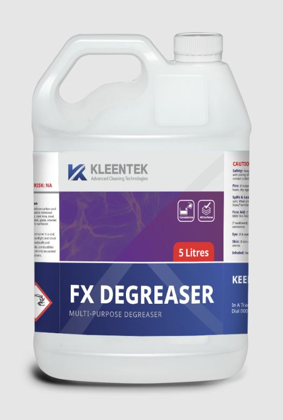
FX DegreaserThe clean before the protectionView & buy →
Machine-cycle note. Also worth considering: Anti-Rust as a post-wash stage, and Brulin AquaVantage 815 GD where the load is all-aluminium and an inhibited alkaline is acceptable. Tell us the parts and the machine and we will specify the stage sequence.
Compatibility
Mild & carbon steelDilute citric — rinse-dry promptly on bare steel
Stainless steelSafe in prescribed use
Cast ironRinse-dry promptly
Aluminium & titaniumSafe at rinse dilution
Magnesium & soft alloysTest first
Zinc & galvanisedTest first
Copper & brassTest first
Plated finishes (Cd·Cr·Ni)Safe in prescribed use
Plastics & rubbersSafe in prescribed use
Painted / coated surfacesSafe in prescribed use
Per prescribed use — the cleaning trial confirms on your parts; the TDS governs. Full range matrix →
Transport
TransportDG classification — from SDS [pending]
Storage

Drum and bath, both looked after

The Concentrate
  • Precautions for safe handling Before use carefully read the product label.
  • Use of safe work practices are recommended to avoid eye or skin contact and inhalation.
  • Observe good personal hygiene, including washing hands before eating.
  • Prohibit eating, drinking and smoking in contaminated areas. 7.2 Conditions for safe storage, including any incompatibilities Store in a cool, dry, well ventilated area, removed from incompatible substances and foodstuffs.
  • Ensure containers are adequately labelled, protected from physical damage and sealed when not in use.
  • Check regularly for leaks or spills.
  • Store removed from direct sunlight. 7.3 Specific end uses No information provided.
Compliant with the product SDS.
The Working Bath

Working solution keeps between uses in sealed, labelled containers; return to the tank on restart and verify strength before production.

Documents & Safety

The paperwork, on the page

Safety Data Sheet (SDS)
Rinse Aid — Australian GHS SDS for your chemical register and risk assessments. PDF, 123 KB.
View SDSDownload
Technical Data Sheet (TDS)
Properties, composition, dose and compatibility at a glance. PDF, 78 KB.
View TDSDownload
Hazard identification
WARNINGPer Safe Work Australia GHS 7
Hazard statements
H315Causes skin irritation.
H319Causes serious eye irritation.
H335May cause respiratory irritation.
Key precautions
P261Avoid breathing dust/fume/gas/mist/vapours/spray.
P264Wash thoroughly after handling.
P271Use only outdoors or in a well-ventilated area.
P280Wear protective gloves/protective clothing/eye protection/face protection.
P352IF ON SKIN: Wash with plenty of soap and water.
P340IF INHALED: Remove to fresh air and keep at rest in a position comfortable for breathing.
Compliant with the product SDS — full document available for your chemical register.
PPE & exposure controls
  • Control parameters Exposure standards No exposure standards have been entered for this product.
  • Biological limits No biological limit values have been entered for this product. 8.2 Exposure controls Engineering controls Avoid inhalation.
  • Use in well ventilated areas.
  • PPE Eye / Face Wear splash-proof goggles.
  • Hands Wear nitrile or PVC or rubber gloves.
  • Body When using large quantities or where heavy contamination is likely, wear coveralls.
  • Respiratory Not required under normal conditions of use.
  • SDS Date: 18 Nov 2020 Revision No: 1 PRODUCT NAME RINSE AID
Compliant with the product SDS — full document available for your chemical register.
First aid
  • Description of first aid measures Eye If in eyes, hold eyelids apart and flush continuously with running water.
  • Continue flushing until advised to stop by a Poisons Information Centre, a doctor, or for at least 15 minutes.
  • Inhalation If inhaled, remove from contaminated area.
  • Apply artificial respiration if not breathing.
  • Skin If skin or hair contact occurs, remove contaminated clothing and flush skin and hair with running water.
  • Continue flushing with water until advised to stop by a Poisons Information Centre or a doctor.
  • Ingestion For advice, contact a Poisons Information Centre on 13 11 26 (Australia Wide) or a doctor (at once).
  • If swallowed, do not induce vomiting.
  • First aid facilities Eye wash facilities and normal washroom facilities should be available. 4.2 Most important symptoms and effects, both acute and delayed May cause irritation to the eyes, skin and respiratory system. 4.3 Immediate medical attention and special treatment needed Treat symptomatically.
Compliant with the product SDS — full document available for your chemical register.
Storage & handling
  • Precautions for safe handling Before use carefully read the product label.
  • Use of safe work practices are recommended to avoid eye or skin contact and inhalation.
  • Observe good personal hygiene, including washing hands before eating.
  • Prohibit eating, drinking and smoking in contaminated areas. 7.2 Conditions for safe storage, including any incompatibilities Store in a cool, dry, well ventilated area, removed from incompatible substances and foodstuffs.
  • Ensure containers are adequately labelled, protected from physical damage and sealed when not in use.
  • Check regularly for leaks or spills.
  • Store removed from direct sunlight. 7.3 Specific end uses No information provided.
Compliant with the product SDS — full document available for your chemical register.
Disposal
  • Waste treatment methods Waste disposal Reuse where possible.
  • For small amounts, flush to sewer with excess water.
  • Alternatively absorb with sand, vermiculite or similar and dispose of to an approved landfill site.
  • Contact the manufacturer/supplier for additional information if disposing of large quantities (if required).
  • Legislation Dispose of in accordance with relevant local legislation.
Compliant with the product SDS — full document available for your chemical register.
Transport & dangerous goods
  • INFORMATION NOT CLASSIFIED AS A DANGEROUS GOOD BY THE CRITERIA OF THE ADG CODE, IMDG OR IATA LAND TRANSPORT (ADG) SEA TRANSPORT (IMDG / IMO) AIR TRANSPORT (IATA / ICAO) 14.1 UN Number None allocated.
  • None allocated. 14.2 Proper None allocated.
  • Shipping Name 14.3 Transport None allocated.
  • None allocated. hazard class 14.4 Packing Group None allocated.
  • None allocated. 14.5 Environmental hazards Not a Marine Pollutant. 14.6 Special precautions for user Hazchem code None allocated.
Compliant with the product SDS — full document available for your chemical register.
Rinse Aid FAQ

Asked at the tank

What dilution and temperature do I run?
Per TDS at Final rinse — and the trial sets your exact process values against your soil. Running richer than specified wastes chemical without cleaning faster. That range is the chemistry’s window — not the whole answer. The substrate sets its own ceiling, and it is usually lower: aluminium and anodised finishes discolour above about 65 °C, zinc and coated parts lower again, and magnesium is governed by pH before temperature. Run at the lower of the two. Bath temperature — chemistry vs substrate →
When do I change the bath?
When cycle times stretch, results fade, or filtration stops holding the debris. Drain, clean the tank, refill — never lay fresh solution over settled sludge.
How long does the protection last?
In-process protection is measured in hours to days between operations — matched to production flow, not storage. Parts holding longer, or heading to storage, step up to a water-displacing film; parts heading to coating need a film compatible with (or removed before) the coating. Tell us the next step and the protection specifies itself.
Can I get the SDS before buying?
Yes — every product ships with its SDS, and documents are available ahead of purchase for your chemical register and risk assessments.

Prove it on your parts

The trial pairs Rinse Aid with your components — concentration, temperature and cycle documented before you order a drum. Wrong chemistry for your soil? The trial says so.

Talk to an engineer Back to the Range