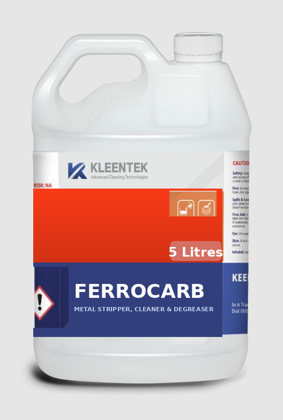
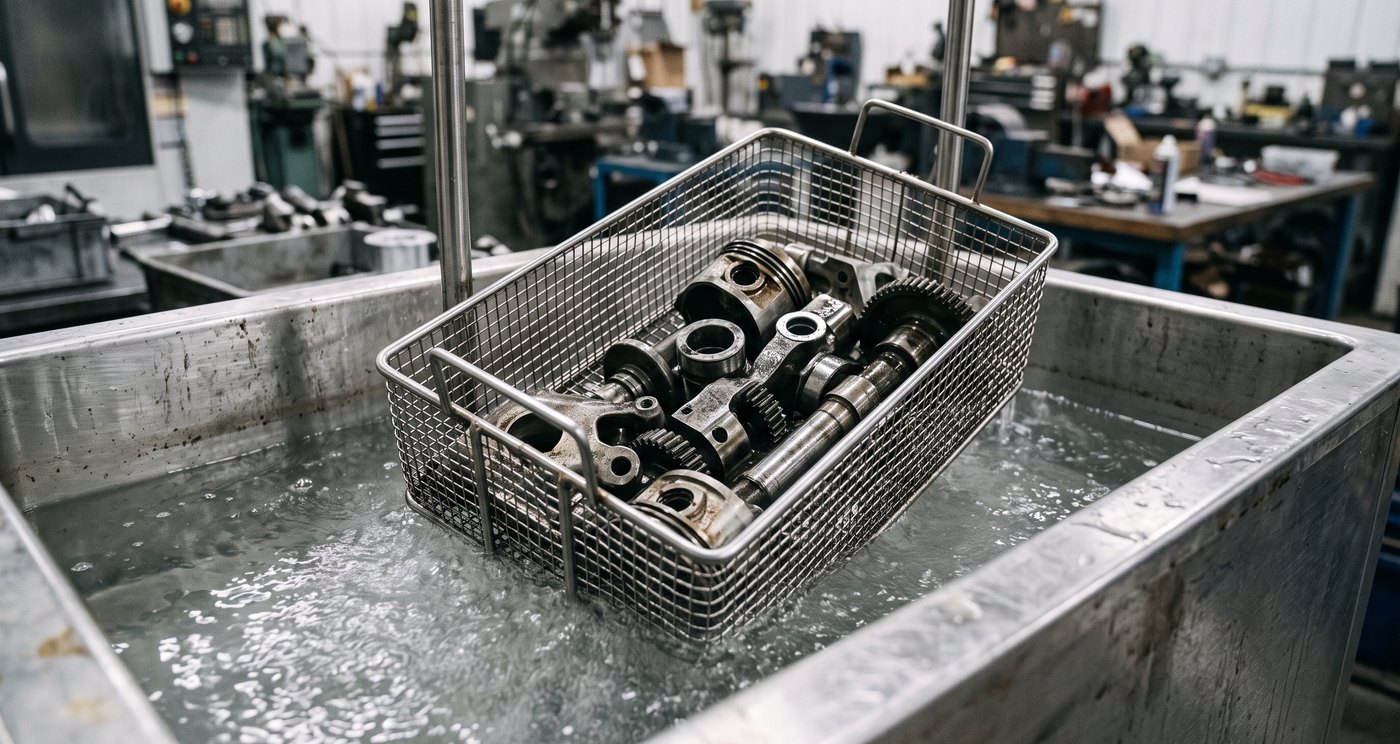
One bath. Four soils. Zero scraping.
Every engine that comes in high-hour carries the same four passengers: coked carbon in the ring lands and ports, baked paint on the block, surface rust where coolant and weather got in, and lead deposits through older valve gear. The traditional answers — scraping, wire wheels, blasting — all remove metal along with the soil, and on a gauged component that is the beginning of the end.
FerroCarb dissolves all four in a single hot immersion: a concentrated blend of surfactants, sequestrants and caustic alkali running 1:3 at 70–80 °C in the ultrasonic tank. Parts go in black and come out bare, clean metal — ring grooves at drawing dimension, gasket faces unscored, threads intact. It even decarbonises rubber moulds and strips steel anilox rollers.
The economics are blunt. A head that takes forty minutes of hand scraping takes a basket cycle unattended — and the scraper finds the soft surfaces the operator never meant to touch. Across a rebuild shop’s week, FerroCarb is the difference between cleaning being a bottleneck and cleaning being a stage.
It earns its cautions: this is genuine Class 8 industrial chemistry that will attack aluminium, zinc and tin rapidly. That is not a flaw — it is what “strong enough for baked carbon” means. Alloy work goes to the Alloysolve system; everything ferrous comes here.
Run 70–80 °C with ultrasonics — cavitation adds the agitation immersion needs the extra 10 °C for. Below 60 °C the chemistry is loafing.
Dose: 1 part FerroCarb : 3 parts water (≈25%). On heavily oiled parts, knock the gross oil off first — then every litre spends its strength on the carbon you bought it for.
 Anti-RustStops the flash rust FerroCarb makes inevitableView & buy →
 RegeniKThe ash stage — DPFs and exhaust partsView & buy →
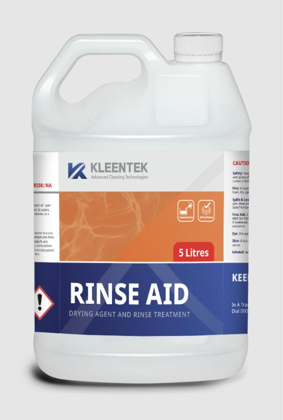 Rinse AidSpot-free final rinse before dryingView & buy →
Formal approvals register — [to be added]