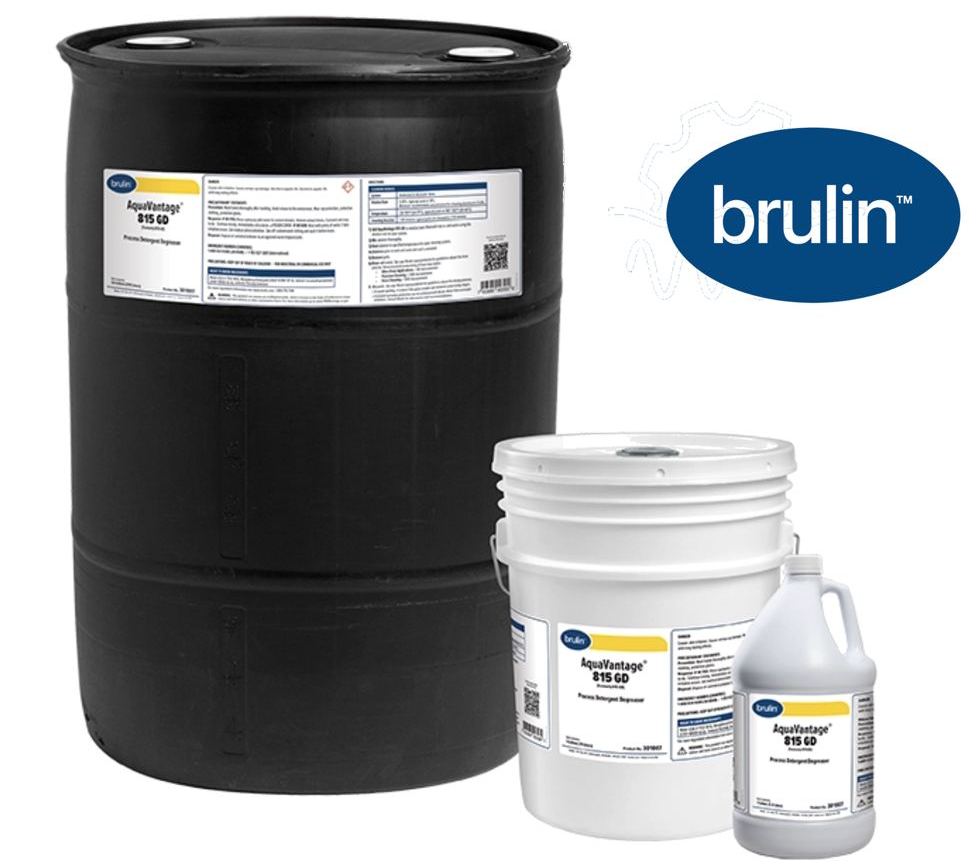
What cleaning solution should you use in an ultrasonic cleaner?
Updated 22 October 2026
An ultrasonic bath needs water plus a cleaning concentrate matched to the dirt and the metal, usually 2.5 to 10% at 50 to 70 °C. Alkaline for oil and grease, acid for scale and rust, neutral for delicate parts. Never a flammable solvent.
Choosing the bath itself? See ultrasonic baths.
Solution, fluid or liquid, it is the same thing. The ultrasonic waves do the scrubbing. The solution does the dissolving, and it decides which metals the bath is safe on. Pick it by the metal first and the dirt second.
Why water on its own does not clean
An ultrasonic cleaner makes millions of tiny cavitation bubbles that collapse against the part. That knocks dirt loose. What happens to the dirt next is down to the solution.
Collapsing cavitation bubbles break up the dirt on every wetted surface, including blind holes and threads.
It gets under oil and grease, breaks it down and keeps it off the part so it does not settle back.
Inhibitors protect the metal while it is in the bath. Plain hot water leaves steel flash rusting within minutes.
Three questions pick the right cleaning fluid
Steel and iron take strong cleaners. Aluminium, brass, zinc and magnesium do not. This rules products out before anything else.
Oil and grease want a degreaser. Carbon and paint want a stripper. Rust, scale and ash want an acid or a near-neutral descaler.
Heat speeds every cleaner up. It also speeds up attack on soft metals. Run at the lower of the solution’s range and the metal’s limit.
The best ultrasonic cleaning solution for each job
Each card gives the working strength, the temperature, the metals it is safe on and the ones to keep out. Press Buy now to order, or Data sheets for the TDS and SDS (safety data sheet).
Best is a claim we make about the chemistry as well as the tanks. The Brulin AquaVantage range we run carries the approvals that matter: 815 GD holds more than forty OEM approvals from Boeing to NASA oxygen service, 815 QR-NF carries Pratt & Whitney approval, and FX Degreaser is AQIS-approved. Every product below is Misonics Tank Approved, run in our own tanks at the published dilution and temperature, and the Misonics-branded chemistry is toll-manufactured for the application rather than relabelled from a shelf.
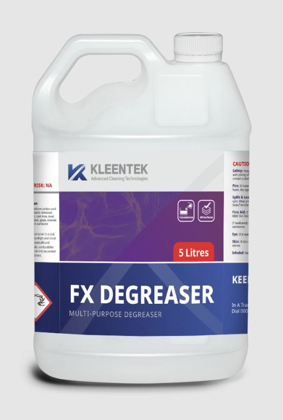
FX Degreaser
The workshop all-rounder for oil, grease and grime. AQIS food-grade approved. The lowest price in the range.
Steel, cast iron, stainless. Aluminium only at 5%, 50 °C, 5 minutes, rinsed at once.
Zinc, galvanised, magnesium. Brass and copper tarnish.
$132 10 L · $247.50 20 L · inc GST
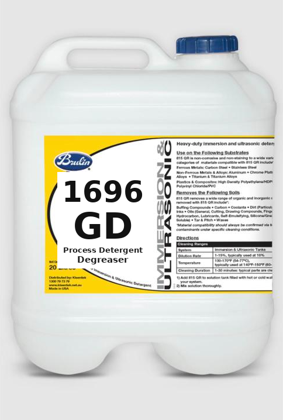
AquaVantage 1696 GD
Near-neutral. The safe choice for carburettors, mixed baskets and soft metals.
Aluminium, brass and copper, chrome, titanium. The mildest in the range.
Zinc and magnesium are not on its approved list. Test first.
$242 10 L · $429 20 L · inc GST
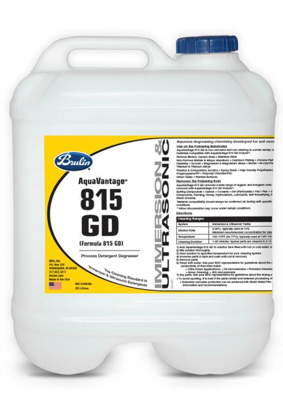
AquaVantage 815 GD
Lifts cutting oils, coolant and buffing compound. Separates oil so it floats off rather than staying in the bath.
Aluminium, magnesium, nickel, titanium. Copper alloys may discolour slightly.
Zinc, tin and soft solder are not on its approved list. Test first.
$242 10 L · $429 20 L · inc GST
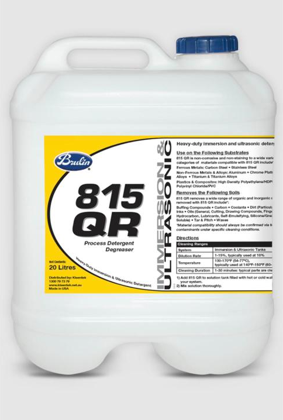
AquaVantage 815 QR-NF
Our pick for general steel, cast iron and aluminium parts with heavy oil.
Aluminium, magnesium, titanium.
Copper, brass and bronze: it can crack brass. Test zinc first.
$242 10 L · $429 20 L · inc GST
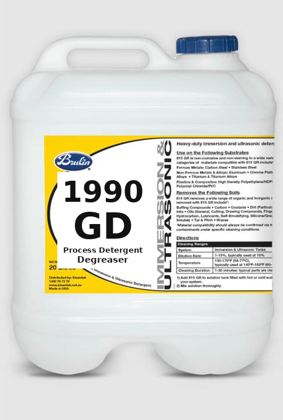
AquaVantage 1990 GD
Mildly alkaline, for general degreasing across steel, stainless and aluminium.
Steel, stainless, aluminium (5% minimum), copper alloys, magnesium.
Zinc, tin and soft solder are not on its approved list. Test first.
$242 10 L · $456.50 20 L · inc GST
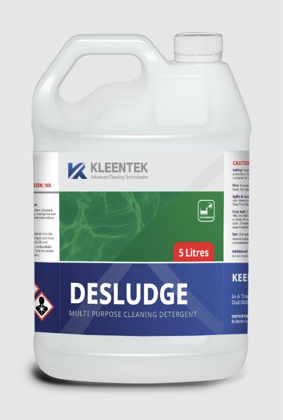
Desludge
A heavy first pass on sludge and carbon so the main bath stays clean. Not for zinc.
Steel, cast iron, stainless. High pH, but silicate inhibitors protect aluminium at working strength.
Zinc, galvanised, magnesium. Brass and copper tarnish.
$214.50 10 L · $357.50 20 L · inc GST
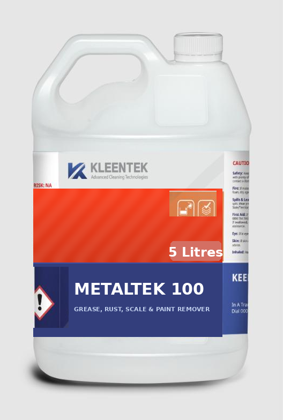
MetalTek 100
Takes baked carbon, paint and rust off iron and steel. Never aluminium.
Iron and steel only.
Aluminium, zinc and tin are attacked fast. Brass, bronze and magnesium too.
$214.50 10 L · $390.50 20 L · inc GST
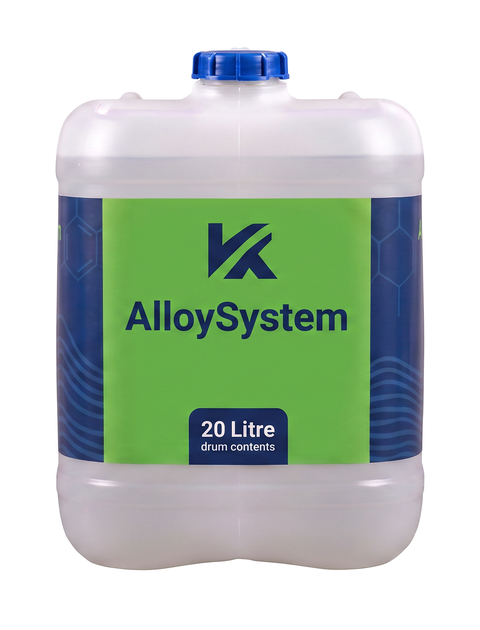
Alloy System
Two-part paint and carbon stripper that is safe on aluminium and zinc.
Aluminium and zinc.
Magnesium. Swells nitrile seals.
$451 10 L · $687.50 20 L · inc GST
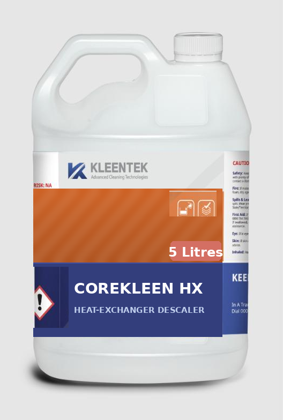
CoreKleen HX
Near-neutral rust and scale remover that is safe on aluminium and zinc, and leaves steel passivated.
Steel, cast iron, stainless, aluminium, zinc.
Magnesium. Copper and brass: limit the time and test.
$242 10 L · $423.50 20 L · inc GST
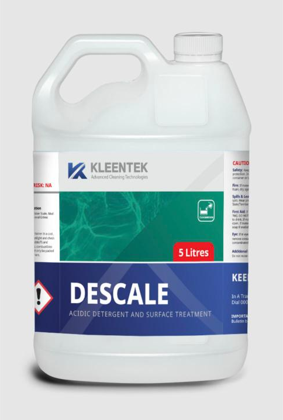
Descale
Phosphoric acid descaler for stainless and steel. Strong: keep the time short.
Stainless steel, titanium. Carbon steel and cast iron for a limited time.
Aluminium, zinc, magnesium. Brass loses its zinc on long contact.
$335.50 10 L · $599.50 20 L · inc GST
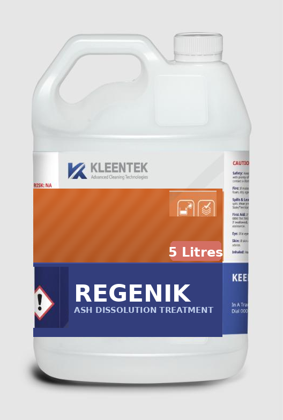
RegeniK
Citric acid ash dissolver for diesel particulate filters, used neat.
DPF ceramic, stainless, titanium.
Aluminium, zinc, brass and bronze. Carbon steel for a limited time.
$181.50 10 L · $302.50 20 L · inc GST
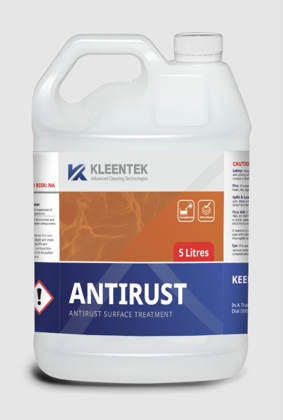
Anti-Rust
A dip after the rinse that stops cleaned steel flash rusting. Left on, not rinsed off.
Steel, cast iron, stainless.
Keep it off aluminium, zinc, brass and copper.
$242 10 L · $429 20 L · inc GST
Acid, neutral or alkaline, in one picture
pH tells you how strong a solution is. 7 is neutral, like clean water. The further from 7, the harder it works, and the more metals it attacks.
pH figures are for the concentrate, from each TDS. The working bath is diluted, so it sits a little closer to 7.
How much concentrate to add
The dose is a percentage of the working volume: the liquid up to the fill line, plus the weir on machines that have one. The space above the fill line does not count: about 25 mm on the bench machines, 80 to 100 mm on the floor machines. An MSX 70 holds 129 L, so at 5% it takes 6.45 L of concentrate and 122.55 L of water. The common doses are shaded.
| Machine · working volume | 2.5% | 5% | 10% | 15% | 25% |
|---|---|---|---|---|---|
| PowerSonic PS 603 · 2.5 L | 0.06 L | 0.13 L | 0.25 L | 0.38 L | 0.63 L |
| PowerSonic PS 605 · 5.8 L | 0.15 L | 0.29 L | 0.58 L | 0.87 L | 1.45 L |
| PowerSonic PS 610 · 9 L | 0.23 L | 0.45 L | 0.9 L | 1.35 L | 2.25 L |
| PowerSonic PS 620 · 18.8 L | 0.47 L | 0.94 L | 1.88 L | 2.82 L | 4.7 L |
| MSX 15 · 15.3 L | 0.38 L | 0.77 L | 1.53 L | 2.3 L | 3.83 L |
| MSX 30 · 28.9 L | 0.72 L | 1.45 L | 2.89 L | 4.34 L | 7.23 L |
| MSX 50 · 86 L | 2.15 L | 4.3 L | 8.6 L | 12.9 L | 21.5 L |
| MSX 70 · 129 L | 3.23 L | 6.45 L | 12.9 L | 19.35 L | 32.25 L |
| MSX 140 · 235 L incl. weir | 5.88 L | 11.75 L | 23.5 L | 35.25 L | 58.75 L |
| MSX 150 · 152 L wash tank | 3.8 L | 7.6 L | 15.2 L | 22.8 L | 38 L |
| MSX 240 · 353 L incl. weir | 8.83 L | 17.65 L | 35.3 L | 52.95 L | 88.25 L |
Fill most of the way with water, add the concentrate, then top up to the fill line. It mixes without foaming.
Bring the bath to temperature and run the degas cycle before the first basket. Why degassing matters.
The dosage calculator works it out for any tank and product.
How long a bath lasts, and when to change it
When a cycle that used to clean in five minutes needs ten, the solution is spent. Drain and refill.
Skim floating oil every day. A layer of oil gets picked up again as the basket comes out.
A filter bag on the circulation catches grit and sludge, so the bath lasts longer.
Top up with solution at working strength, not water alone. Water on its own weakens the bath.
A dull film or flash rust after rinsing is a sign the bath is tired or the rinse is too cool.
Follow the SDS and your local trade waste rules. Never tip it into a stormwater drain.
What not to put in an ultrasonic cleaner
The bath is heated and cavitation turns a solvent into vapour. A fire risk. Read why.
Chlorides pit stainless steel, including the tank itself.
They foam, and foam soaks up the cleaning power. No inhibitor, so steel rusts and aluminium marks.
Only use an acid descaler at its stated strength and temperature, in a tank built for it.
Caustic strippers on aluminium, zinc or brass etch and darken the part in minutes.
A jewellery or glasses cleaner is made for skin oil on gold and silver. It does little to grease or carbon.
Order cleaning solution
Order online. Each product page has the TDS, the SDS and the 200 L and 1,000 L prices.
| Solution | 10 L | 20 L | |
|---|---|---|---|
FX DegreaserOil and grease on steel and iron | $132 | $247.50 | Buy |
AquaVantage 1696 GDAluminium, brass, mixed metals | $242 | $429 | Buy |
AquaVantage 815 GDMachined parts, cutting oils | $242 | $429 | Buy |
AquaVantage 815 QR-NFHeavy workshop soils | $242 | $429 | Buy |
AquaVantage 1990 GDSteel, stainless and aluminium | $242 | $456.50 | Buy |
MetalTek 100Carbon and paint on iron | $214.50 | $390.50 | Buy |
Alloy SystemPaint off aluminium and zinc | $451 | $687.50 | Buy |
CoreKleen HXRust and scale, safe on aluminium | $242 | $423.50 | Buy |
DescaleMineral scale | $335.50 | $599.50 | Buy |
RegeniKDPF ash | $181.50 | $302.50 | Buy |
Anti-RustRust protection after the wash | $242 | $429 | Buy |
DesludgeEngine sludge pre-wash | $214.50 | $357.50 | Buy |
Questions buyers ask
What is the best cleaning solution for an ultrasonic cleaner?
Can I use plain water?
Can I use dish soap?
How much solution do I add?
What temperature should the bath be?
Which solutions are safe on aluminium?
How often do I change the bath?
Can I put petrol or a solvent in the tank?
Do I rinse after cleaning?
Which solution removes rust in an ultrasonic cleaner?
Which solution removes carbon and paint?
Is a jewellery cleaning solution any good for parts?
Related pages
Ultrasonic degreaser
Choosing a degreaser that will not attack the metal.
Chemical selector
Pick by metal, dirt and process.
Dosage calculator
Concentrate for any tank size.
Carburettor cleaning
The solution and settings for carburettors.
Chemical safety
Handling, PPE and storage.
Ultrasonic parts cleaner
Workshop machines, 15 to 70 L.
Not sure which solution?
Tell us the part, the metal and the dirt. We will name the solution, the dose and the temperature.