Ultrasonic parts cleaners for Australian workshops
An ultrasonic parts cleaner is a heated tank of water-based chemistry driven by ultrasonic transducers. It takes off bonded carbon, varnish and scale, and cleans blind holes, galleries and threads that a spray jet or a brush struggles to reach, provided the liquid can get in and trapped air can get out. Misonics builds ultrasonic parts cleaners sized to the part: benchtop units for small components, floor machines for workshop and plant parts, heavy-duty tanks for cylinder blocks and traction motor housings, and sealed ultrasonic parts washers that wash, rinse and dry. We supply the water-based chemistry that runs in them.
Updated · Fred Shaw, Misonics
A heated spray cabinet takes bulk soil off fast. An ultrasonic parts cleaner takes off what a jet or a brush leaves: bonded carbon, varnish and scale, and the soil inside galleries, blind holes and threads. For workshops rebuilding engines, pumps, valves and hydraulic parts, the two work well together, or a correctly specified ultrasonic machine can do the whole job. The biggest part sets the class of machine, the soil and the metal set the chemistry, and a trial on your worst part settles both before you buy.
Spray washer or ultrasonic parts cleaner, or both
Many workshops already have a heated spray cabinet or a wash station at the bench. Keep it for the gross soil and put an ultrasonic parts cleaner beside it for bonded soil and the inside of the part. The table shows which machine does which job.
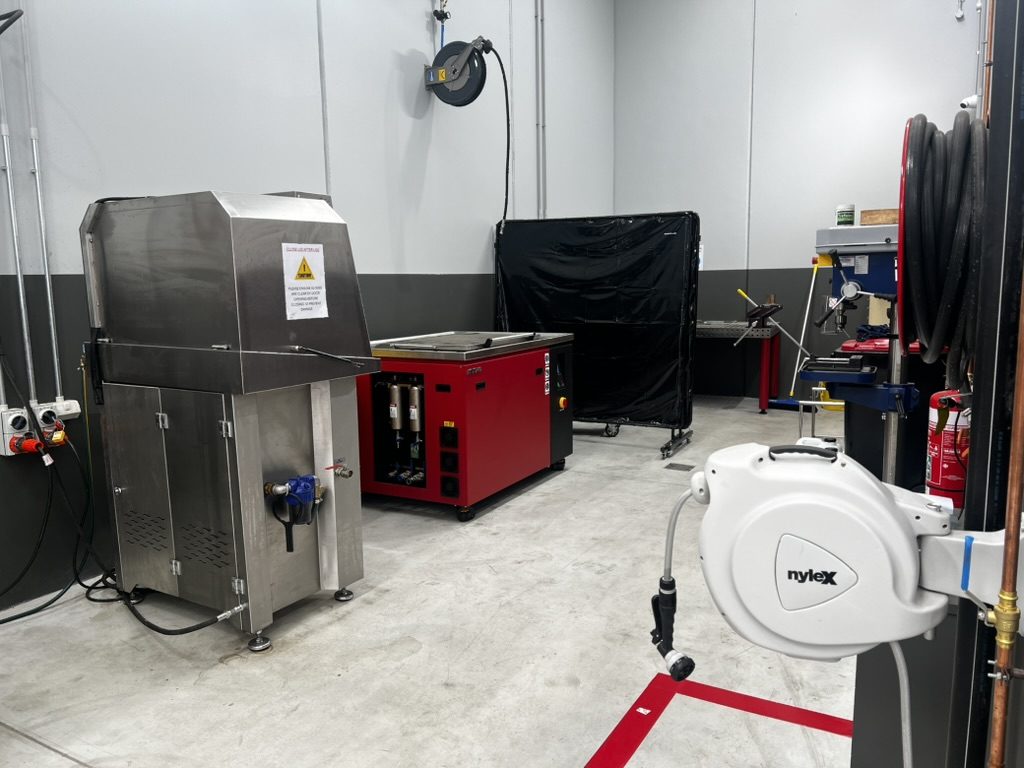
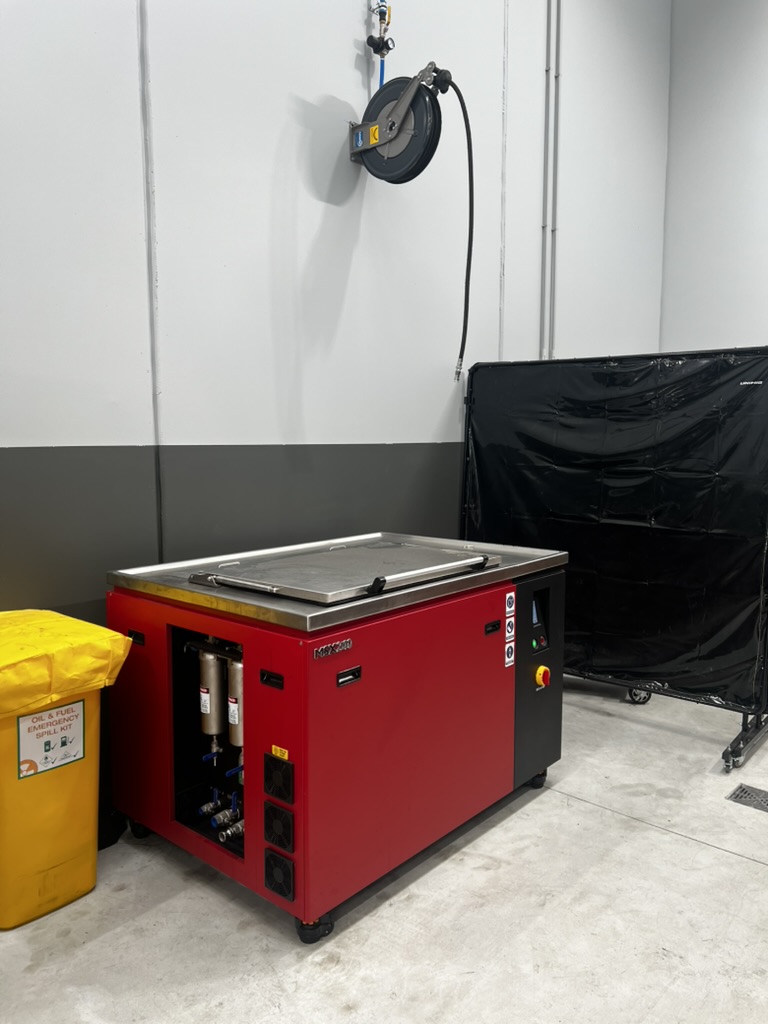
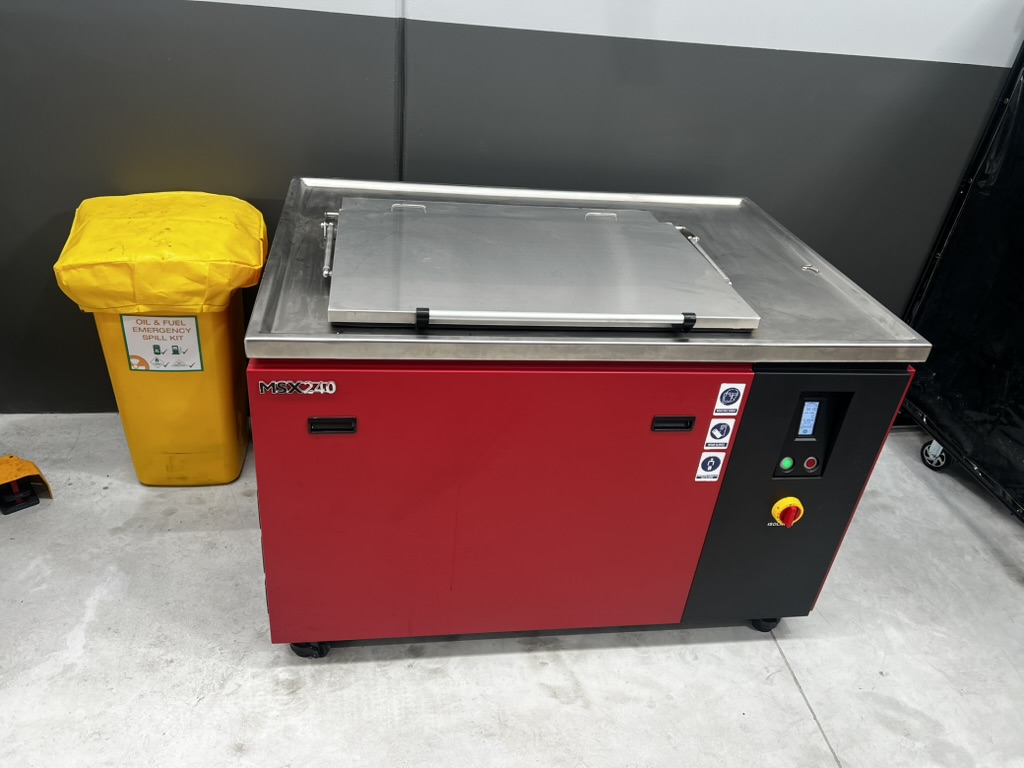
The MSX 240 in these photos works beside the spray parts washer at a truck and commercial vehicle service centre in Victoria. Gearbox and diff parts, injectors and fuel pump parts, and air brake valves and calipers go through the spray washer first to take the road grime and loose oil off. They then go into the MSX 240 basket, turned so trapped air can escape, and run in AquaVantage 815 QR-NF at 60–66 °C for 10 to 20 minutes. Washing first keeps the heavy soil out of the ultrasonic bath, so the chemistry lasts longer between changes. The result the service centre reports is faster turnaround on rebuilds: parts reach the bench clean inside and out, and go back on the truck sooner.
| Job | Parts washer (spray cabinet or wash station) | Ultrasonic parts cleaner | Best combination |
|---|---|---|---|
| Fresh oil and grease | Works well | Works well | Either. Washer first if the part is heavily loaded, so the ultrasonic bath stays clean longer. |
| Baked carbon, varnish, scale | Often stays on the part | Removed with chemistry matched to the soil | Washer to strip the loose soil, ultrasonic for the bonded soil. |
| Blind holes, threads, galleries | Partly, where a jet or brush reaches | Cleaned where the liquid gets in, with the part loaded so trapped air can escape | Ultrasonic. Add a rinse so galleries flush clean. |
| Mud, heavy dirt, paint off big plant | Hot spray washer or pressure washer | Not the tool for gross soil | Wash first, then ultrasonic for the precision parts off the assembly. |
| Parts that must come out dry | Blow off by hand | Rinse and dry stage needed | UltraWash: wash, rinse and dry in one sealed cycle. |
Comparing every kind of parts washer, and the fluid for each? See parts washers: spray cabinet, wash station or ultrasonic. Still running a solvent wash station? Read still washing parts in solvent?
Ultrasonic parts cleaners: light duty, industrial and heavy duty
Every machine runs the same process: heated bath, chemistry matched to the soil, ultrasonics, then rinse and protect. What changes is the tank, the basket load, the power and how the part is handled.
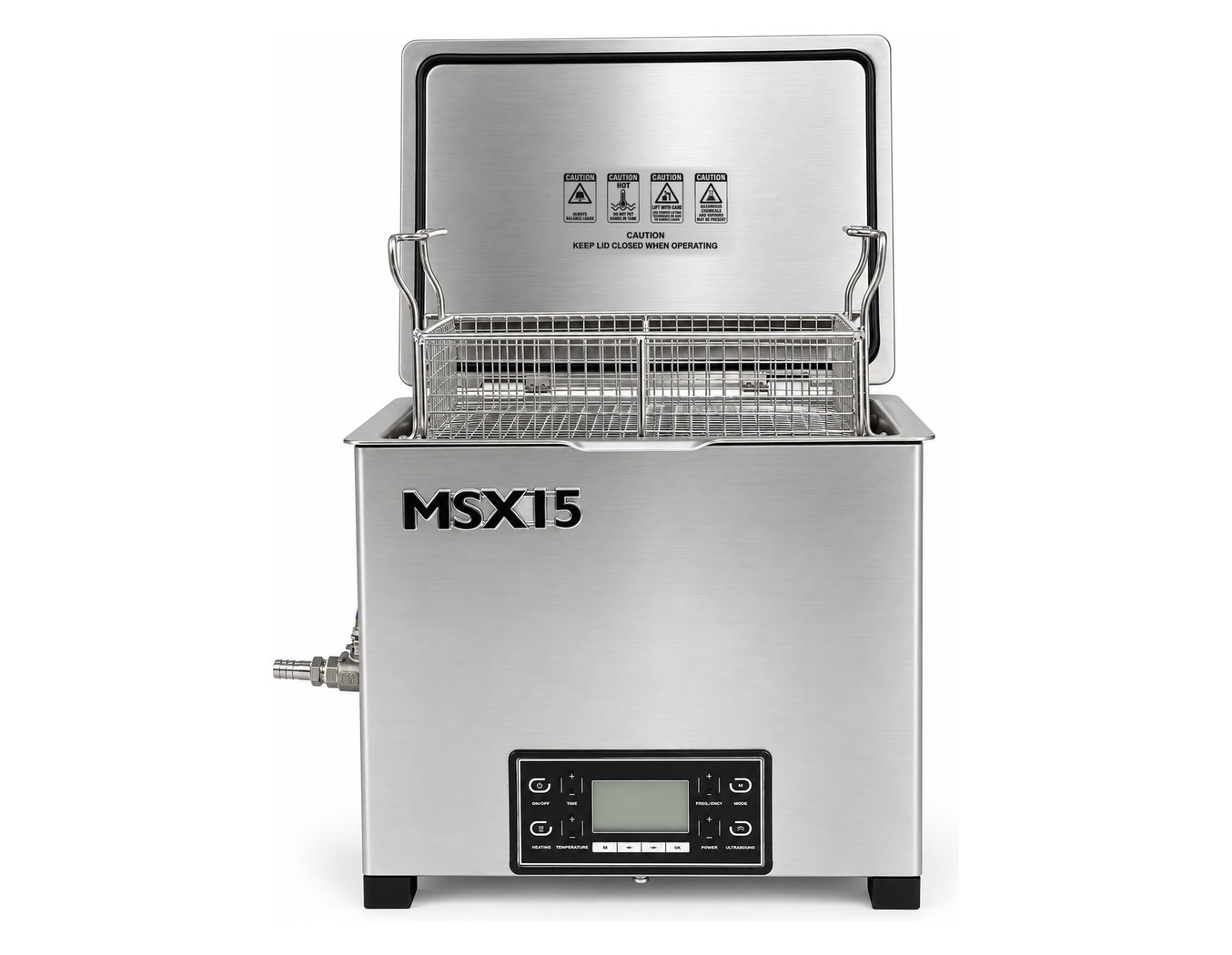
Light duty
Carburettors, injectors, brake and hydraulic parts, small castings and tooling. Runs from a standard 240 V socket. Dual frequency on the MSX 30 for soft metals and fine bores.
Benchtop range →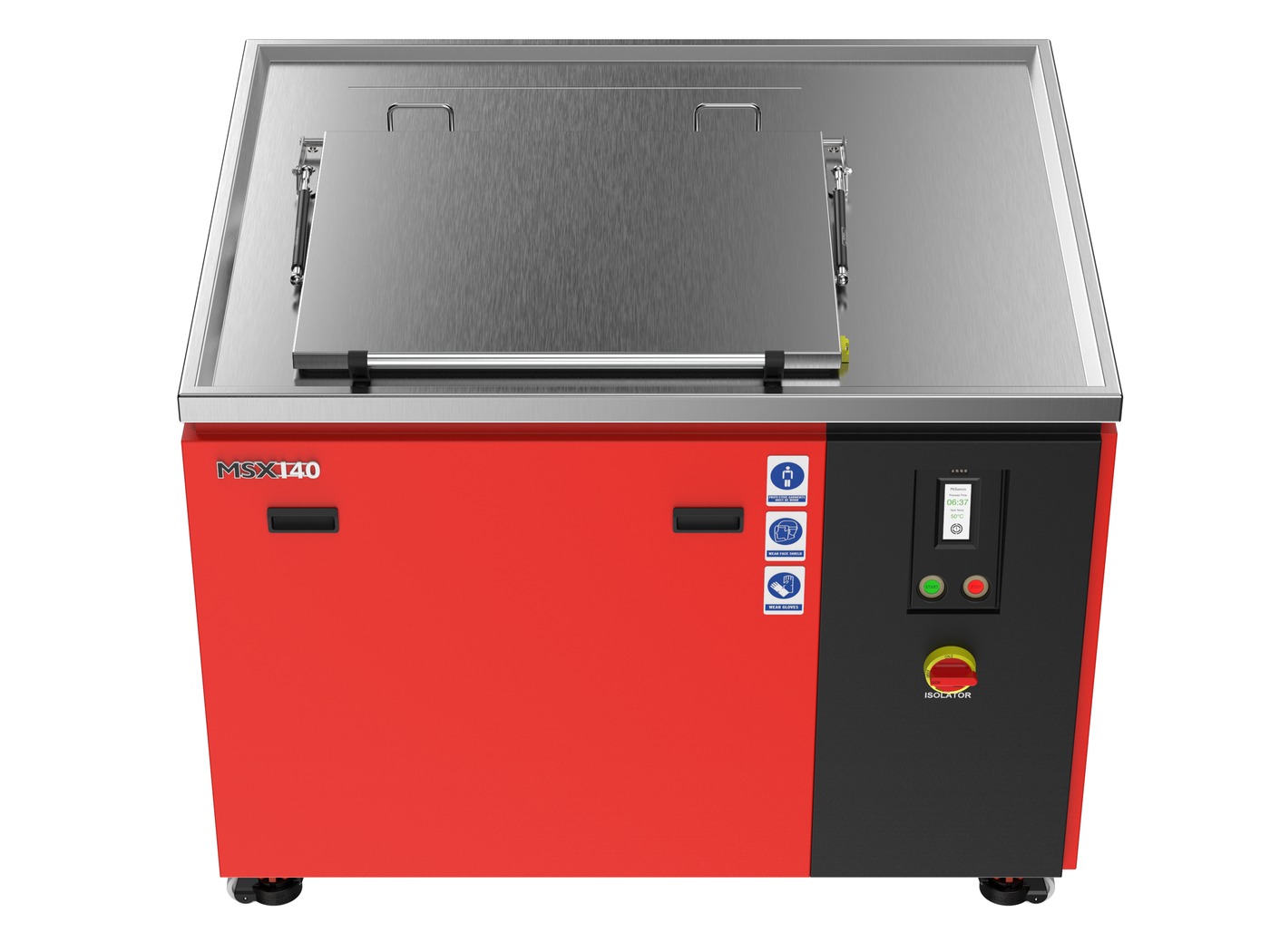
Industrial
Cylinder heads, gearbox internals, pump and valve bodies, manifolds and filters. Weir and filtration keep the bath working through a shift. Platform lifts take the basket weight.
Floor range →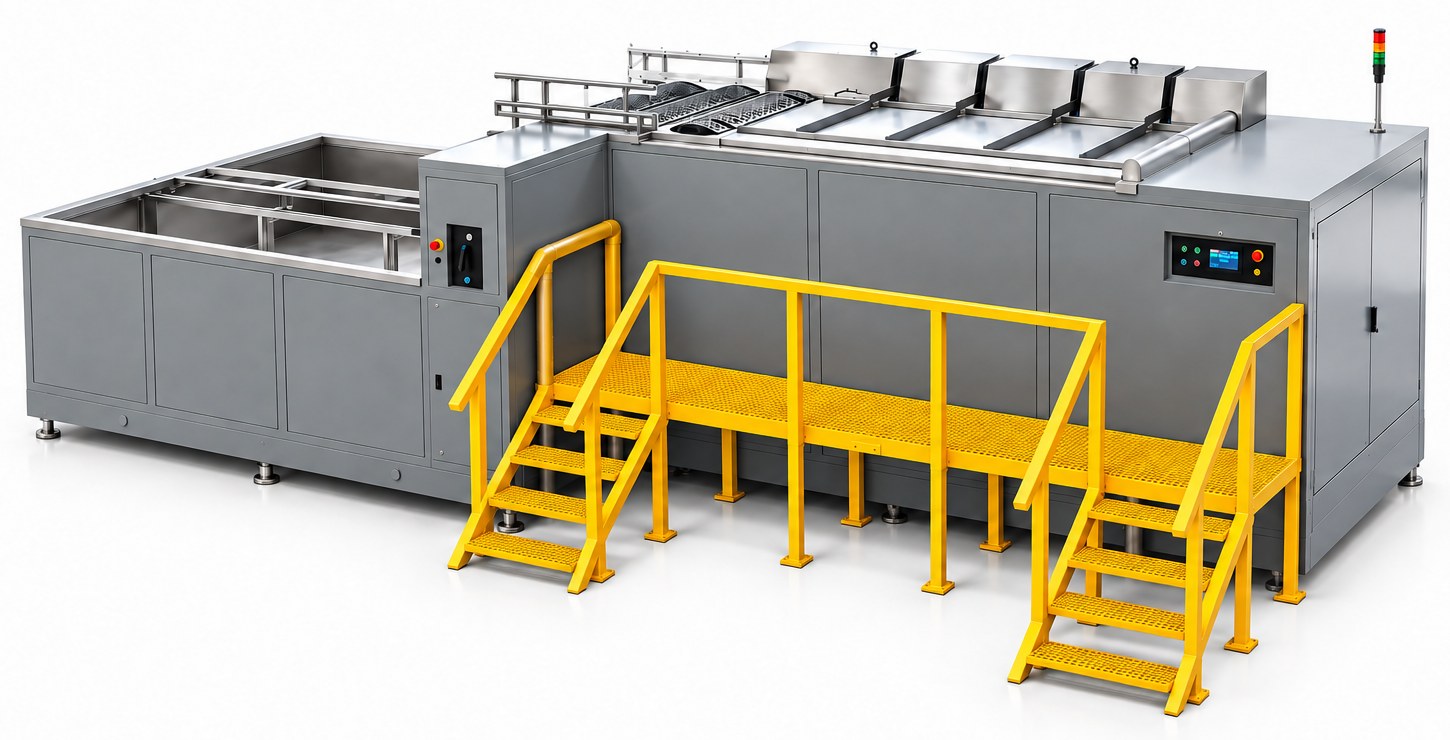
Heavy duty
Cylinder blocks off large diesels, traction motor housings, final drives and tube bundles. Crane or lift loading, three-phase supply, tank built to the largest part.
Heavy-duty range →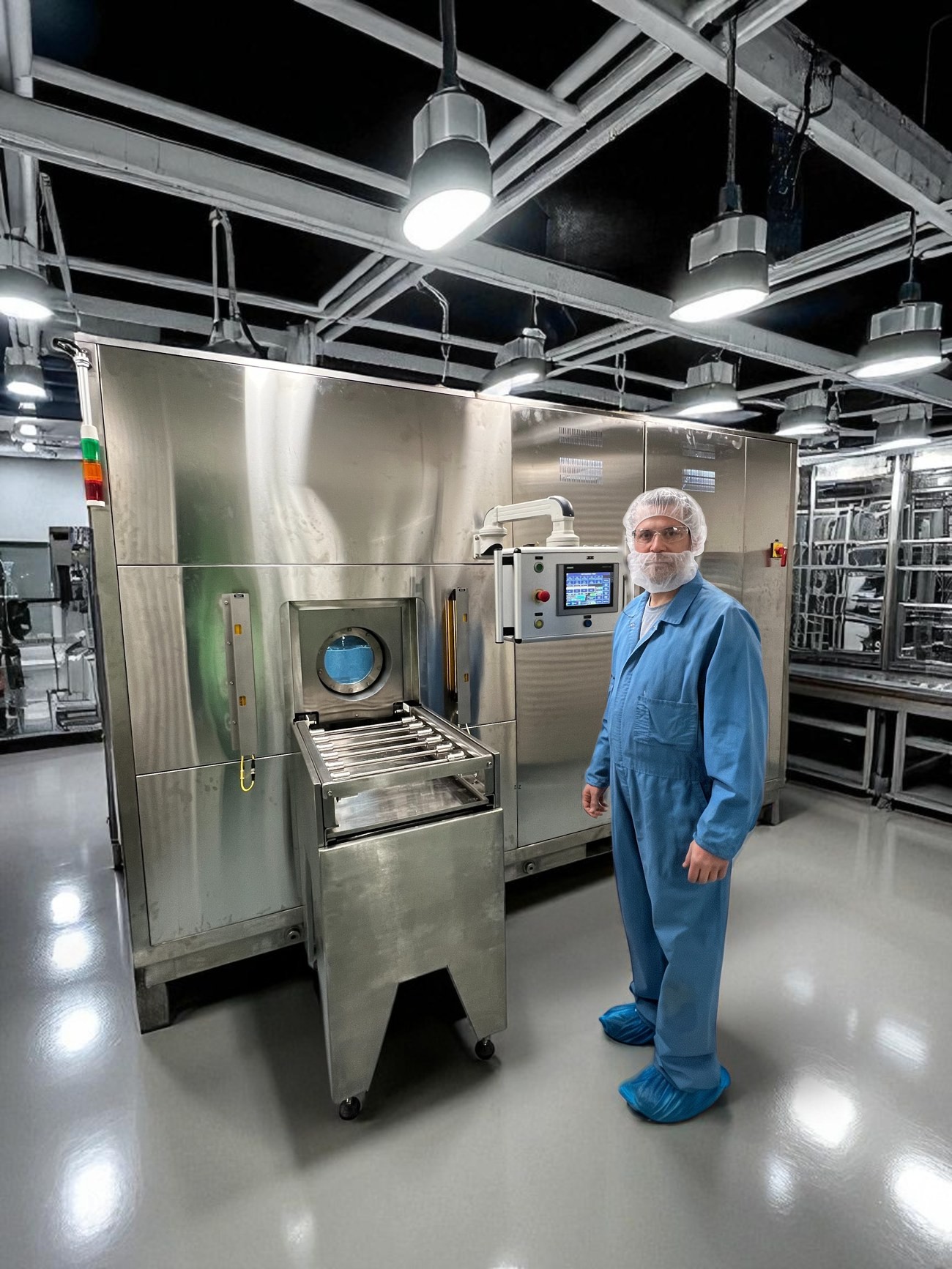
Wash, rinse, dry
Parts that must come out clean, rinsed and dry: spray, ultrasonics, rinse and hot-air drying behind one door. Sono lines run the same stages as an automated line.
UltraWash range →Benchtop prices are on their own pages. Floor, heavy-duty and sealed machines are quoted to site as a working system: machine, basket, chemistry and commissioning.
Five things that decide the machine
Measure the largest part you will clean. It sets the basket, the working depth and the class of machine.
Oil, carbon, scale, paint, flux and swarf each want a different chemistry, and the metal sets the limit. We match the chemistry before the machine is specified.
Steel and cast iron take a lower frequency and a strong alkaline chemistry. Aluminium, brass and plated parts want a finer frequency and a near-neutral solution. Dual-frequency machines cover both.
One basket an hour is a benchtop or floor machine. A basket every few minutes is a sealed washer or an automated line.
What the part has to pass decides the stages after the wash: rinse for galleries, drying for assembly, a rust inhibitor for ferrous parts waiting on machining.
We run a documented trial on your worst part and recommend the machine from the result.
What comes through a workshop or plant
Where each part usually lands. Soil level and volume move a job up a class.
| Parts | Usual class | Range |
|---|---|---|
| Carburettors, injectors, small brass and aluminium components, tooling, brake and hydraulic parts | Light duty | MSX benchtop |
| Cylinder heads, pistons, gearbox internals, pumps, valves, manifolds, turbochargers, DPFs, filter elements | Industrial | MSX floor · EvoSonic |
| Cylinder blocks, crankcases, traction motor housings, final drives, large castings, tube bundles and heat exchangers | Heavy duty | EvoSonic Heavy · UltraMax |
| Production parts in volume, parts that must leave the machine rinsed and dry | Sealed or automated | UltraWash · Sono range |
Ultrasonic parts cleaners
What is the difference between a parts washer and an ultrasonic parts cleaner?
Can an ultrasonic cleaner replace a parts washer?
Which class of ultrasonic parts cleaner do I need?
Will an ultrasonic cleaner damage aluminium?
How should parts be loaded in an ultrasonic tank?
How do I know it will work on my parts?
What are you cleaning?
Tell us the part, what comes off it and how many a shift. We will recommend the machine and chemistry, and tell you whether to keep your existing parts washer for the gross soil.