Alloy SystemALLOYSolve + ALLOYSalt — the two-part paint stripper & decarboniser
Paint and carbon off aluminium and zinc — without the caustic damage, without the methylene chloride
Two parts, one bath. ALLOYSolve supplies the solvent action, ALLOYSalt the alkaline lift. Together they take stoved paint, cured coatings and baked-on soils off steel, cast iron, aluminium and zinc — and the residues filter straight out.
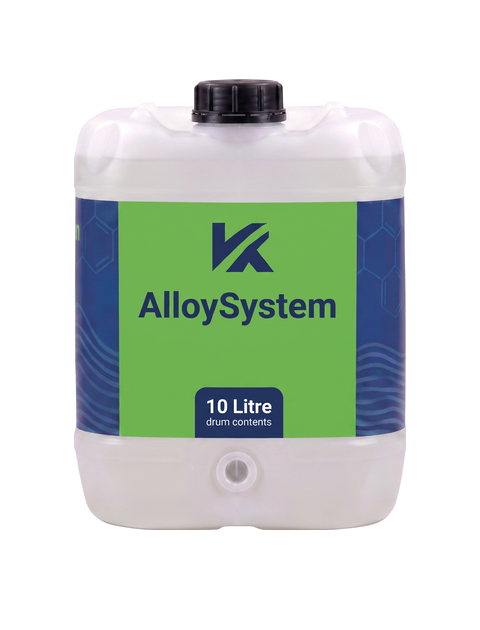
The stripper that spares the alloy
Methylene chloride built the paint-stripping trade, and its withdrawal left a hole: nothing seemed to lift stoved finishes and baked carbon without attacking the metal underneath. Caustic strippers do the job on steel and eat aluminium and zinc in the process. The Alloy System is Kleentek’s engineered answer — a two-part heated bath that strips the way the old chlorinated chemistry did, with no chlorinated solvent in the building.
The two parts are the point. ALLOYSolve, the solvent part, penetrates and swells cured paint and organic soils; ALLOYSalt, the alkaline part, lifts what has loosened, saponifies the oils beneath and holds the debris in suspension. Emulsifiers stop the paint redepositing, so the residue ends up in the filter rather than back on the work — and the bath keeps going.
Safe on steel, cast iron, aluminium and zinc; flatly not safe on magnesium. In many applications it is a drop-in replacement for a methylene chloride stripper, needing only heat — 40–70 °C, and it will not work cold. Sold as the complete system from 10 L; both parts are also sold separately for top-ups.
Penetrates and swells
Benzyl-alcohol solvent action gets under cured paint and carbonised films and swells them off the substrate — the job methylene chloride used to do, without its compliance burden.
Lifts, emulsifies, suspends
Silicate alkaline detergent lifts the loosened film, emulsifies the oils beneath, and holds residue in suspension so it ends up in the filter — not back on the work.
| Make-up | ALLOYSolve + ALLOYSalt in matched volumes, as supplied — then 10% v/v of the mixed system in water |
| Temperature | 40–70 °C — heating is required; the system does not work cold |
| Agitation | Static tanks perform better with agitation — air agitation is often adequate; ultrasonics gives the best result |
| Rinse | Rinse components thoroughly with water before drying |
| Bath care | Filter paint residues from the bath to extend solution life |
| Fire safety | The mixed system is non-combustible per its SDS. ALLOYSolve on its own has a flash point of 101 °C — well above the working range; ALLOYSalt has none. |
| Equipment | Ultrasonic tanks, agitated immersion, spray wash, static tanks with agitation |
One system, one make-up. Values from the Kleentek TDS (KT-TDS-ALSSYS Rev 1); the trial documents your working concentration, temperature and cycle before you commit.
Where it earns its keep
Heavy machinery refurbishment, aerospace component stripping, alloy and wheel refinishing, general manufacturing — and the classic aluminium engine work: pistons, heads and casings carrying carbon and paint.
Dose: 10% v/v of the mixed system in water, at 40–70 °C. The trial sets your exact process values; the TDS governs.
The working process
Delivered within Australia. Outside Australia, request a delivered price.
 Anti-RustStops flash rust on cleaned steelView & buy →
 RegeniKThe ash stage after carbonView & buy →
| Mild & carbon steel | Steel on the TDS list |
| Stainless steel | Safe in prescribed use |
| Cast iron | Cast iron on the TDS list |
| Aluminium & titanium | Aluminium on the TDS list — the point of the system (titanium not listed; test) |
| Magnesium & soft alloys | Do not use — not safe on magnesium |
| Zinc & galvanised | Zinc on the TDS list — safe |
| Copper & brass | Not on the TDS list — test first |
| Plated finishes (Cd·Cr·Ni) | Not on the TDS list — confirm plating type first |
| Plastics & rubbers | HDPE · PP · EPDM · Viton safe; acrylic, polycarbonate and ABS craze; nitrile seals swell — use EPDM or Viton |
| Painted / coated surfaces | Strips paint — that is the job |
| Transport | Not classified as Dangerous Goods for road and rail. ALLOYSalt is a Schedule 5 (Caution) poison |
This is not a single-use chemical
A common misconception treats industrial chemistry like dishwater — used once, tipped out. A defended bath of the Alloy System works for weeks of production: weir oil separation and filtration defend the bath, solids leave through the filter, and the chemistry keeps working until genuine depletion.
Change out on evidence, not anxiety: when cycle times stretch or results fade at correct concentration, the bath has earned its retirement. Top-ups at specification carry it between changes.
- Skim or weir oils continuously — oil load is bath killer #1
- Filter solids; drain settled sludge from the sump
- Verify concentration on schedule per the TDS check method
- Log it — the trend predicts top-ups before cleaning fades
Two drums, one discipline
| Location | Cool, dry, well-ventilated — out of direct sunlight |
| Segregation | Away from foodstuffs, incompatible materials, and sources of heat or ignition |
| Containers | Original containers, sealed between uses — the solvent part loses strength to evaporation if left open |
| ALLOYSalt specifically | Store locked up (P405) — Poison Schedule S5, classified Danger (H314) on its own, and its alkalinity demands segregation from acids |
| Shelf discipline | Store the two parts together as a system — a part that cannot find its partner is dead stock |
The made-up system is not a single-use fill. Between shifts, lid the tank: it limits evaporation of the solvent component, keeps airborne dust out, and holds temperature for a faster morning start.
Bath life is measured in work done, not days passed — emulsified oils skim off at the weir, paint residues collect in the filter, and the system chemistry keeps working until depletion, when a part-wise top-up (at system ratio) restores it.
For shutdown periods, drain and store made-up solution in sealed containers rather than leaving an open tank standing — and label the container with make-up date and ratio, because the next operator was not there when you mixed it.
The icons on the label, and what they mean
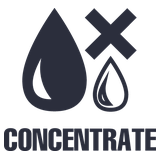
These are the manufacturer’s own label marks, not third-party certifications. Where a named approval exists it is listed in full on this page. The compatibility table above is what governs.
The paperwork, on the page
Hazard identification
| H315 | Causes skin irritation. |
| H319 | Causes serious eye irritation. |
| P102 | Keep out of reach of children. |
| P103 | Read carefully and follow all instructions. |
| P264 | Wash hands, face and all exposed skin thoroughly after handling. |
| P280 | Wear protective gloves/protective clothing including eye/face protection. |
| P302+P352 | IF ON SKIN: Wash with plenty of water and soap. |
| P305+P351+P338 | IF IN EYES: Rinse cautiously with water for several minutes. Remove contact lenses, if present and easy to do. Continue rinsing. |
| P332+P313 | If skin irritation occurs: Get medical advice/attention. |
| P337+P313 | If eye irritation persists: Get medical advice/attention. |
| P362+P364 | Take off contaminated clothing and wash it before reuse. |
PPE & exposure controls
- National occupational exposure limits: no value assigned for this specific material by Safe Work Australia.
- Engineering measures: natural ventilation should be adequate under normal use conditions.
- Personal protective equipment: gloves and safety glasses. Available information suggests nitrile rubber or neoprene gloves are suitable for intermittent contact — the user makes the final assessment for their glove and conditions.
- PPE must suit the nature of the work and the hazards identified by your risk assessment.
- Hygiene: keep away from food, drink and animal feed. Do not eat, drink or smoke when using. Wash hands before eating, drinking or smoking. Avoid contact with clothing, eyes and skin; avoid inhaling vapour, mist or aerosols.
- Ensure eyewash stations and safety showers are close to the workstation.
- Wash contaminated clothing and other protective equipment before storing or re-using.
First aid
- If poisoning occurs, contact a doctor or Poisons Information Centre (Phone Australia 131 126, New Zealand 0800 764 766).
- Inhalation: remove victim from exposure — avoid becoming a casualty. Remove contaminated clothing and loosen remaining clothing. Allow patient to assume most comfortable position and keep warm. Keep at rest until fully recovered. Seek medical advice if effects persist.
- Skin contact: if skin or hair contact occurs, immediately remove contaminated clothing and flush skin and hair with running water. Continue flushing with water until advised to stop by the Poisons Information Centre or a doctor; or for 15 minutes and transport to doctor or hospital.
- Eye contact: if in eyes, hold eyelids apart and flush the eyes continuously with running water. Continue flushing until advised to stop by the Poisons Information Centre or a doctor; or for at least 15 minutes and transport to doctor or hospital.
- Ingestion: rinse mouth with water. If swallowed, do NOT induce vomiting. Give a glass of water to drink. Never give anything by the mouth to an unconscious patient. If vomiting occurs give further water. Seek medical advice.
- PPE for first aiders: gloves and safety glasses. Notes to physician: treat symptomatically.
Storage & handling
- Handling: avoid eye contact and skin contact. Avoid inhalation of vapour, mist or aerosols.
- Storage: store in a cool, dry, well-ventilated place and out of direct sunlight.
- Store away from foodstuffs and from incompatible materials (oxidising agents — SDS Section 10).
- Store away from sources of heat and/or ignition; avoid elevated temperatures in storage.
- Keep container standing upright. Keep containers closed when not in use — check regularly for leaks.
- ALLOYSalt concentrate: store locked up (P405) — Poison Schedule 5.
Disposal
- Persons conducting disposal, recycling or reclamation activities should ensure that appropriate personal protection equipment is used, see "Section 8.
- Exposure Controls and Personal Protection" of this SDS.
- If possible material and its container should be recycled.
- If material or container cannot be recycled, dispose in accordance with local, regional, national and international Regulations.
Transport & dangerous goods
- Not classified as Dangerous Goods by the criteria of the "Australian Code for the Transport of Dangerous Goods by Road & Rail" and the "New Zealand NZS5433:
- Transport of Dangerous Goods on Land".
- MARINE TRANSPORT Not classified as Dangerous Goods by the criteria of the International Maritime Dangerous Goods Code (IMDG Code) for transport by sea.
- AIR TRANSPORT Not classified as Dangerous Goods by the criteria of the International Air Transport Association (IATA) Dangerous Goods Regulations for transport by air.
Asked at the tank
What dilution and temperature do I run?
Do I have to buy both parts?
Is it really a replacement for methylene chloride?
When do I change the bath?
Can algae grow in the bath if it sits unused?
Can I get the SDS before buying?
Not sure which chemical? See which chemical for which metal and soil.
Prove it on your parts
The trial pairs the Alloy System with your components — concentration, temperature and cycle documented before you order a drum. Wrong chemistry for your soil? The trial says so.
Filter bags for this bath
The bag is what keeps the bath working — it takes the soil out before it settles back onto the next load. Which media suits this one depends on its pH, so ask us before you order.
The bag media is settled by the pH, and we have not published one for this product yet. Ask us and we will tell you which felt to run.