Added to cart
Home / Chemicals / Degreasing & General Cleaning / Brulin AquaVantage 1696 GD
Brulin EngineeredTank Approved Specification conformance documented

Brulin AquaVantage 1696 GD

Precision cleaning for the substrates that scare you

Near-neutral pH 7.9 — mixed metals, sensitive assemblies, no drama.

pH 7.9 — near-neutral confidenceMixed metals & sensitive assembliesBrulin documentation & support behind it
Pricing on application — trade accounts
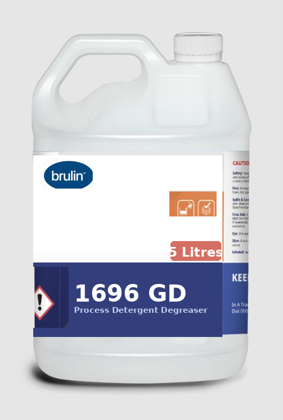
brulin aquavantage 1696 gd container
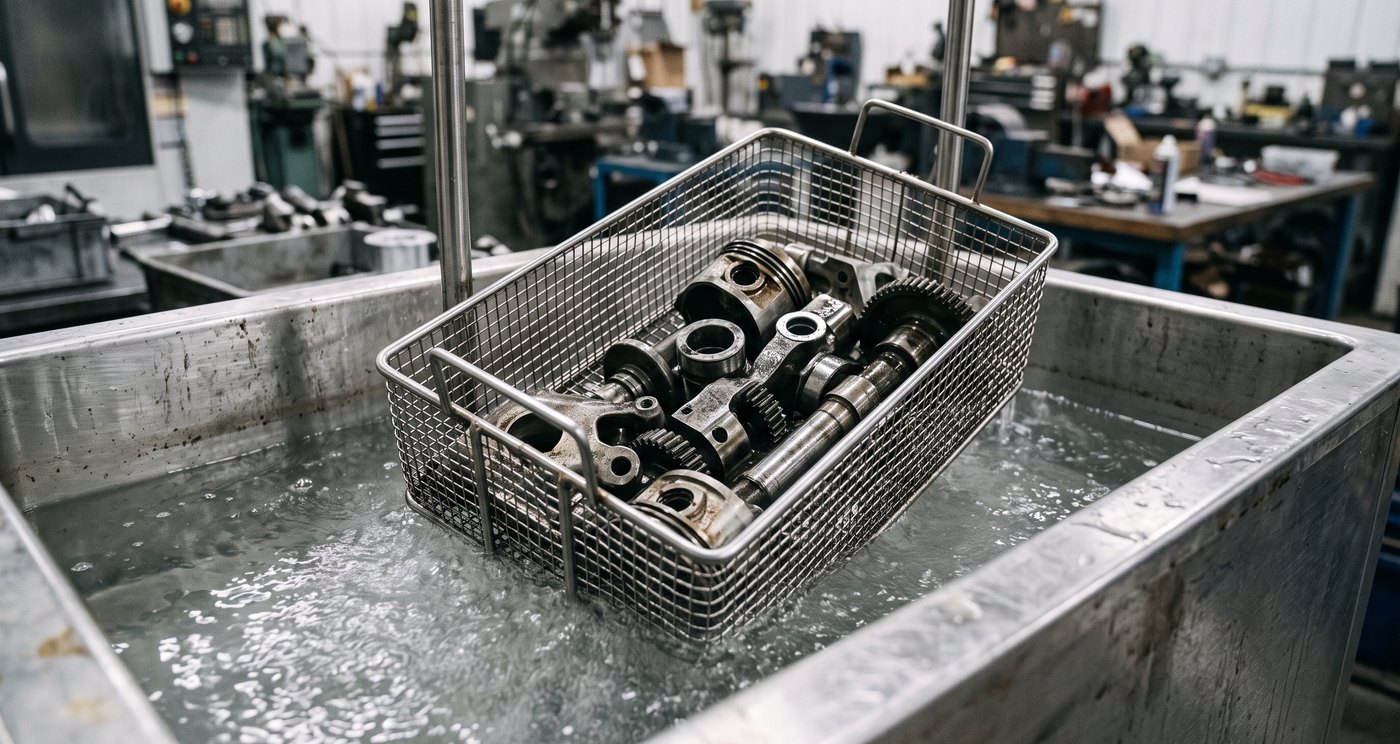
Machined steel components in a stainless mesh basket being lowered into an ultrasonic cleaning bath
The chemistry is half the process. It wets the tank and the part so cavitation can form at the surface, and it holds the soil once the ultrasound has lifted it.Illustration generated by Misonics.
Why It Wins

Precision cleaning for the substrates that scare you

Mixed-metal assemblies are where cleaning chemistry goes to get sued: aluminium beside copper beside solder beside plated contacts, and every aggressive option attacks something. AquaVantage 1696 GD cleans at pH 7.9 — near-neutral, effective, and safe across combinations that disqualify everything stronger.

It is the Brulin answer for electronics-adjacent hardware, medical assemblies and precision mixed-material work: real cleaning performance from chemistry gentle enough that the compatibility check becomes a formality.

Where soils are heavier, its 815-series siblings take over; where substrates are the risk, 1696 GD is the specification.

Applications

Where it earns its keep

Sensitive substrates — electronics adjacent, medical, mixed-metal precision assemblies.

ElectronicsLife SciencesAerospace
Temperature & Dose
SWEET SPOT 55 °C40–70 °C20 °C100 °C

Dose: 5–30%. The trial sets your exact process values; the TDS governs.

Run It Right

The working process

The GD Family

Right product, right job

Buy Brulin AquaVantage 1696 GDinc GST
5 L$ TBC
20 LPOA
200 LPOA
Complete The Job
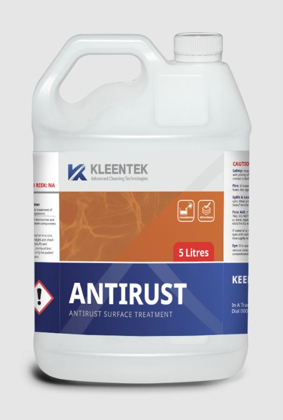
Anti-RustStops flash rust on cleaned steelView & buy →Rinse AidSpot-free final rinseView & buy →
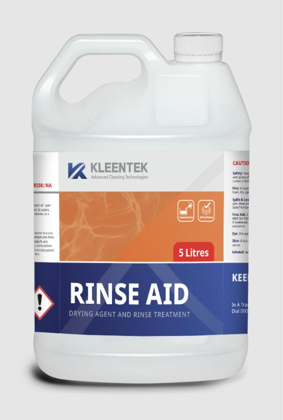
Machine-cycle note. Also worth considering: Anti-Rust as a post-wash stage, and Brulin AquaVantage 815 GD where the load is all-aluminium and an inhibited alkaline is acceptable. Tell us the parts and the machine and we will specify the stage sequence.
Compatibility
Mild & carbon steelSafe in prescribed use
Stainless steelSafe in prescribed use
Cast ironSafe in prescribed use
Aluminium & titaniumNear-neutral (pH ~8) — aluminium safe
Magnesium & soft alloysConfirm grade in trial
Zinc & galvanisedSafe in prescribed use
Copper & brassMinor discolouration possible
Plated finishes (Cd·Cr·Ni)Safe in prescribed use
Plastics & rubbersSafe in prescribed use
Painted / coated surfacesSafe in prescribed use
Per prescribed use — the cleaning trial confirms on your parts; the TDS governs. Full range matrix →
Transport
TransportNot classified as Dangerous Goods for road and rail
No DG freight surcharge applies.
Bath Life

This is not a single-use chemical

A common misconception treats industrial chemistry like dishwater — used once, tipped out. A defended bath of Brulin AquaVantage 1696 GD works for weeks of production: the oil-splitting formulation sends released oils to the weir, solids leave through the filter, and the chemistry keeps working until genuine depletion.

Change out on evidence, not anxiety: when cycle times stretch or results fade at correct concentration, the bath has earned its retirement. Top-ups at specification carry it between changes.

Keep It Honest
  • Skim or weir oils continuously — oil load is bath killer #1
  • Filter solids; drain settled sludge from the sump
  • Verify concentration on schedule — titration method on the product TDS
  • Log it — the trend predicts top-ups before cleaning fades
Storage

Drum and bath, both looked after

The Concentrate
  • Handling: Avoid eye contact and skin contact.
  • Avoid inhalation of vapour, mist or aerosols.
  • Storage: Store in a cool, dry, well-ventilated place and out of direct sunlight.
  • Store away from foodstuffs.
  • Store away from incompatible materials described in Section 10.
  • Store away from sources of heat and/or ignition.
  • Keep container standing upright.
  • Keep containers closed when not in use - check regularly for leaks.
Compliant with the product SDS.
The Working Bath

Lid the tank between shifts — holds temperature, limits evaporation, keeps dust out.

Idle periods: a warm, stagnant aqueous bath can support biological growth over extended stagnation. Circulate periodically, keep concentration at specification, never leave an open tank standing for weeks.

Extended shutdown: drain to sealed, labelled containers — or schedule changeover for restart day.

Documents & Safety

The paperwork, on the page

Safety Data Sheet (SDS)
Brulin AquaVantage 1696 GD — Australian GHS SDS for your chemical register and risk assessments. PDF, 209 KB.
View SDSDownload
Technical Data Sheet (TDS)
Properties, composition, dose and compatibility at a glance. PDF, 82 KB.
View TDSDownload
Hazard identification
WARNINGPer Safe Work Australia GHS 7
Skin Irritation - Category 2Eye Irritation - Category 2A
Hazard statements
H315Causes skin irritation.
H319Causes serious eye irritation.
Key precautions
P102Keep out of reach of children.
P103Read carefully and follow all instructions.
P264Wash hands, face and all exposed skin thoroughly after handling.
P280Wear protective gloves/protective clothing including eye/face protection.
P101If medical advice is needed, have product container or label at hand.
P302+P352IF ON SKIN: Wash with plenty of water and soap.
Compliant with the product SDS — full document available for your chemical register.
PPE & exposure controls
  • National Occupational Exposure Limits: TWA STEL NOTICES ppm mg/m3 ppm mg/m3 Propylene glycol monomethyl ether 100 369 150 553 - Triethanolamine 5 Sen As published by Safe Work Australia.
  • TWA - The time-weighted average airborne concentration over an eight-hour working day, for a five-day working week over an entire working life.
  • STEL (Short Term Exposure Limit) - the average airborne concentration over a 15 minute period which should not be exceeded at any time during a normal eight-hour workday. ‘Sen' Notice - sensitiser.
  • The substance can cause a specific immune response in some people.
  • An affected individual may subsequently react to exposure to minute levels of that substance.
  • These Exposure Standards are guides to be used in the control of occupational health hazards.
  • All atmospheric contamination should be kept to as low a level as is workable.
  • These exposure standards should not be used as fine dividing lines between safe and dangerous concentrations of chemicals.
  • They are not a measure of relative toxicity.
  • Product Name: AquaVantage 1696GD Reference No:
Compliant with the product SDS — full document available for your chemical register.
First aid
  • If poisoning occurs, contact a doctor or Poisons Information Centre (Phone Australia 131 126, New Zealand 0800 764 766).
  • Inhalation: Remove victim from exposure - avoid becoming a casualty.
  • Remove contaminated clothing and loosen remaining clothing.
  • Allow patient to assume most comfortable position and keep warm.
  • Keep at rest until fully recovered.
  • Seek medical advice if effects persist.
  • Skin Contact: If skin or hair contact occurs, immediately remove contaminated clothing and flush skin and hair with running water.
  • Continue flushing with water until advised to stop by the Poisons Information Centre or a Doctor; or for 15 minutes and transport to Doctor or Hospital.
  • Eye Contact: If in eyes, hold eyelids apart and flush the eyes continuously with running water.
  • Continue flushing until advised to stop by the Poisons Information Centre or a Doctor; or for at least 15 minutes and transport to Doctor or Hospital.
Compliant with the product SDS — full document available for your chemical register.
Storage & handling
  • Handling: Avoid eye contact and skin contact.
  • Avoid inhalation of vapour, mist or aerosols.
  • Storage: Store in a cool, dry, well-ventilated place and out of direct sunlight.
  • Store away from foodstuffs.
  • Store away from incompatible materials described in Section 10.
  • Store away from sources of heat and/or ignition.
  • Keep container standing upright.
  • Keep containers closed when not in use - check regularly for leaks.
Compliant with the product SDS — full document available for your chemical register.
Disposal
  • Persons conducting disposal, recycling or reclamation activities should ensure that appropriate personal protection equipment is used, see "Section 8.
  • Exposure Controls and Personal Protection" of this SDS.
  • If possible material and its container should be recycled.
  • If material or container cannot be recycled, dispose in accordance with local, regional, national and international Regulations.
Compliant with the product SDS — full document available for your chemical register.
Transport & dangerous goods
  • Not classified as Dangerous Goods by the criteria of the "Australian Code for the Transport of Dangerous Goods by Road & Rail" and the "New Zealand NZS5433:
  • Transport of Dangerous Goods on Land".
  • MARINE TRANSPORT Not classified as Dangerous Goods by the criteria of the International Maritime Dangerous Goods Code (IMDG Code) for transport by sea.
  • AIR TRANSPORT Not classified as Dangerous Goods by the criteria of the International Air Transport Association (IATA) Dangerous Goods Regulations for transport by air.
Compliant with the product SDS — full document available for your chemical register.
Brulin AquaVantage 1696 GD FAQ

Asked at the tank

What dilution and temperature do I run?
5–30% at 40–70 °C — and the trial sets your exact process values against your soil. Running richer than specified wastes chemical without cleaning faster. That range is the chemistry’s window — not the whole answer. The substrate sets its own ceiling, and it is usually lower: aluminium and anodised finishes discolour above about 65 °C, zinc and coated parts lower again, and magnesium is governed by pH before temperature. Run at the lower of the two. Bath temperature — chemistry vs substrate →
When do I change the bath?
When cycle times stretch, results fade, or filtration stops holding the debris. Drain, clean the tank, refill — never lay fresh solution over settled sludge.
Can algae grow in the bath if it sits unused?
Over extended stagnation, any warm diluted aqueous bath can support growth as preservative systems deplete. Prevention: circulate periodically, hold concentration at specification, lid the tank. If a bloom happens: drain, clean the tank including weir and lines with hot fresh solution, rinse and refill — never dose on top of growth.
Can I get the SDS before buying?
Yes — every product ships with its SDS, and documents are available ahead of purchase for your chemical register and risk assessments.

Prove it on your parts

The trial pairs Brulin AquaVantage 1696 GD with your components — concentration, temperature and cycle documented before you order a drum. Wrong chemistry for your soil? The trial says so.

Talk to an engineer Back to the Range
Compliance, Standards & Conformance

Approved and conformant — by name

AquaVantage 1696 GD (formerly Brulin 1696 B, SKU 431039) carries OEM process approvals, a full aerospace materials-compatibility test set, and manufacturer environmental certifications. If your process is governed by one of these, the chemistry is already qualified for it.

OEM process approvals
  • Boeing BAC 5763 — approved for emulsion cleaning processes
  • Safran PR-1500 — Safran process conformance
Environmental & formulation
  • South Coast AQMD — certified Clean Air Solvent
  • RoHS compliant — manufacturer declaration
  • APE/NPE-free — no alkylphenol or nonylphenol ethoxylates
  • Silicate-free — where silicate residues are prohibited
  • Phosphate-free — no added phosphate chemistry
Manufacturer certification
  • ISO 9001:2015 — quality management
  • ISO 14001:2015 — environmental management

Company-level certifications held by Brulin, not individual product approvals.

Aerospace test compliance

The materials-compatibility standards the product has been tested against, and what each one actually proves.

StandardWhat it tests
SAE ARP 1755B, Category 10Stock-loss and corrosion effect of aqueous cleaning agents on aircraft-engine materials
ASTM F945Stress corrosion of titanium alloys caused by aircraft-engine cleaning materials
ASTM F483Total-immersion corrosion testing of aircraft maintenance chemicals
ASTM F485Effects of cleaners on unpainted aircraft surfaces
ASTM F1110Sandwich corrosion testing
ASTM F2111Intergranular attack and end-grain pitting on aircraft metals
ASTM G86Mechanical-impact ignition sensitivity in liquid or gaseous oxygen environments

Safety and regulatory status

Concentrate classification
  • Skin irritation — Category 2
  • Serious eye irritation — Category 2A

Applies to the concentrate. Dilute working solutions are milder — handle per the SDS regardless.

Transport
  • Not regulated as dangerous goods under DOT, IMDG or IATA
Inventory & disclosure
  • Components listed as active on the US TSCA inventory
  • California Proposition 65 warning — trace diethanolamine exposure

Document currency. Approvals and test compliance as stated on the Brulin product page and 2025 technical data sheet. Safety classification from the Brulin US-format SDS, revision 15 October 2023 — a US-format SDS, not an Australian (GHS 7 / Safe Work Australia) SDS. Approvals are held by the manufacturer and apply to the product as supplied. Ask Misonics for the current revision before writing any of these into a process specification, and for an Australian-format SDS before the product enters an Australian workplace chemical register.