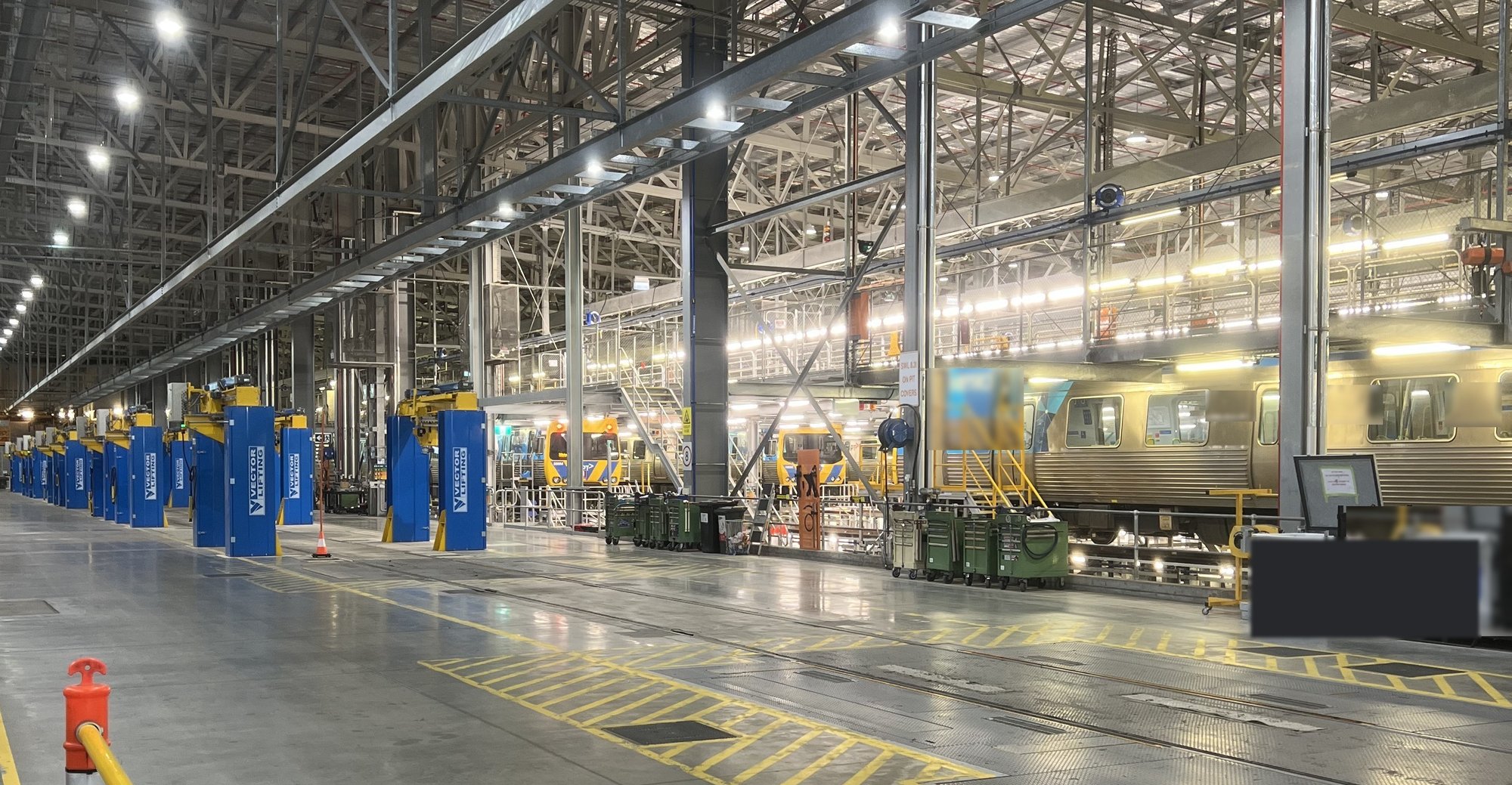
Rolling-stock overhaul is scheduled in components per shift, and every one carries the same mix: brake dust, carbon, grease and — near ports and coalfields — salt and coal fines. The components are safety-critical, so the cleaning has to be documented, not just done.
Misonics systems clean traction, brake and bogie hardware to inspection-ready condition in logged cycles, at workshop throughput.
Embedded across calipers, cylinders and bogie hardware.
Carbon & arc residues
On traction-motor components and electrical cabinet hardware.
Grease & hydraulic oils
Packed into bearings, hubs and brake rigging.
Coal dust & coastal salt
Accumulated on export-corridor rolling stock — corrosive and abrasive together.
Scale & fouling
In cooling radiators, intercoolers and exchangers.
Mass transit is more than rail — bus and coach fleets carry the same brake dust, grease and cooling-system fouling into every overhaul, whether the wheels run on rails or rubber. — click to enlarge
On the bench
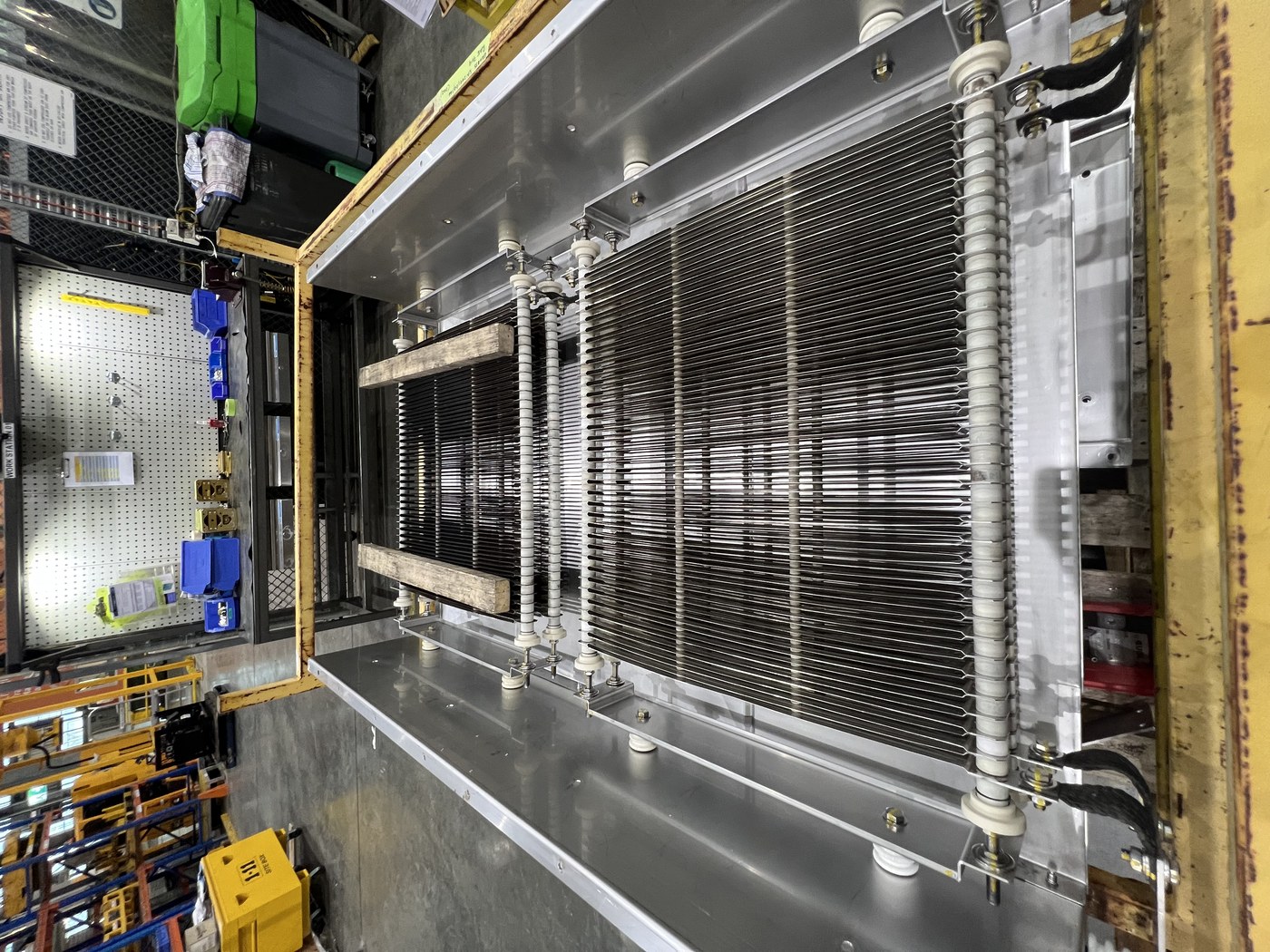
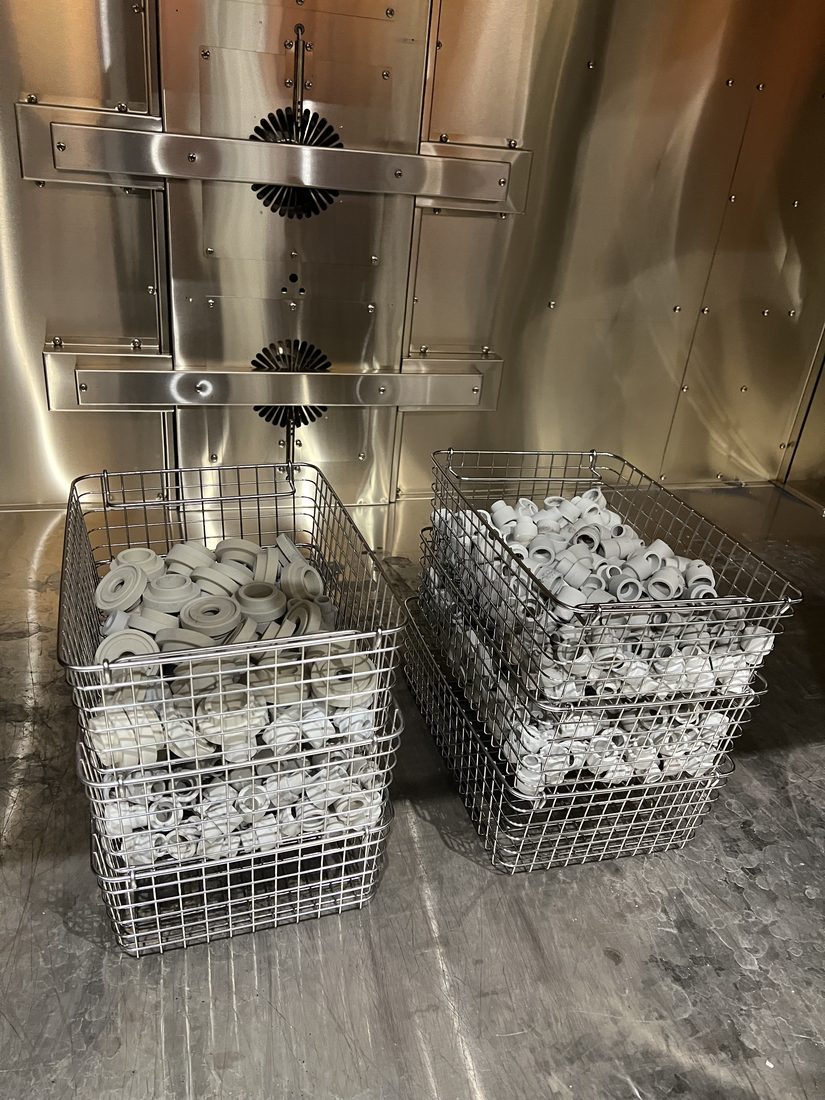
Brake resistor grids and insulators — a job that looks small and is not
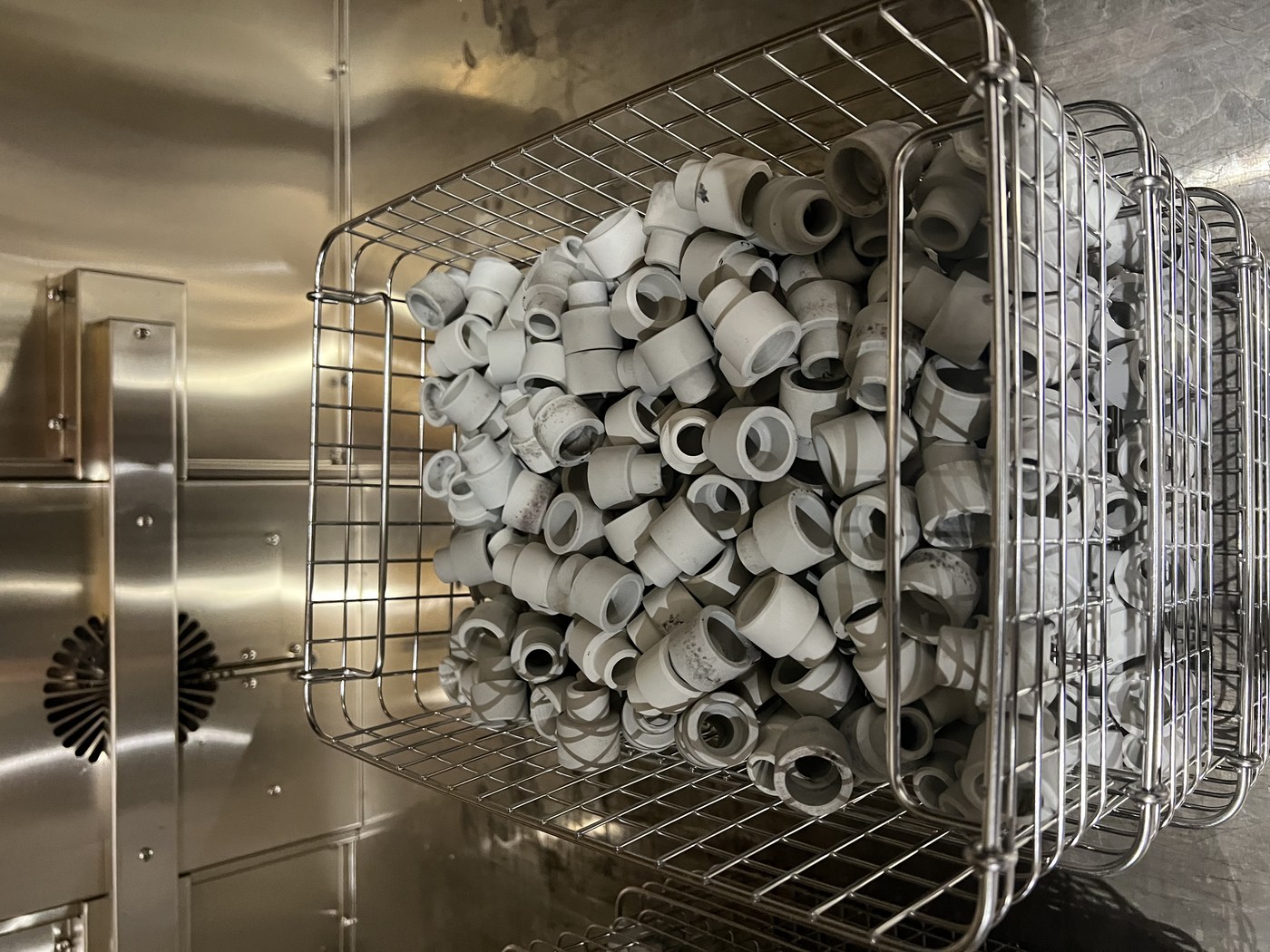
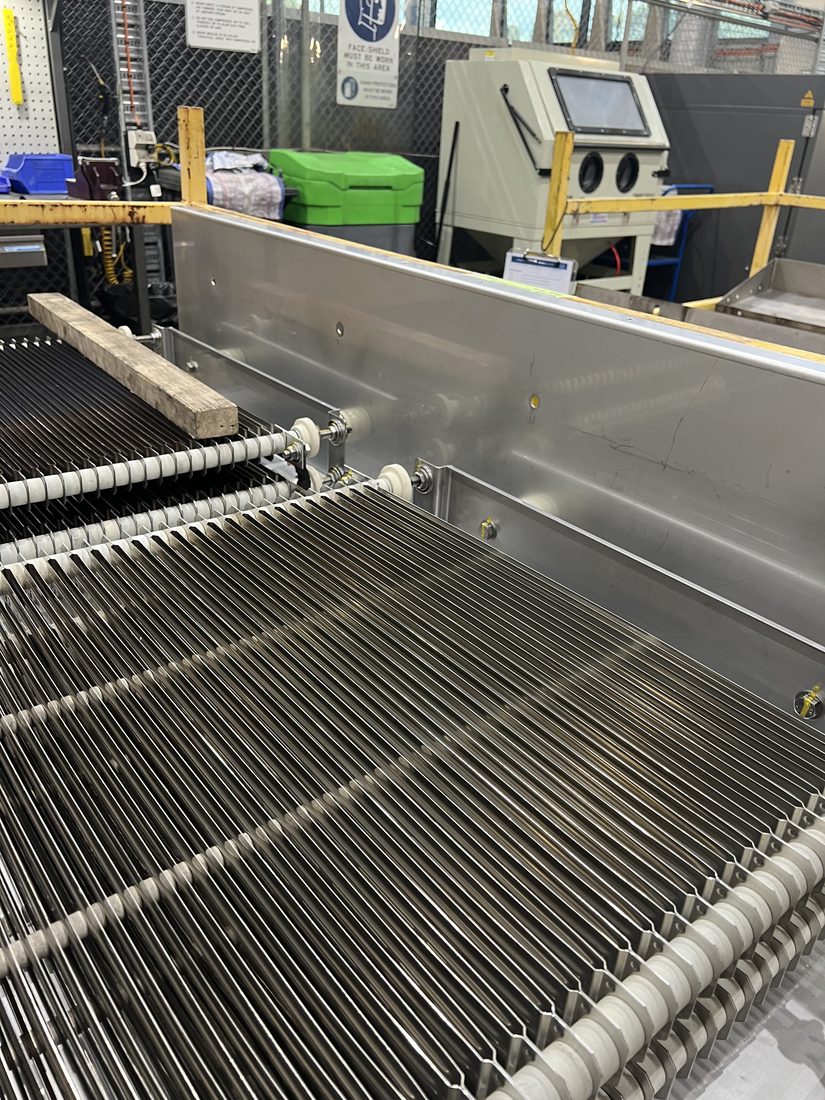
Dynamic braking dumps energy into resistor grids as heat, and the whole assembly lives under the vehicle collecting brake dust, carbon and road grime. The same hardware goes by different names across fleets — brake resistor grids, dynamic braking resistors, resistor banks, brake grids, rheostatic braking equipment — and it all fouls the same way. Contamination bridging the ceramic insulators is not a cosmetic problem — it is a heat dissipation and insulation resistance problem, and it is measured, not eyeballed.
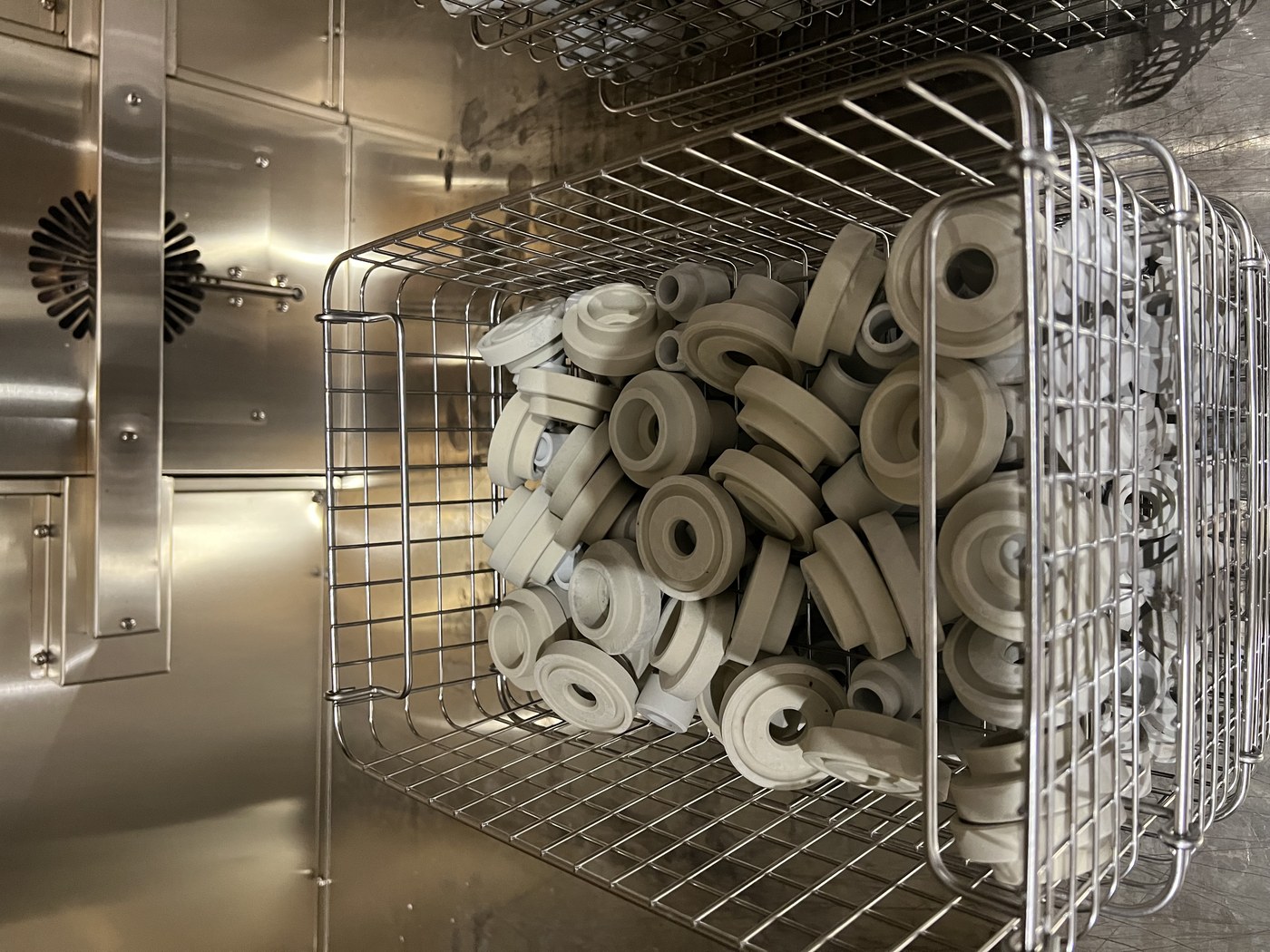
The parts are small, awkward and arrive in quantity. Basket them, run a stored recipe, take them out clean — no bench, no brushes, no operator deciding when a part is done.
Insulator bushes basketed. Loose, high-volume parts that no one should be handling individually.The assembled grid — the insulators sit between elements, exactly where contamination is hardest to reach.Insulator rings in the basket, in the tank. One basket, one recipe — the whole batch treated the same way.A full grid assembly in the machine. The part goes in whole — nothing is dismantled to reach the insulators.Loaded and ready. From here it is a recipe and a timer.
Click any image to enlarge. Parts photographed on a real cleaning job; components shown are standard rail hardware.
The endpoint is a defined, repeatable process condition — cycle time, chemistry, concentration, frequency and temperature are recorded parameters, not operator judgement.
Trial Evidence
Fastener recovery, before and after
Bolts, studs and drive components pulled at overhaul, photographed as received and after a documented cycle. Drag the handle across to compare.
Corroded flange bolts. Thread engagement is the whole question on a recovered fastener. Corrosion product out of the roots, threads gauging again.
Paint-fouled flange bolts. Overspray and thread-locker off the shank without touching the thread form — the difference between a reusable bolt and scrap.
Components We Clean
Real parts, real materials
Traction & power
Traction-motor components, cabinet hardware and cooling circuits — carbon and dust out of electrical assemblies.
Motor framesCabinetsCoolers
Brakes & bogies
Calipers, cylinders, valves, bearings and hubs on overhaul rotation — clean to gauge and inspect.
CalipersValvesBearings
Engine & driveline
Diesel engine and transmission components for motive-power overhaul.
BlocksHeadsTurbos
Why Ultrasonics — And Why These Machines
Cavitation cleans geometry it cannot see
Bubble collapse at the liquid–metal boundary lifts contamination from passages, galleries and cavities without anything touching the surface. Nothing abrades, nothing embeds, no metal is removed.
GeneratorResonance held all shift
The VarioSonic G5 tracks the transducer array as temperature and load shift — conversion efficiency up to 95%.
Sound fieldSweep modulation
Eliminates standing-wave hot and cold zones across a loaded basket.
Process controlLogged, recipe-driven cycles
Stored recipes and logged cycles — audit evidence produced as a by-product of running.
Bath conditionFiltration & oil separation
Multi-stage filtration and weir oil capture hold results steady as the bath loads.
SupportOver-the-air diagnostics
Most faults identified — many resolved — without a site visit.
ConstructionBuilt to work hard
Heavy 316 stainless tanks, tested before despatch, every wearing part replaceable.
Equipment Fit
The machine follows the process
From manually loaded single-tank units to automated lines — and engineered systems where the catalogue ends.
EvoSonic
Heavy platforms sized to bogie and traction components.
Brake dust and carbon respond to heavy-duty alkaline formulations; aluminium and plated components take inhibited chemistry — matched per component family in the trial.
Applications Matrix
Component coverage at a glance
Component category
Specific parts / assemblies
Compatible materials
Traction
Motor components, cabinet hardware
Steels, copper, insulation systems
Brakes
Calipers, cylinders, valves
Cast iron, steels, elastomer seals
Bogies
Bearings, hubs, rigging
Steels
Engine
Blocks, heads, coolers
Cast iron, aluminium
Pneumatics
Air brake manifolds, valves
Aluminium, brass
Electrical
Connectors, busbars
Copper, plated finishes
Prove it on your parts
Where an application needs validation, we clean sample components in our laboratory, document the result, and specify the machine around the verified process. If ultrasonics is the wrong answer, the trial shows that too, and we will tell you.