Home / UltraWash / UltraWash 300

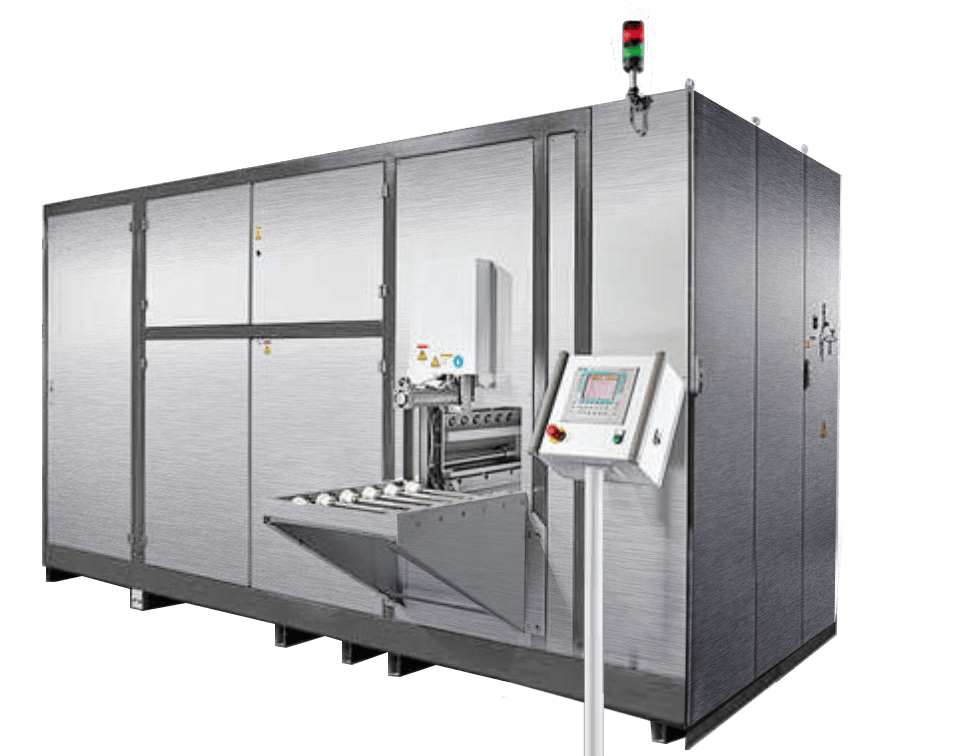
Misonics UltraWash 300 Multi-Stage Cleaning System

The heavy chamber · single chamber + 3 Collection Tanks · semi-automated · AS3100

355 Lchamber
3,000 W3 × RS-25 resonators
620×380×380basket mm
96 kWconnected
S7-1500TP900
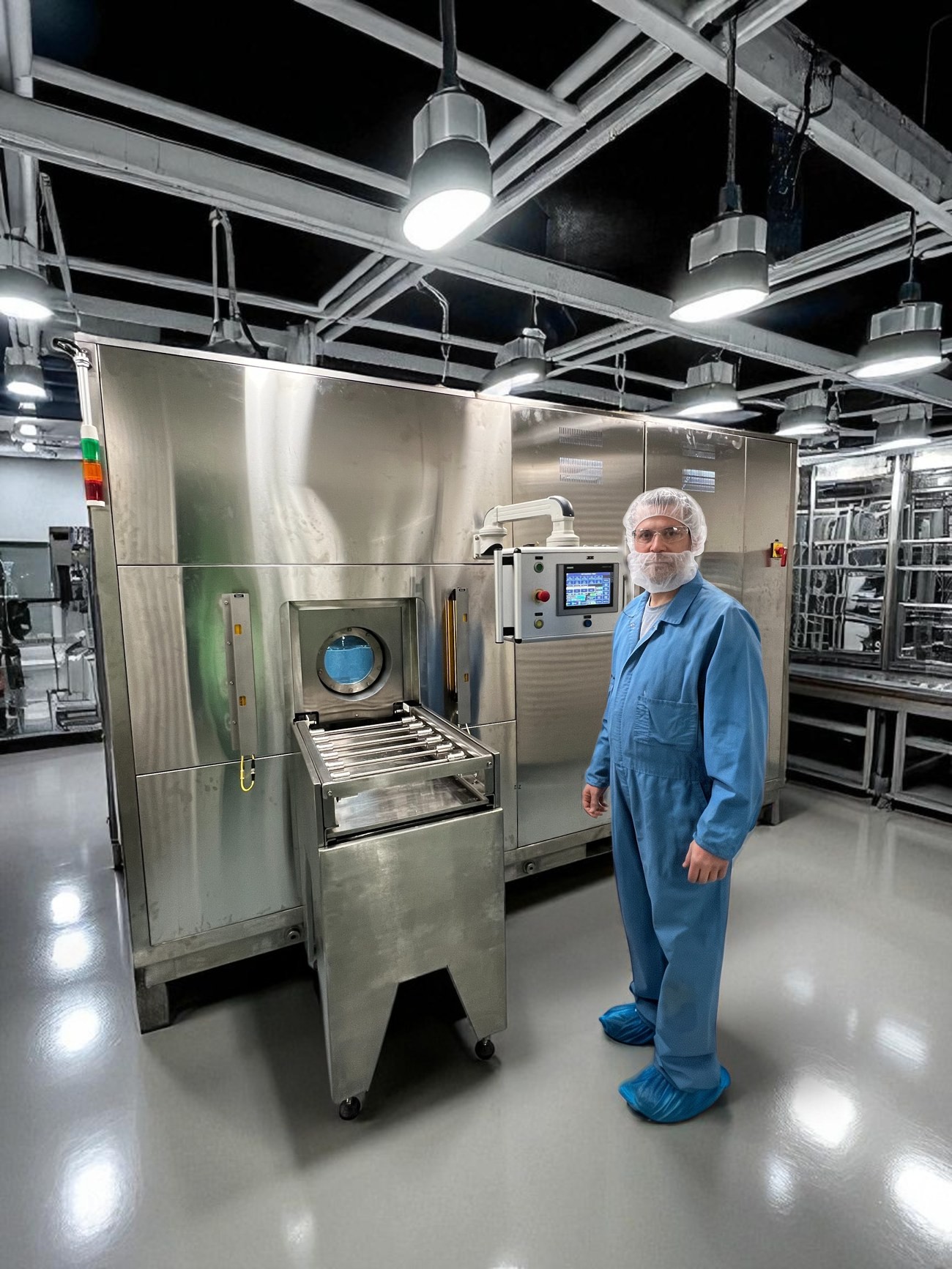
Installed UltraWash — pharmaceutical plant (naming permission pending)

Install photography, engineering renders and July 2026 trial results — cleaned for a leading Australian vitamin & supplement manufacturer. Client naming pending permission.

The heavy chamber
Engineered to site — POA

Quoted as a working system: chamber, Collection Tanks, chemistry, recipes, commissioning and operator training — one number, ex GST.

Every UltraWash 300 ships with
  • ✓ Six-stage sealed chamber — spray · IFW · rotation · sonics · forced hot-air · vacuum
  • ✓ Flush2Drain residue purge — protects the rinse stages
  • ✓ RO final-rinse capability for critically clean work
  • ✓ 3 heated, filtered Collection Tanks + auto-fill · bunded with leak detection
  • ✓ Variable basket rotation (3–4 rpm) with 60° rocking mode
  • ✓ Staged filtration + oil coalescer/skimmer
  • ✓ Siemens S7 PLC/HMI · recipe library · 3-level password access
  • ✓ AS3100 · 12-month warranty · commissioning
415 V 3-ph · 40 kW heating · 96 kW connected · 140 A

Watch it work

Inside the chamber, on a real trial

Nine clips from one customer trial, July 2026 — the machine from the outside, the door opening at the conveyor, the empty chamber, the basket turning behind the sight glass, the seal closing, 25 kHz cavitation working the parts under the surface, the wash at full noise, the rinse jets that follow it, and the recipe library on the HMI. This is the machine doing exactly what the sequence diagram below promises.

The parts and the before/after results are in the gallery above — production residue, stripped to base metal in a programmed cycle.

Clips are silent and load only when you press play. All filmed on the same customer trial.

Why this machine

The heavy chamber

The 300 scales the sealed-chamber concept to heavy work: a 355-litre chamber with a 620 × 380 × 380 mm basket envelope, three RS-25 tube resonators, 40 kW of heating and a 96 kW connected load. Same six-stage discipline — spray, IFW, rotation, sonics, dry, vacuum — at a size that takes gearbox and aerospace-class assemblies.

Filtration runs cartridge-plus-bag with coalescer oil removal and auto-fill; control is the S7-1500 on a TP900 panel. When the parts are heavy, the cleanliness spec is written down, and the process must finish dry — this is the chamber.

The whole diagram, one chamber

Every stage of the Misonics process — behind one door

Misonics cleaning process stages

This is the range the diagram was drawn for: spray, injection flood, rotation (the oscillation stage, motorised), ultrasonics, rinse, hot air and vacuum drying — sequenced by recipe inside one sealed chamber. Parts leave finished, not damp. The lock case study is this machine at work.

The process library

One chamber. Eight recipe slots. This is what customisation means.

Every recipe below runs in this machine — same chamber, different sequence. Change the part family and the operator changes the recipe, not the machine. This is the UltraWash argument in one section: the processes are the product.

Critical degrease + RO dry

≈ 20 min
Pharmaceutical · nutraceutical · medical
Spray washUS wash 72 °CFlush2DrainGross rinseRO rinseForced hot-air dryVacuum

The delivered pharmaceutical cycle: product and machine oils off, Flush2Drain purges the sump so residual oils never touch the rinse stages, RO water finishes spot-free, vacuum empties the blind ports. Verifiable, logged, repeatable.

Heavy degrease

≈ 12 min
Workshop · MRO · production parts
Spray washIFW + rotationUS washGross rinseForced hot-air dry

The daily workhorse recipe: turbulation and rotation carry the bulk load, ultrasonics finishes the geometry, forced hot-air drying finishes for handling. No RO stage — throughput first.

Congealed & crystallised soils

≈ 25 min
Gelatin · slurries · food process residues
Warm soak + turbulationUS washFlush2DrainGross rinseRO rinseVacuum

For soils that must dissolve before they can leave — congealed gelatin, crystallised slurries: a heated turbulation soak softens, cavitation strips, Flush2Drain takes the residue to drain before any rinse water is spent.

Pre-sterilisation instrument cycle

≈ 15 min
Medical · dental · veterinary reprocessing
Spray washUS wash low powerGross rinseRO rinseForced hot-air dryVacuum

Instrument-grade chemistry at controlled power, RO finish, and drying complete before packaging — the cleaning step of the reprocessing workflow, parameterised and logged per basket.

Swarf & particulate flush

≈ 8 min
Machined components · pre-assembly
IFW + rotationUS burstFlush2DrainGross rinseForced hot-air dry

Rotation keeps drillings changing aspect while injection flood evacuates chips; the ultrasonic burst clears what clings. Short, violent, effective.

Passivation-prep clean

≈ 14 min
Stainless fabrication · aerospace · food equipment
Spray washUS washGross rinseRO rinseVacuum

ASTM A380 discipline: passivation only works on a genuinely clean surface. This recipe delivers it, RO-rinsed, ready for the citric line.

End-of-day maintenance cycle

≈ 6 min
The machine cleans itself
Flush2DrainCollection Tank filter passSump rinse

The recipe most machines never have: sump flushed to drain, Collection Tanks turned over through filtration, Monday starts clean. Initiated from the HMI like any other program.

Seven of the sequences we have delivered or specified — every stage time, temperature, rotation speed, spray pressure and ultrasonic power is an editable recipe value on the HMI.

A delivered cycle, minute by minute

The pharmaceutical 20-minute cycle — from a real proposal

StageTimeWhat happens
Load15 sBasket rolls in from the conveyor — single operator
Spray wash · 72 °C60 sHigh-pressure spray as the basket rotates and the tank floods
Ultrasonic wash · 72 °C420 sRod-resonator cavitation with 360° basket rotation; drains to Collection Tank 1
Rinse2Drain spray · 70 °C30 sFlush2Drain purges sump and residues straight to drain — no cross-contamination into the rinses
Gross rinse · 70 °C120 sHot flooding rinse with ultrasonics and rotation
RO rinse · 70 °C45 sReverse-osmosis water finish — spot-free, residue-free
Forced hot-air dry · 120 °CRegenerative blower drives forced hot air through the rotating basket — bulk moisture gone
Vacuum dryChamber vacuum evacuates blind ports and galleries — assembly-dry

Mixed aluminium, stainless, brass, carbon steel and PTFE parts to 60 kg; soils from machine oils to congealed gelatin and crystallised slurries — 24-hour, three-shift duty. Client naming pending permission.

Built for critically clean

Where "clean" is a specification, not an opinion

Machine attributes

The attribute set, from the Misonics library

Spray & IFW washSpray & IFW wash
Basket rotationBasket rotation
25 kHz · auto-tuned · >95% eff.25 kHz · auto-tuned · >95% eff.
Collection Tank rinsingCollection Tank rinsing
Hot-air dryingHot-air drying
Vacuum dryingVacuum drying
Weir / coalescer oil removalWeir / coalescer oil removal
Auto-fill & reticulationAuto-fill & reticulation
Siemens S7 recipes ×5Siemens S7 recipes ×5
Level sensing · PT-100Level sensing · PT-100
Interlocked sliding doorInterlocked sliding door
Remote diagnosticsRemote diagnostics

What it does

Why it matters

Drawn from the UltraWash proposal engineering and delivered installations.

Chemistry

Approved chemistry

Chemistry rule: these tanks are approved for the declared chemistry at the declared concentration and temperature. Acid chemistry needs an acid-duty specification. Hydrofluoric acid, hydrochloric acid and pickling solutions are not permitted in the tank; acid processes are only possible by indirect cleaning in a chemically inert secondary container, and only with written Misonics approval.
Specification

Full specification — UltraWash 300

CAPACITY & DIMENSIONS
Tank Volume Capacity355 L
Basket – Length620 mm
Basket – Width380 mm
Basket – Wall Height380 mm
Overall Unit – Length3600 mm
Overall Unit – Width2940 mm
Overall Unit – Height2500 mm
Tank MaterialSS304 (SS316L optional)
ULTRASONIC SYSTEM
Ultrasonic Power3000 W
Ultrasonic Power Density8.5 W/L
Conversion Efficiency>95%
Ultrasonic Frequency25 kHz
Multi-FrequencyNo
Number of Generators1
Number of Resonators3
Generator SeriesACG (25kHz)
Resonator TypeTube Resonator RS-25 (572mm ×3)
Resonator MaterialSS316
Power Adjustable10–100%
Auto-TuningYes
HEATING SYSTEM
Heating Power40 kW
Heating Element TypeImmersion (4 kW elements)
Heating Voltage415V AC 3-Ph
Temperature Range65 – 80 °C
Safety ThermostatYes
Insulated TankYes – Nitrile Foam 9mm
FILTRATION & OIL MANAGEMENT
Displacement WeirNo
Oil Capture & RemovalYes
Auto-FillYes
Filter SizeCartridge 10µm + Bag 50µm
Filter Stage 250 µm
Main Tank Drain40mm Manual Ball Valve
Oil DrainYes – Coalescer
CONTROL & SAFETY
Control Panel TypeSiemens HMI/PLC (TP900, S7-1500)
Programmable CyclesYes
Stored Recipes5
Temperature SensorPT-100
Lid TypeAutomated (Pneumatic sliding)
Remote AccessNo
ELECTRICAL & POWER
Power Supply415V / 50Hz / 3-Phase
Wiring Requirements3P+E+N
Power Cable Provided5-core flexible cable
POWER DRAW
Total kW Load96
Max Power Consumption96000 W
Total Amps Draw140
COMPLIANCE & WARRANTY
Machine Warranty12 months
Printed ManualYes
Online ManualYes
Electrical CertificationAS3100

Items marked TBC are being confirmed; full engineering pack (GA, technical sheet, process diagram) available on request.

Questions

Before you specify

What exactly happens inside the chamber?
One sealed chamber runs the whole sequence: spray wash and injection flood wash knock down and flush the soil, the basket rotates through swept 25 kHz ultrasonics for the deep clean, Collection Tank rinses follow, then forced hot-air and vacuum drying finish the parts — bone dry, inside the same door they went in through. Parts never see workshop air mid-process.
Why three Collection Tanks?
Wash chemistry and rinse water live in their own heated, filtered Collection Tanks and are pumped to the chamber per recipe stage — so chemistry is not diluted by rinsing, rinse water stays clean, and changeovers are a recipe selection, not a bath change.
What does vacuum drying add over hot air?
Blind holes and galleries hold water against airflow alone. Pulling chamber vacuum drops the boiling point and evacuates moisture from exactly the features that matter — the difference between dry-looking and assembly-dry.
How clean does the bath stay?
Each Collection Tank runs staged filtration — cartridge plus bag, down to 5–10 µm final — with coalescer or belt-skimmer oil removal and auto-fill make-up. The bath-defence playbook, plumbed in.
What controls it?
Siemens S7 PLC with colour HMI: five stored recipes covering every stage time, temperature and sequence, PT-100 sensing, interlocked pneumatic sliding door, and remote diagnostics on the 70 and 150.
Is this the machine from the lock case study?
Yes — the critically-clean brass lock process (spray + IFW degrease, water-spray rinse, hot air + vacuum dry) is the UltraWash sequence. Read it: the case study is the demonstration.
What if the standard chambers don't fit our line?
UltraWash is also our custom-build platform — front-loading always: conveyor infeed, cleanroom-adjacent builds and pharmaceutical finishes have all been delivered. The custom option starts from your parts and your takt time.
Power and services?
415 V three-phase throughout; heating 20–40 kW by model, and the 300 draws up to 96 kW connected. Compressed air for the door and process valves; water and drain at the machine. Site-services check on every quote.
Related

The rest of the range