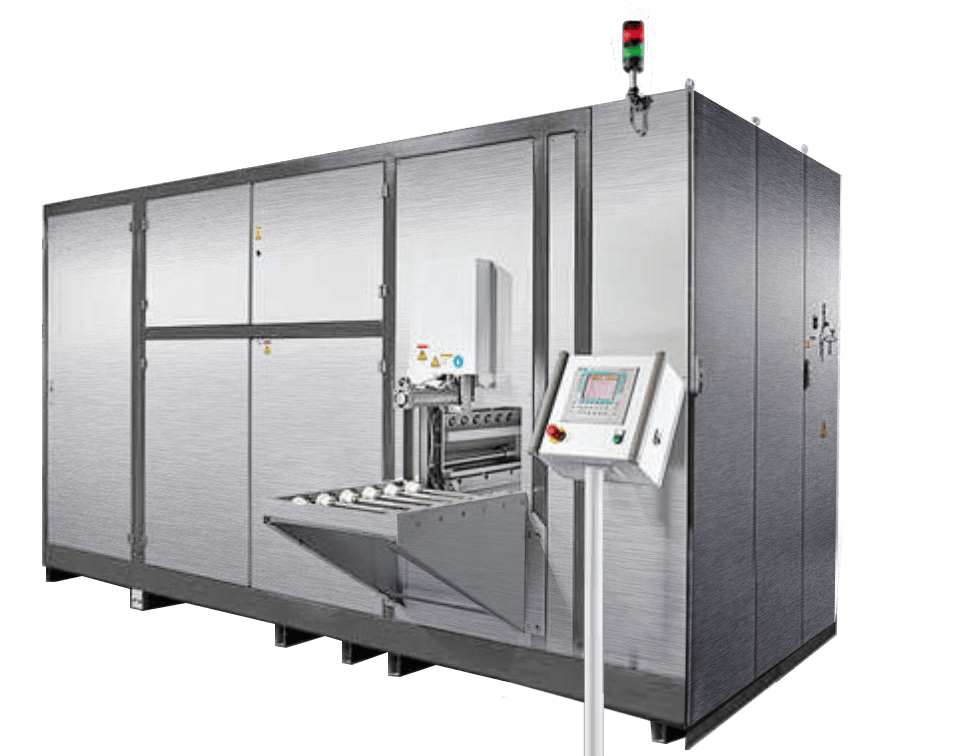
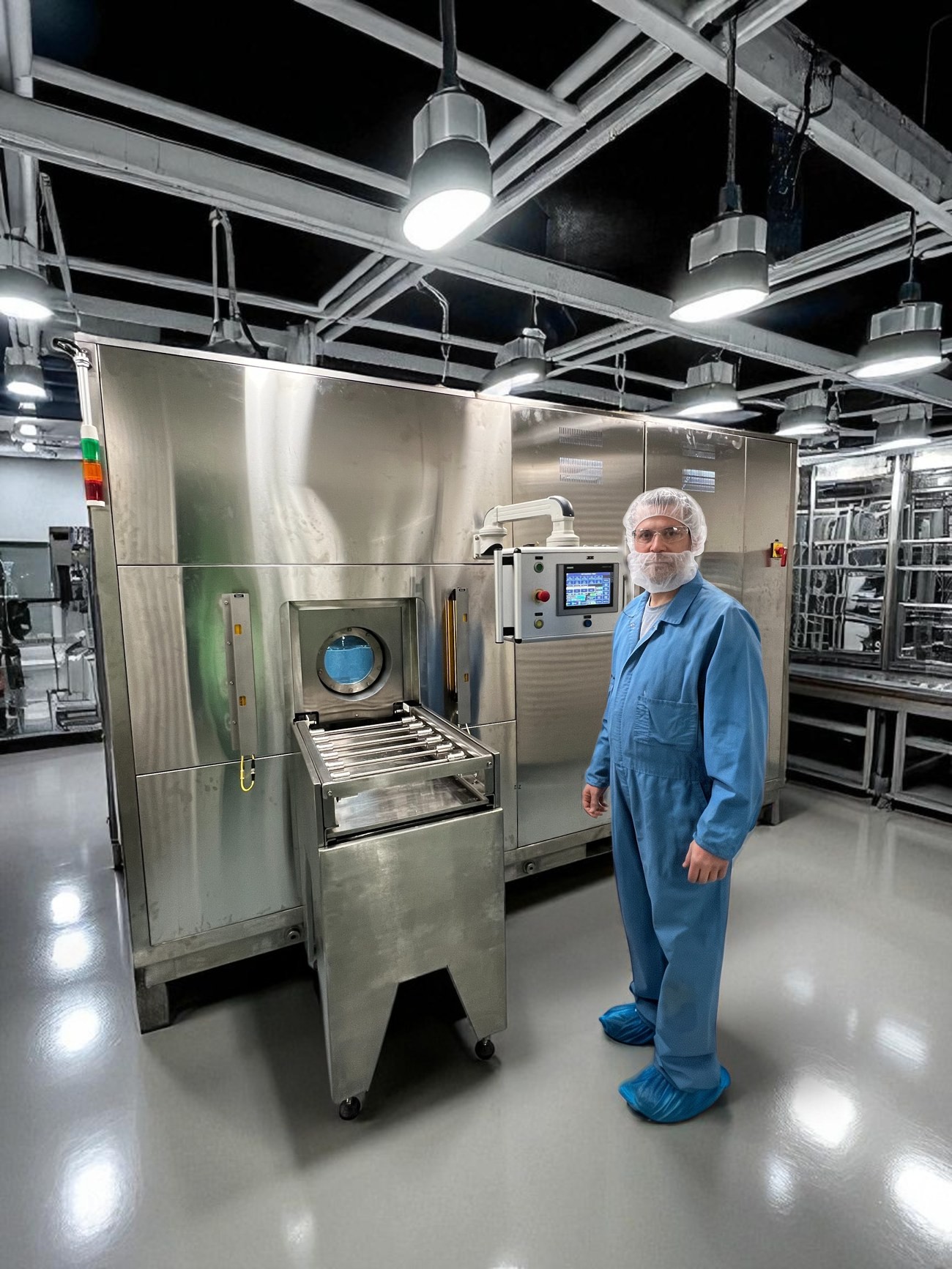
UltraWash is the hero of our technical builds: a sealed chamber that runs spray, injection flood, rotating ultrasonics, rinse, forced hot-air and vacuum drying as one programmed sequence. Where the cleanliness spec is written down — pharma, aerospace, precision manufacture — this is the machine that meets it, cycle after logged cycle. And because every stage is a recipe value, one chamber holds a library of completely different processes — degrease, critical rinse, instrument reprocessing, particulate flush — swapped from the touchscreen. In process terms it is a rotary basket washer — the basket rotates through every stage — the machine class low-foam rotary chemistries are blended for.
Quoted to site, ex GST.

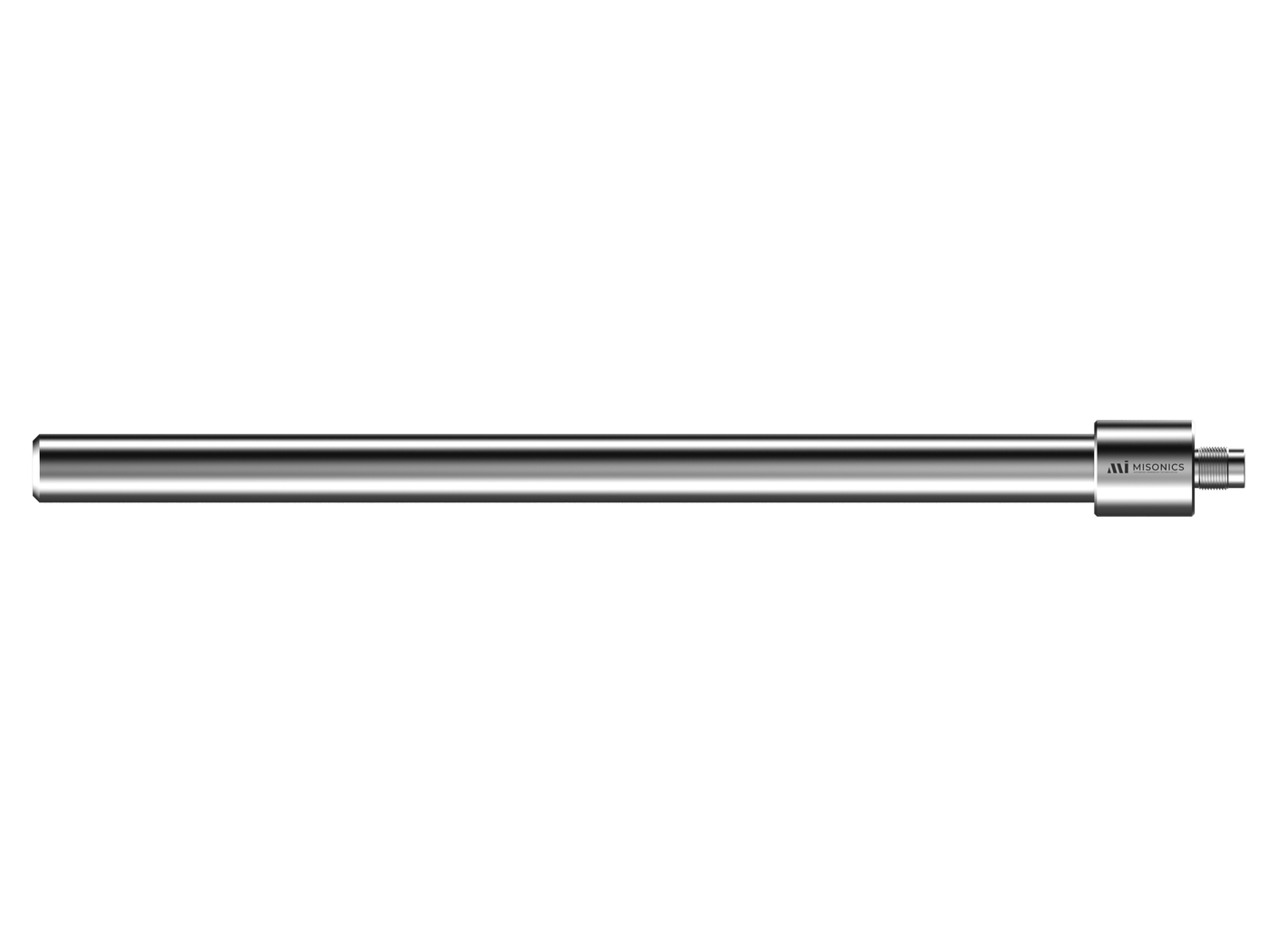
| Model | Chamber | Basket L×W×H | Ultrasonics | Heating | Footprint | Control |
|---|---|---|---|---|---|---|
| UltraWash 70 | 70 L | 470 × 320 × 160 mm | 1,500 W · 1 resonator | 20 kW | 2.3 × 2.5 m | S7-1200 · 9" HMI |
| UltraWash 150 | 150 L | 610 × 320 × 200 mm · 100 kg | 3,000 W · 2 resonators | 36 kW | 4.2 × 1.8 m | S7-1500 · TP700 |
| UltraWash 300 | 355 L | 620 × 380 × 380 mm | 3,000 W · 3 resonators | 40 kW | 3.6 × 2.9 m | S7-1500 · TP900 |


Load, close, run. Recipe selected at the panel, door sealed, then spray wash at 72 °C, ultrasonics through the bath, RO rinse and dry — a full multi-stage sequence in one chamber, with the operator doing nothing after pressing start.
Every stage you see here is a step in a stored recipe, not an operator decision.
Filmed on a customer trial. Silent; 64 seconds; loads when you press play.
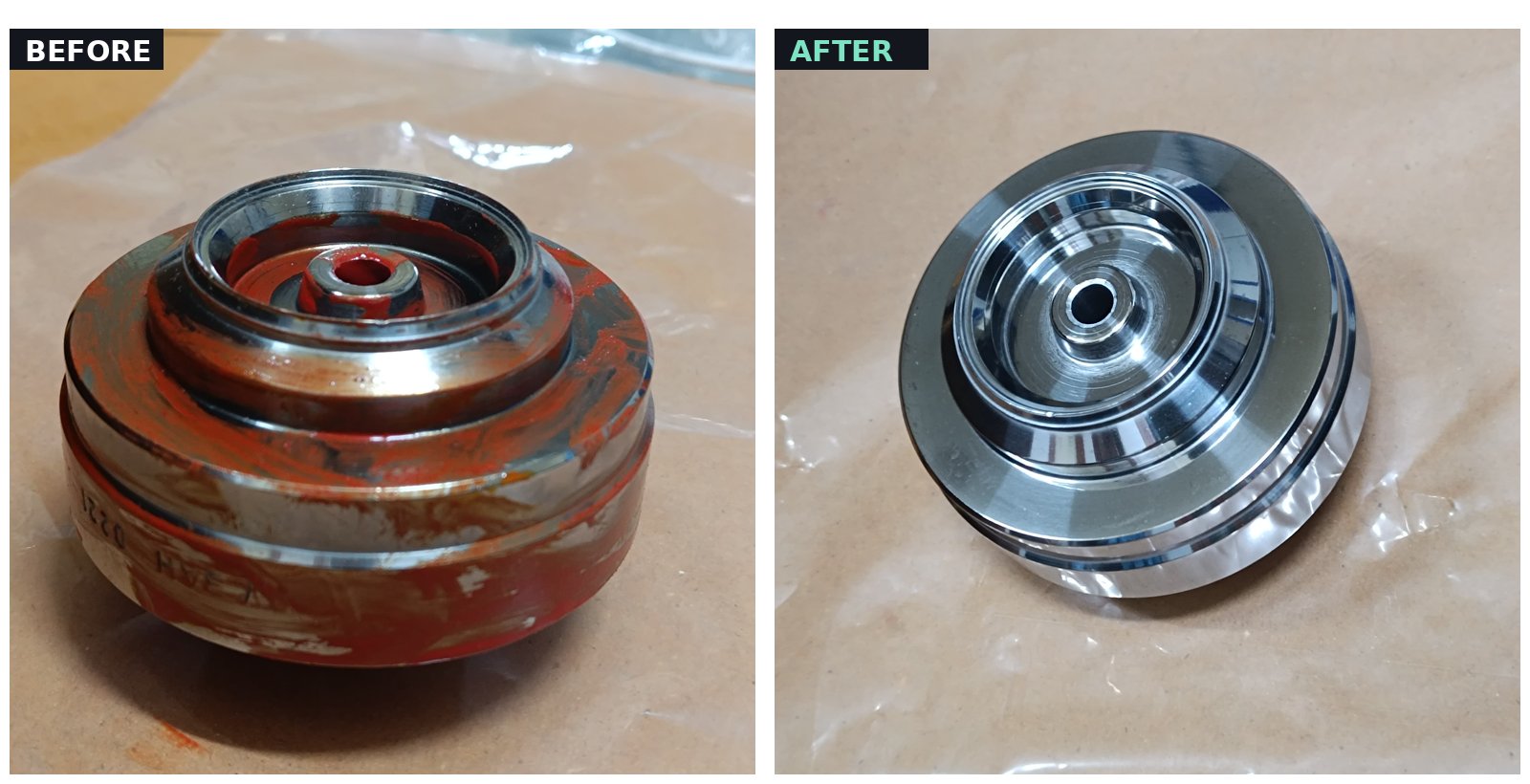
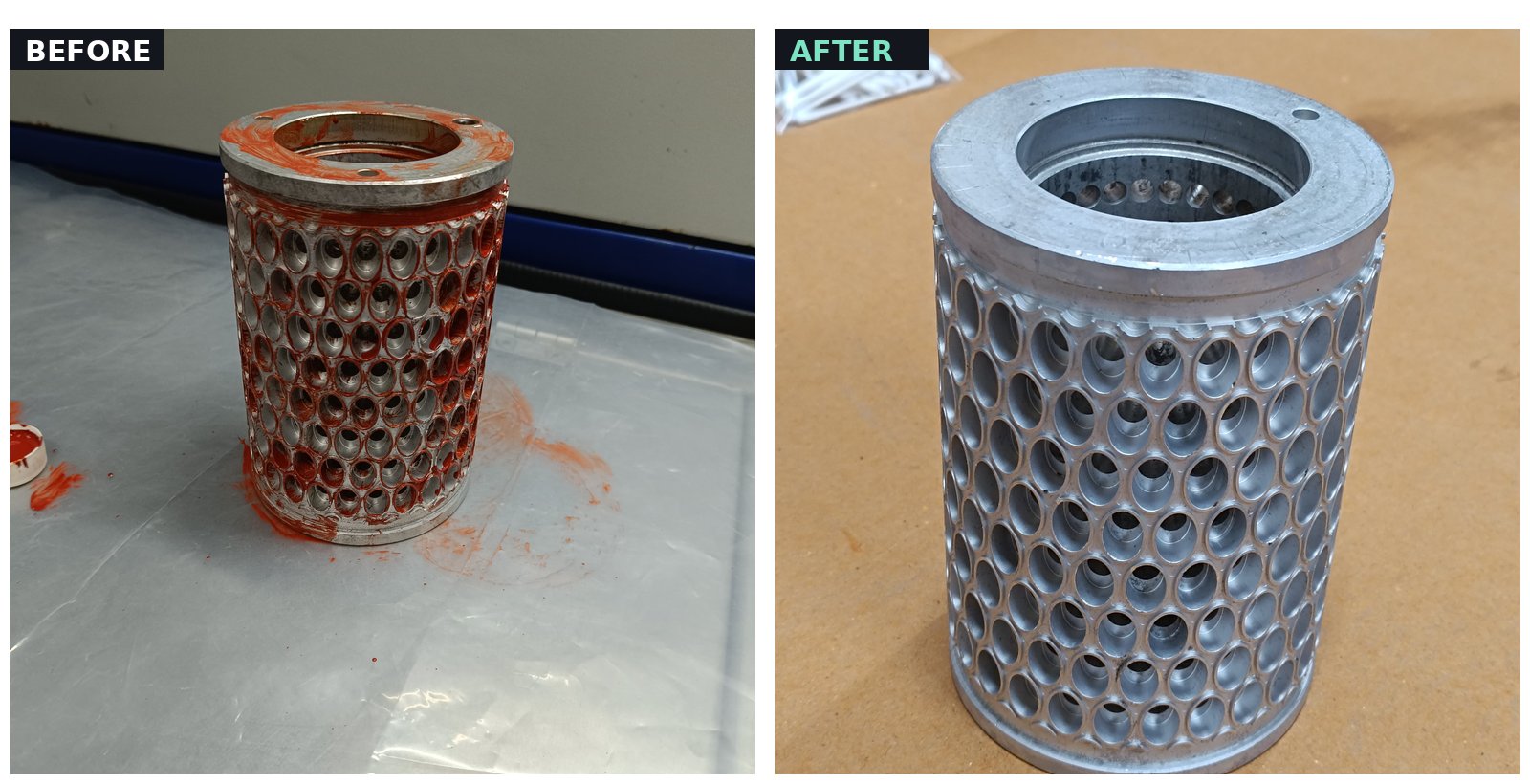
Production parts from a leading Australian vitamin & supplement manufacturer — rotors, flanges, strainers and press blocks carrying baked-on product residue — cleaned to base metal in a programmed UltraWash cycle. The before/after photography and five in-chamber clips are on the UltraWash 300 page.


This is the exact sequence from a delivered pharmaceutical proposal — mixed aluminium, stainless, brass and PTFE parts to 60 kg, soils from machine oil to congealed gelatin, three-shift duty. Every time, temperature, pressure and rotation below is a recipe value the next customer sets differently.
Basket rolls in from the conveyor — one operator, no lifting. Door seals behind it.

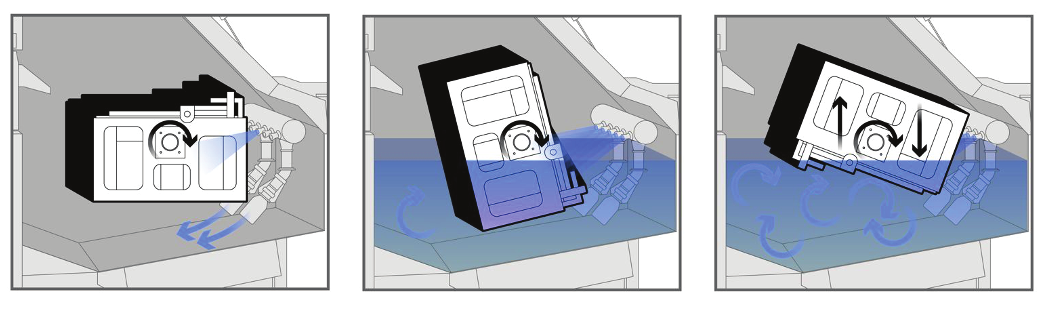
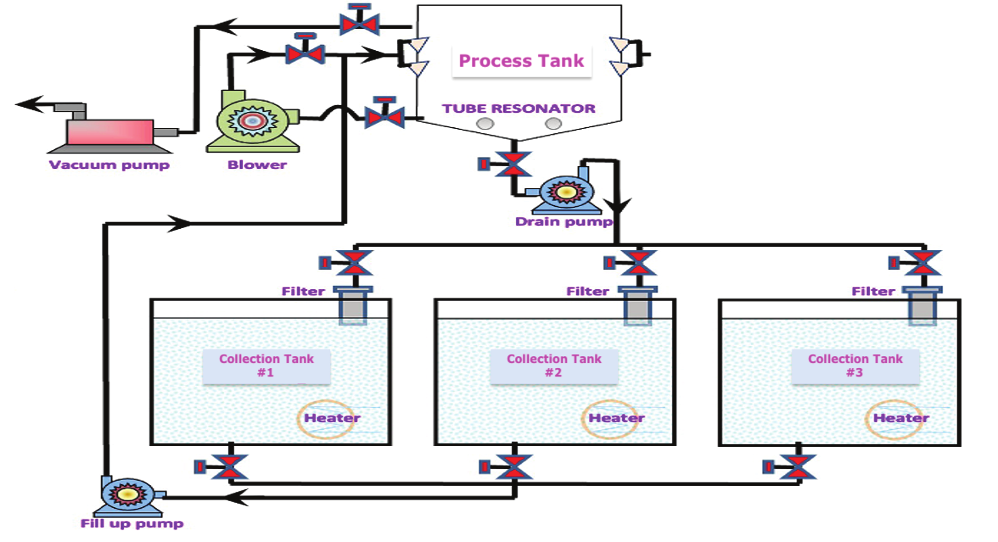
Spray jets attack as the basket rotates and the tank floods from Collection Tank 1 — turbulence starts working before the parts are even submerged.

Rod resonators drive swept 25 kHz through the flooded chamber while the basket turns 360° — every face, every drilling, every pass. Drains back to Collection Tank 1.
The stage most machines are missing: spray from Collection Tank 2 washes sump residues straight to drain — the degrease chemistry and its soils never touch the rinse stages.
Hot flooding rinse with ultrasonics and rotation — chemistry off, everywhere the chemistry went.
Reverse-osmosis water finish — no minerals, no spotting, no residue. The critically-clean signature.
A regenerative blower forces 120 °C air through the rotating basket — bulk moisture gone before the vacuum stage finishes the blind holes.
Chamber vacuum drops the boiling point and empties blind ports and galleries. Parts come out assembly-dry, not dry-looking.
The sealed chamber is half the story. The other half is that every stage — spray pressure, flood, rotation speed, rocking arc, ultrasonic power, rinse source, hot-air temperature, vacuum — is a recipe value. One machine holds a library of completely different processes and swaps between them from the HMI. Below: seven sequences we have delivered or specified.
The delivered pharmaceutical cycle: product and machine oils off, Flush2Drain purges the sump so residual oils never touch the rinse stages, RO water finishes spot-free, vacuum empties the blind ports. Verifiable, logged, repeatable.
The daily workhorse recipe: turbulation and rotation carry the bulk load, ultrasonics finishes the geometry, forced hot-air drying finishes for handling. No RO stage — throughput first.
For soils that must dissolve before they can leave — congealed gelatin, crystallised slurries: a heated turbulation soak softens, cavitation strips, Flush2Drain takes the residue to drain before any rinse water is spent.
Instrument-grade chemistry at controlled power, RO finish, and drying complete before packaging — the cleaning step of the reprocessing workflow, parameterised and logged per basket.
Rotation keeps drillings changing aspect while injection flood evacuates chips; the ultrasonic burst clears what clings. Short, violent, effective.
ASTM A380 discipline: passivation only works on a genuinely clean surface. This recipe delivers it, RO-rinsed, ready for the citric line.
The recipe most machines never have: sump flushed to drain, Collection Tanks turned over through filtration, Monday starts clean. Initiated from the HMI like any other program.
Seven of the sequences we have delivered or specified — every stage time, temperature, rotation speed, spray pressure and ultrasonic power is an editable recipe value on the HMI.
| Stage | Time | What happens |
|---|---|---|
| Load | 15 s | Basket rolls in from the conveyor — single operator |
| Spray wash · 72 °C | 60 s | High-pressure spray as the basket rotates and the tank floods |
| Ultrasonic wash · 72 °C | 420 s | Rod-resonator cavitation with 360° basket rotation; drains to Collection Tank 1 |
| Rinse2Drain spray · 70 °C | 30 s | Flush2Drain purges sump and residues straight to drain — no cross-contamination into the rinses |
| Gross rinse · 70 °C | 120 s | Hot flooding rinse with ultrasonics and rotation |
| RO rinse · 70 °C | 45 s | Reverse-osmosis water finish — spot-free, residue-free |
| Forced hot-air dry · 120 °C | — | Regenerative blower drives forced hot air through the rotating basket — bulk moisture gone |
| Vacuum dry | — | Chamber vacuum evacuates blind ports and galleries — assembly-dry |
Mixed aluminium, stainless, brass, carbon steel and PTFE parts to 60 kg; soils from machine oils to congealed gelatin and crystallised slurries — 24-hour, three-shift duty. Client naming pending permission.
Product-contact parts — pumps, dies, wedges — cleaned of product and machine oils to RO-rinsed, vacuum-dried standard, logged per basket. Delivered and running in an Australian plant.
Life sciences sector →The parameterised cleaning step reprocessing audits want — instrument chemistry, controlled power, RO finish, dry before packaging.
The reprocessing guide →Blind bores, galleries and lattices cleaned and verified before NDT, coating or assembly — with the sealed chamber closing the between-stage contamination window.
Aerospace sector →Spray, injection flood wash, basket rotation, swept 25 kHz ultrasonics, forced hot-air and vacuum drying — the whole process diagram behind one interlocked door. Parts never touch workshop air mid-process.
Wash and rinse chemistry held separately, pumped per recipe stage — no cross-dilution, no bath changes between part families.
Chamber vacuum pulls moisture out of blind holes and galleries that hot air alone never empties.
The oscillation stage, motorised — every face keeps changing aspect to spray, flood and cavitation.
Tube-resonator arrays with generator auto-tuning — delivered power held as load and temperature move.
Cartridge plus bag stages per Collection Tank with coalescer or belt-skimmer oil removal and auto-fill make-up.
TP-series HMI, PT-100 sensing, interlocked pneumatic sliding door, remote diagnostics on 70/150.
SS304 chambers (SS316L optional), insulated Collection Tanks — heat in the process, not the room.
The pharmaceutical installation on this page and the critically-clean lock process in our case study are this platform, delivered.
Front-load chambers engineered to your parts and line — conveyor infeed, cleanroom finishes. (Top-loading? That is the UltraKleen Pro range.)
UltraWash systems are quoted to site because that is what makes the number real: chamber and Collection Tank configuration, chemistry, services check, commissioning and first recipes — one figure, ex GST, with the GA and cycle table attached. Tell us the machine and the parts; engineering responds same business day.