A line-marking rig is a paint machine that lives outdoors. Tips, guards, seats and gun filters block solid the moment a shift finishes late, and the standing answer has always been to bin them and open a new box.
Councils, state road authorities and contract line-markers all carry the same consumable bill. Cavitation takes cured paint out of a seat bore without anything touching the orifice — so the tip goes back on the gun instead of into the skip.
Waterborne and solvent-borne film set hard through tips, guards, seats and gun filters.
Set in applicator shoes, dies and screed hardware the moment the machine stops hot.
Packed into dispensers, hoppers and delivery nozzles, where it quietly changes the spread pattern.
Off crack-sealing and spray-seal hardware without a drum of solvent and a wire brush.
On roadside cabinets, sensor mounts and mounting hardware coming back for refurbishment.
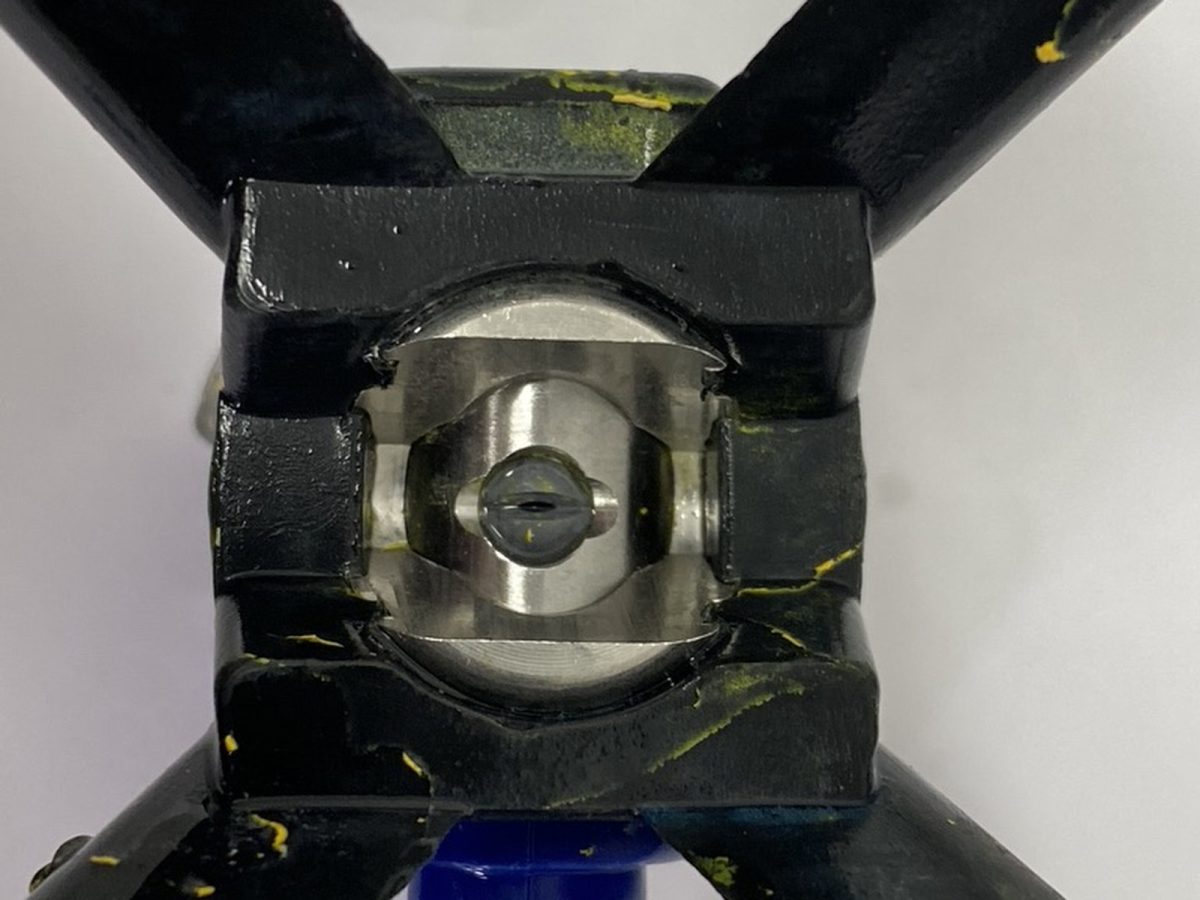
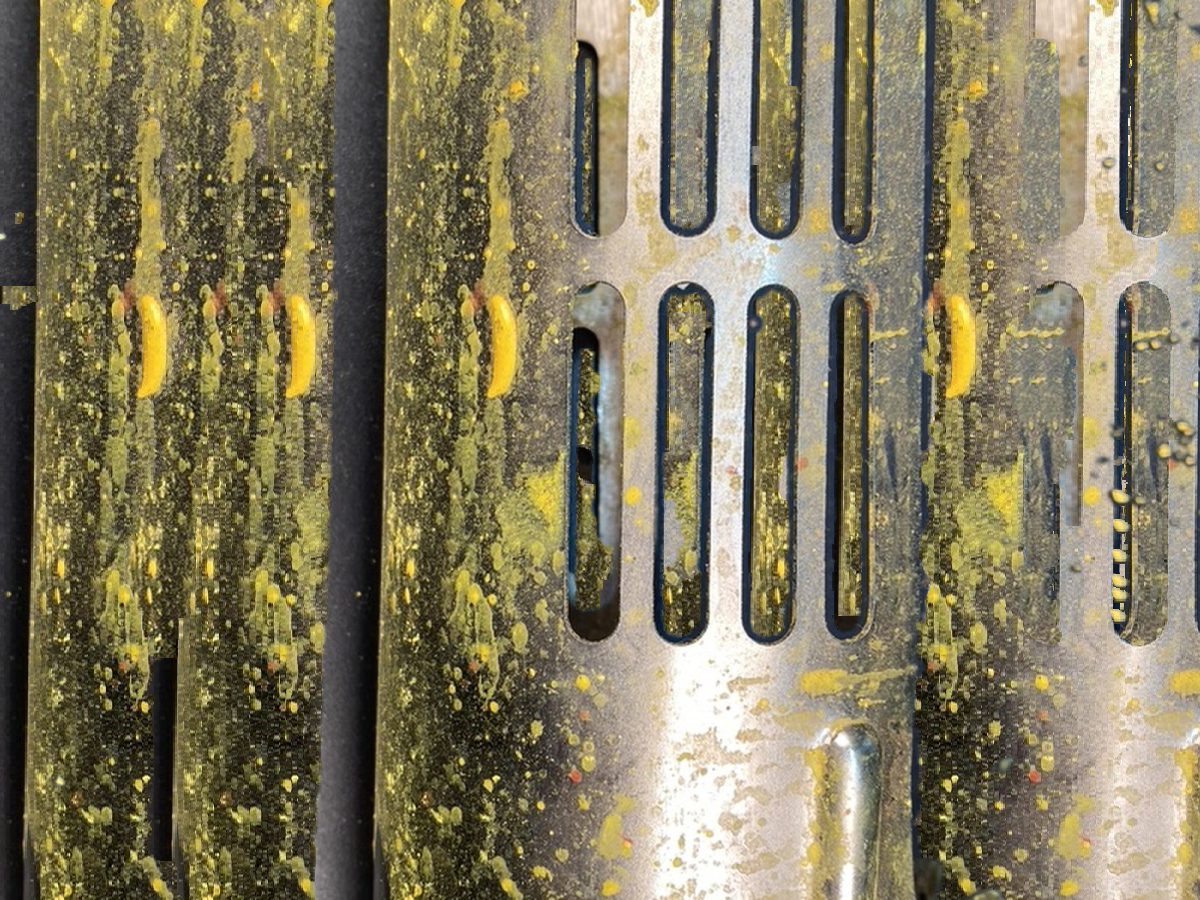
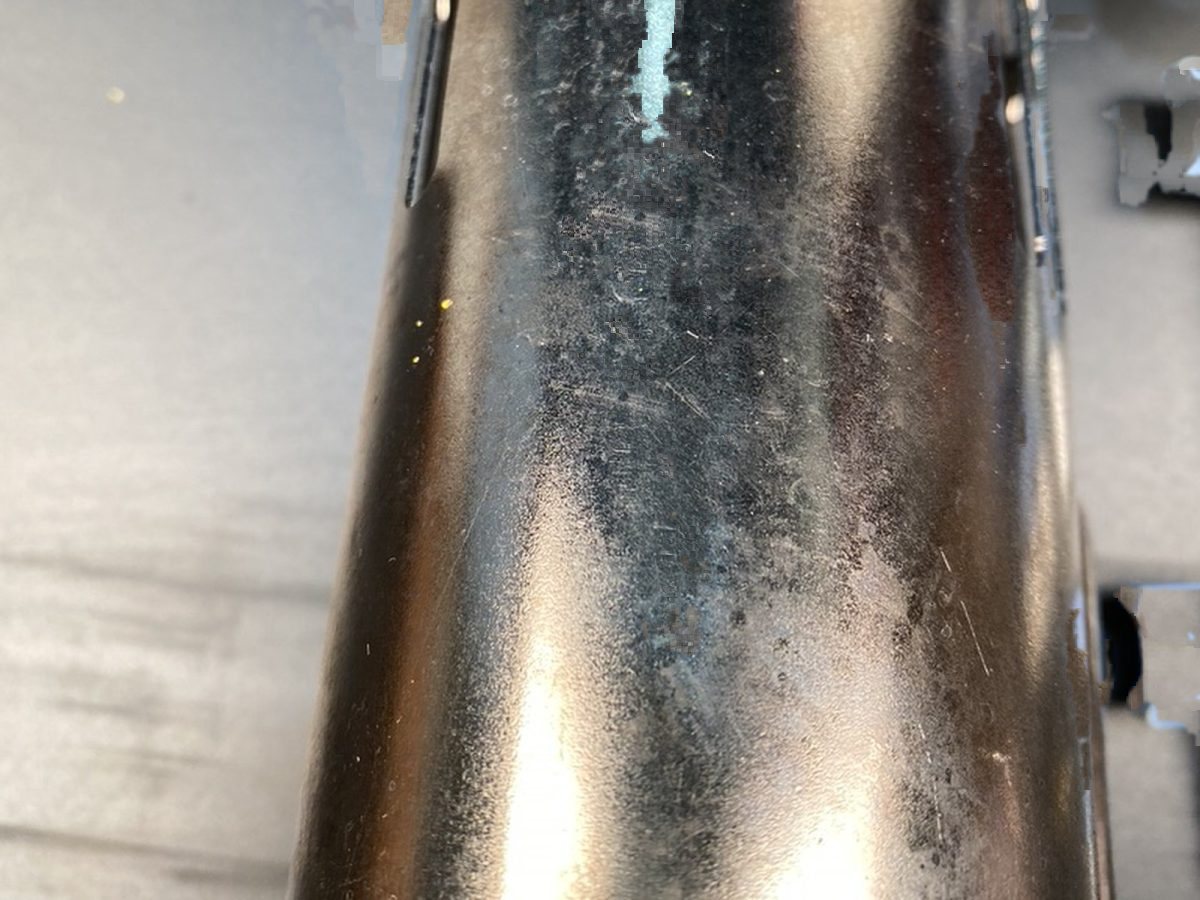
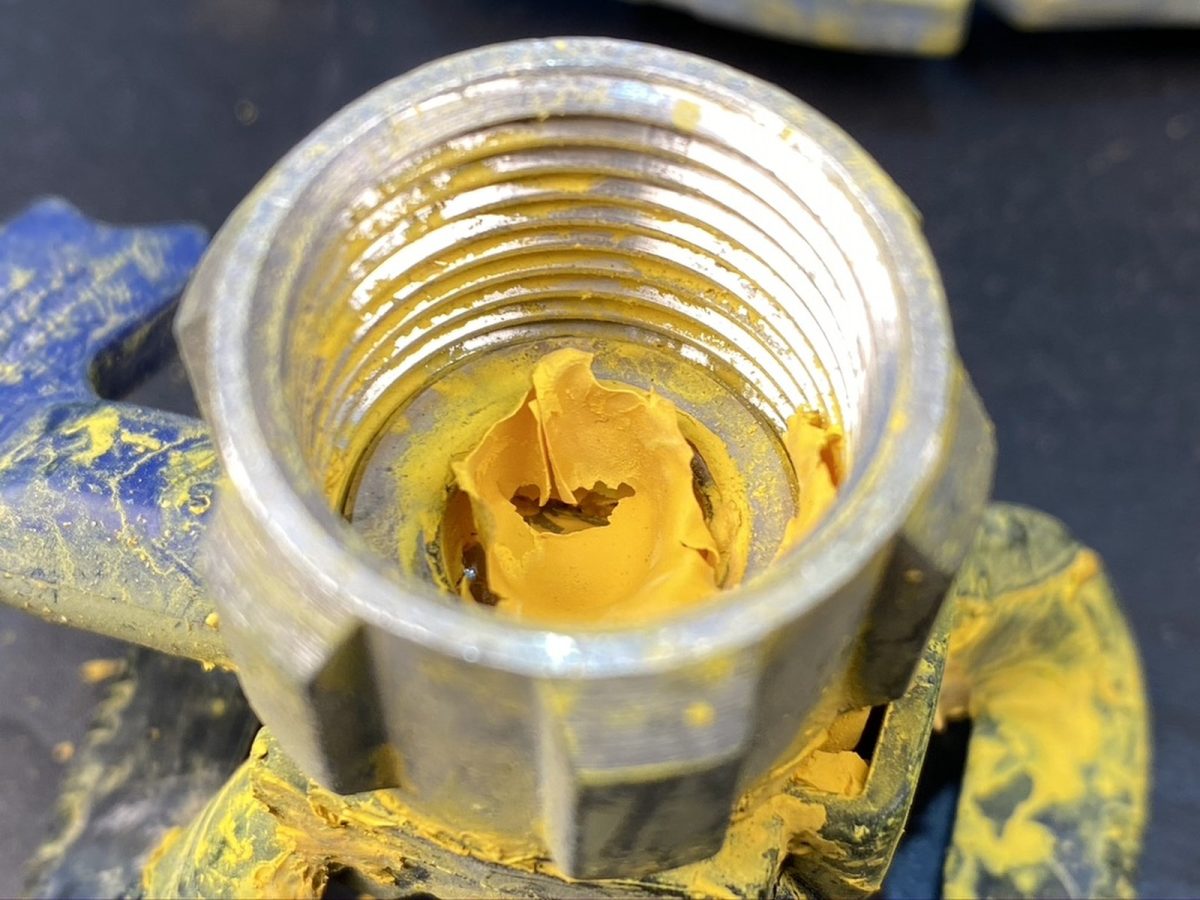
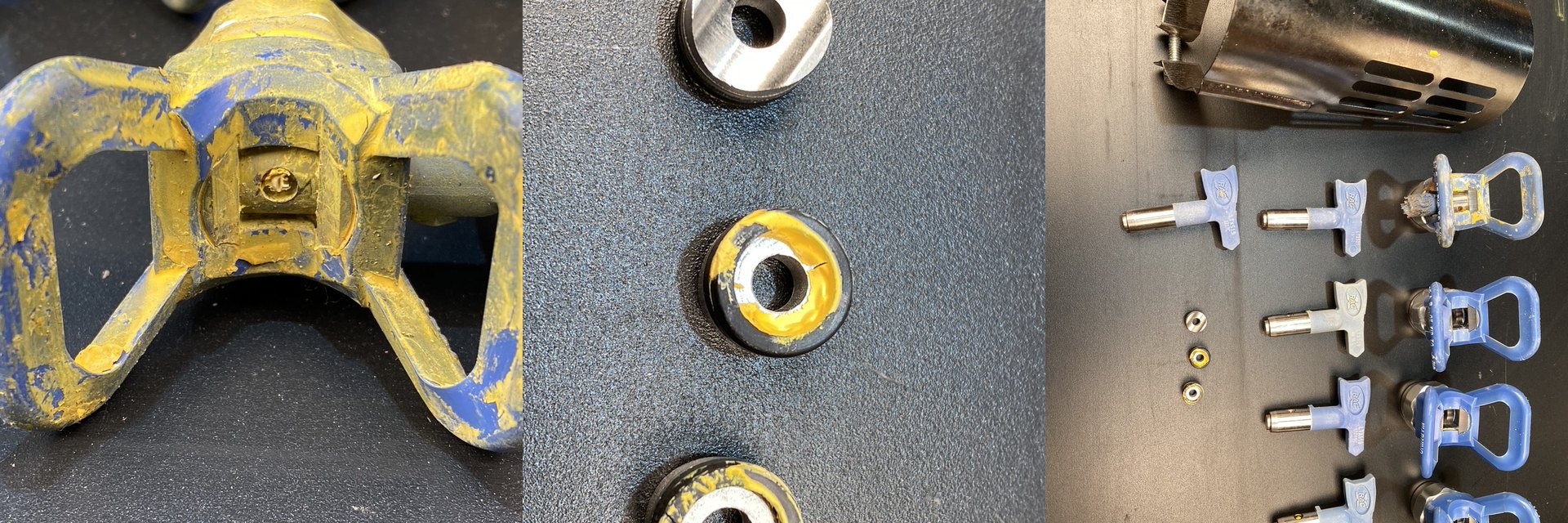
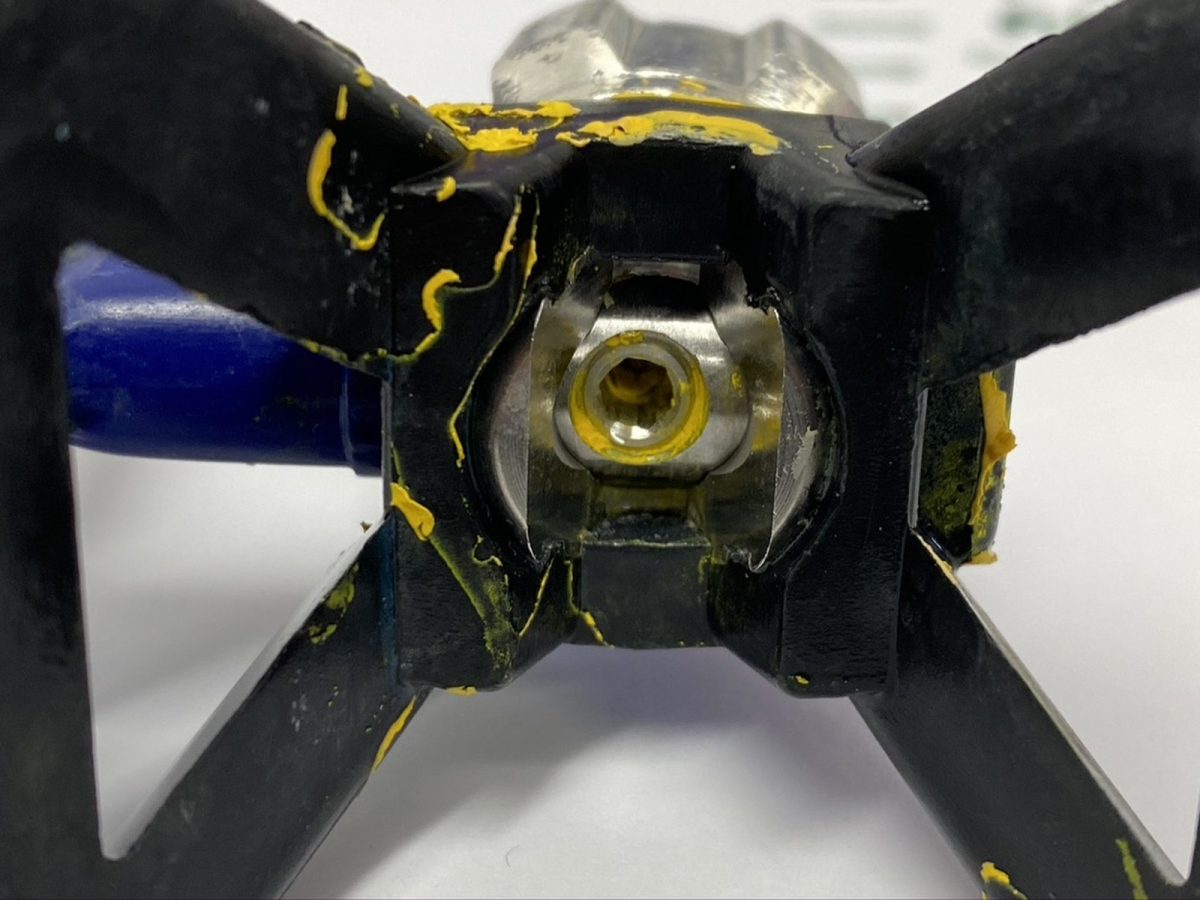
Spray tips, guards, seats and gun filters off working line-marking equipment, photographed as received and after a documented cycle. Drag the handle across to compare.
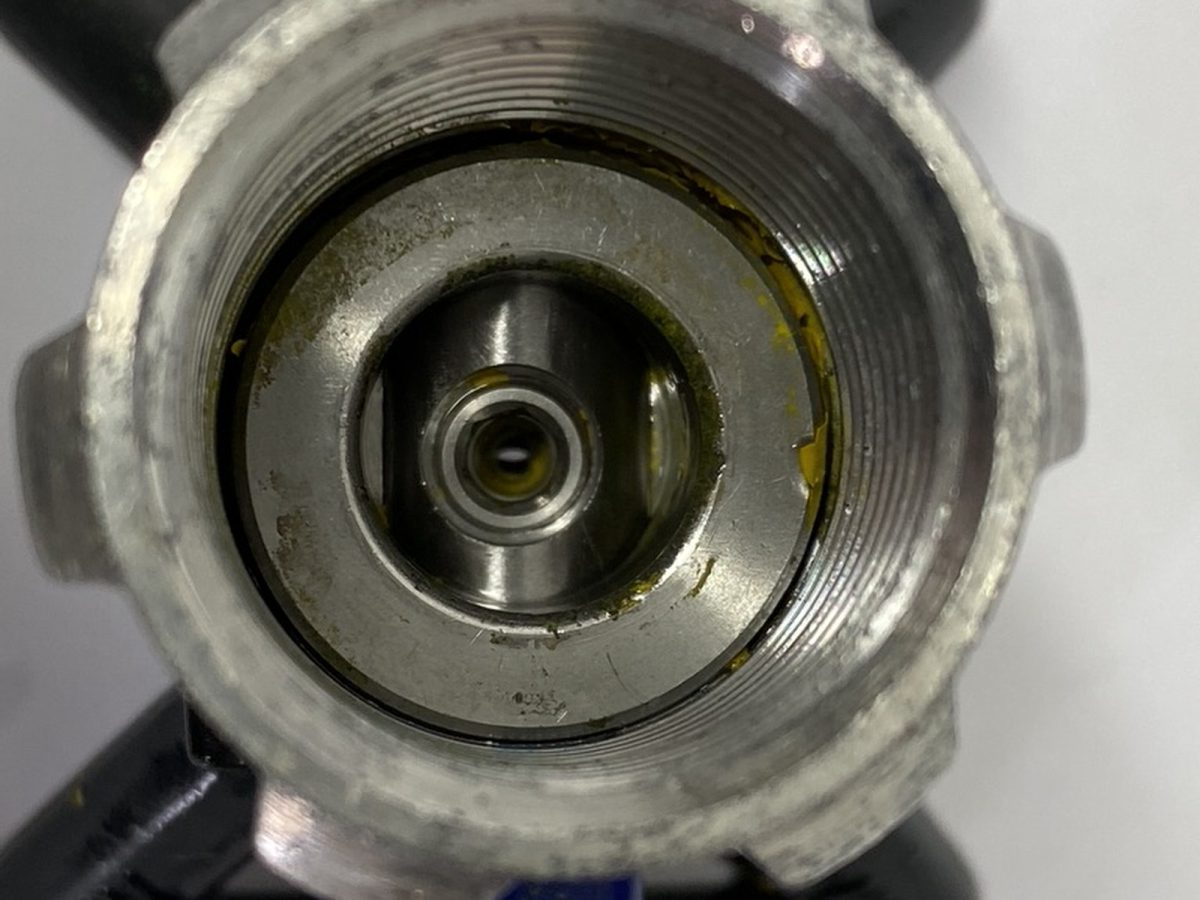
Tip seat bore. Paint filling the seat bore, which is exactly where a tip stops sealing. Recovered rather than replaced.
Same trials, photographed separately


Airless tip and guard. Dried paint locking the guard and the tip together. Cleaned as an assembly, without dismantling.


Gun filter sleeve. Every slot blinded on the left. Filter elements are the most replaceable part on a marking rig, and the most worth recovering.


Tip thread and seat. Thread and seat together — both surfaces have to be clean for the tip to sit true.
Airless tips, tip guards, seats, threads and gun filter sleeves — paint out of the orifice without anything mechanical touching the carbide.
Pumps, manifolds, strainers, agitator hardware and the fittings between the drum and the gun.
Bead dispensers, applicator shoes, sensor mounts and cabinet fittings on refurbishment.
Bubble collapse at the liquid–metal boundary lifts contamination from passages, galleries and cavities without anything touching the surface. Nothing abrades, nothing embeds, no metal is removed.
The VarioSonic G5 tracks the transducer array as temperature and load shift — conversion efficiency up to 95%.
Eliminates standing-wave hot and cold zones across a loaded basket.
Stored recipes and logged cycles — audit evidence produced as a by-product of running.
Multi-stage filtration and weir oil capture hold results steady as the bath loads.
Most faults identified — many resolved — without a site visit.
Heavy 316 stainless tanks, tested before despatch, every wearing part replaceable.
From manually loaded single-tank units to automated lines — and engineered systems where the catalogue ends.
Cured paint, thermoplastic and bitumen each need different chemistry, and the tip you are trying to save is usually carbide in a stainless carrier. The chemistry is matched to the coating and then checked against the substrate — confirmed on your own hardware before anyone quotes a machine.
| Component category | Specific parts / assemblies | Compatible materials |
|---|---|---|
| Line marking | Tips, guards, seats, gun filters | Stainless, tungsten carbide, brass |
| Paint handling | Pumps, manifolds, strainers, fittings | Steels, stainless, polymers |
| Thermoplastic | Applicator shoes, dies, screeds | Steels, cast iron |
| Bead systems | Dispensers, hoppers, nozzles | Stainless, aluminium |
| Roadside assets | Sensor mounts, cabinet hardware | Aluminium, plated steel |
Where an application needs validation, we clean sample components in our laboratory, document the result, and specify the machine around the verified process. If ultrasonics is the wrong answer, the trial shows that too, and we will tell you.