About Quality & Compliance R&D Chemistry Insights
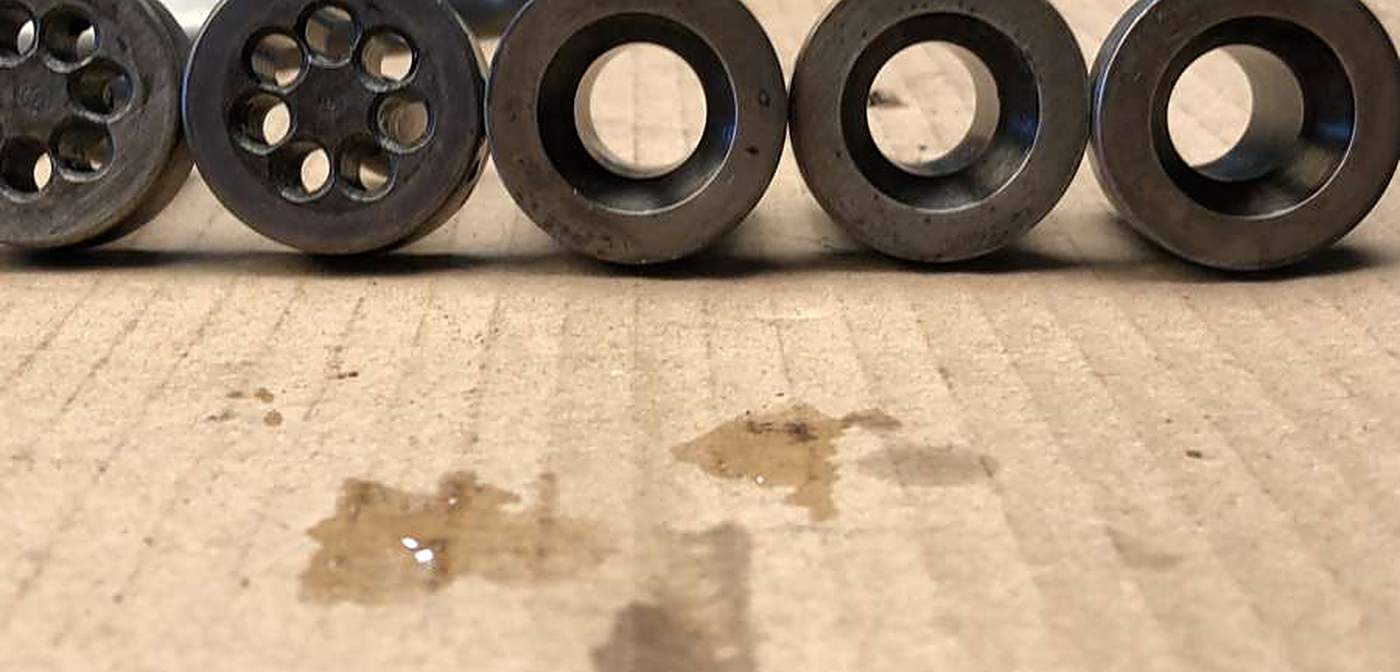
A row of food extrusion dies part-way through a documented cleaning trial in the Misonics laboratory
Home / Research & Development
Research & Development

Mature platforms, still moving

Ultrasonic technology rewards patience: the best machines are mature platforms that have accumulated years of corrections — and still take new capability with every generation.

How Our Technology Advances

Three channels, one direction

Research partnerships

We hold research relationships with leading specialists in ultrasonic technology — including manufacturers with decades of patented development behind them. When an application is unusual, we are not limited to what we have seen ourselves; we draw on their development work, test data and engineering resources directly.

Operator-driven development

Feedback from commissioning, service visits and remote sessions goes back into the machines and the control software. Each generation carries the corrections of the one before — the practical reason a mature platform outperforms a new one. Where the software needs to behave differently for your process, it gets changed; we would rather revise the software than ask you to adapt to it.

Applied research

Beyond cleaning, we are actively researching ultrasonic applications in wastewater treatment and boiler pipe descaling — fields where cavitation offers the same advantage it does in the tank: work delivered through the liquid, wherever the liquid reaches.

Inside The Laboratory

A trial, step by step

This is what a laboratory trial actually looks like: a set of food-extrusion dies arrived packed with hardened corn starch and carbon, and left as a documented process. Every stage is photographed and labelled as it happens — chemistry, concentration, temperature and time — because the point of a trial is not a clean part. It is a recipe you can run every day.
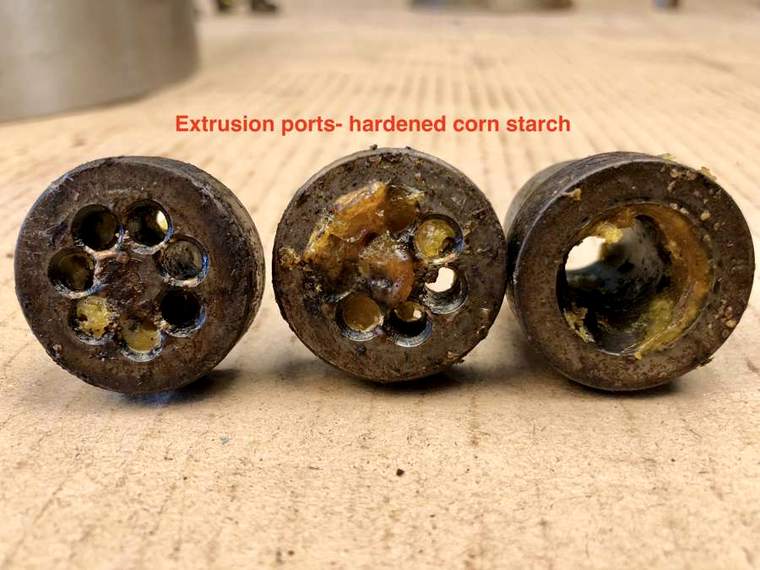
Extrusion dies as received, ports blocked with hardened corn starch
As received

Ports blocked solid

Hardened corn starch and carbon, baked into blind ports a brush cannot reach. This is the problem as it arrived.
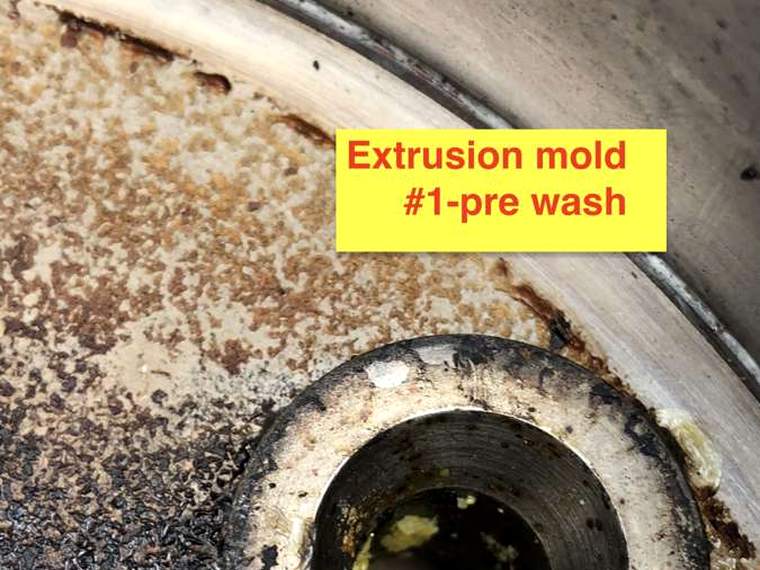
Close-up of a die port before washing, labelled during the trial
Pre-wash inspection

Soil identified & recorded

Each die is photographed and labelled before anything touches it — the baseline every later stage is judged against.
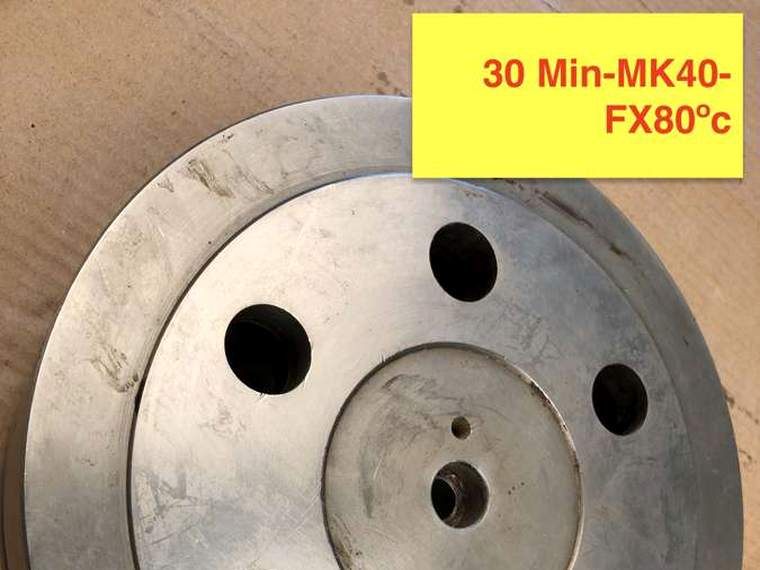
Die after 30 minutes in the ultrasonic bath at 80 degrees, labelled with chemistry and temperature
30 min · 80 °C

First cycle, parameters on the photo

Chemistry, concentration and temperature are written onto the record as the part comes out — not remembered afterwards.
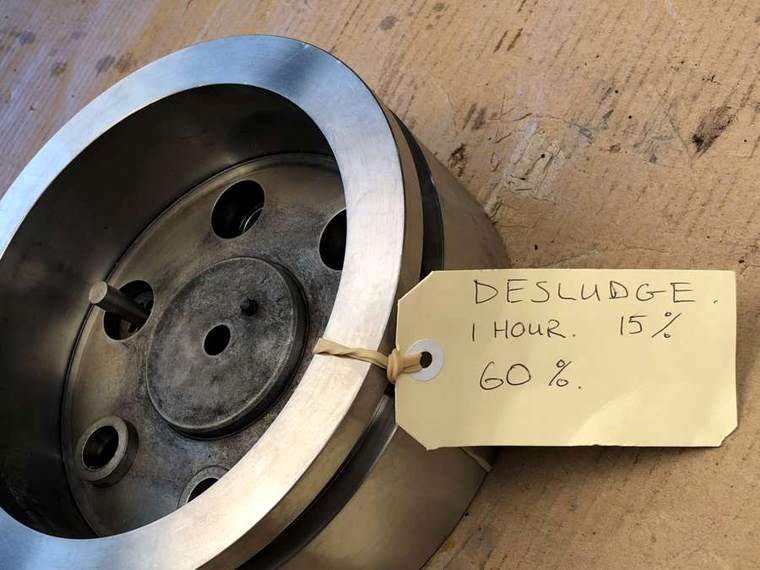
Die with a handwritten trial tag recording a one hour desludge cycle
Desludge · 1 h

Every part carries its tag

Handwritten tags travel with each part through the trial — cycle, concentration and temperature, checkable at any point.
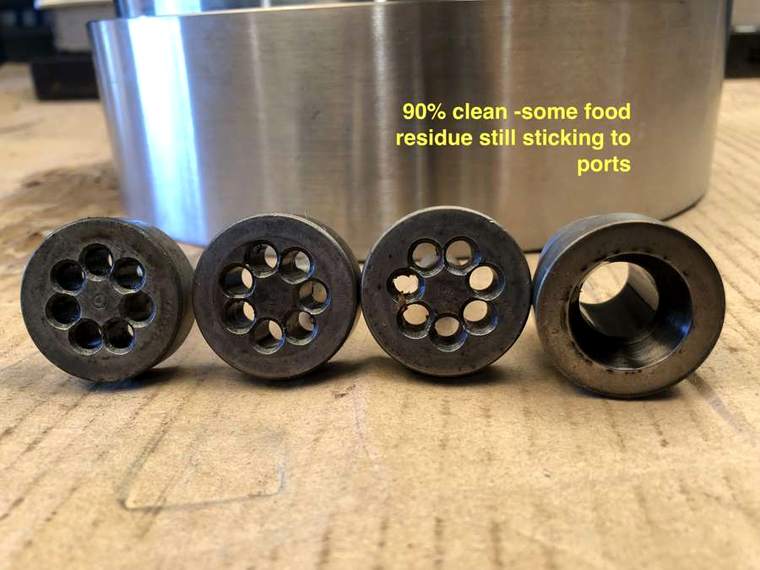
Row of dies labelled ninety percent clean with some residue still in ports
Interim result

“90% clean” — recorded as 90%

An honest interim reading, written on the photo. The remaining residue tells us what to change — not what to hide.
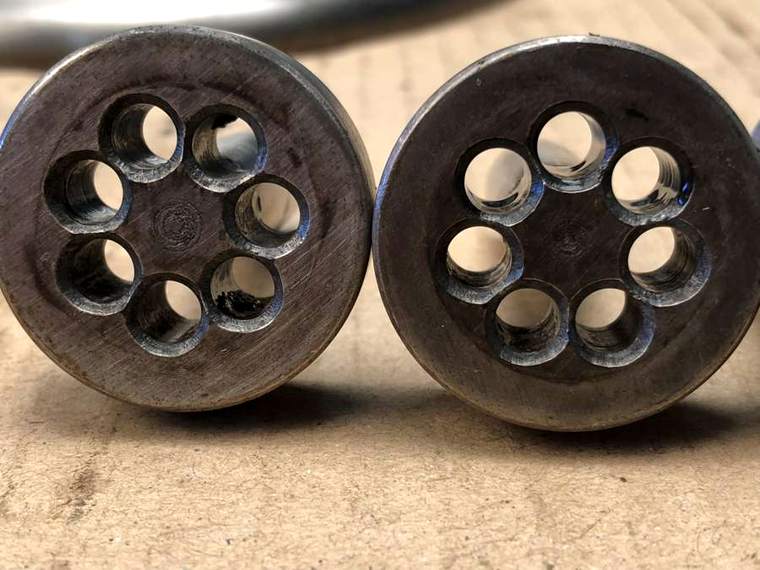
Cleaned extrusion dies with every port open and bright metal visible
Verified process

Ports open, recipe proven

The finished state — and behind it, a documented sequence the customer’s operators can repeat on every die, every week.

Why this belongs on an R&D page: every trial run in the laboratory feeds the platform. The cycle that cleared these ports became data — soil type, chemistry, energy, time — and that data is why the next unusual application starts from knowledge instead of guesswork.
Have an application nobody has solved?

Unusual problems are where the research relationships earn their keep. Describe the problem — if it can be tested, the laboratory will test it.

Talk to an Applications Engineer