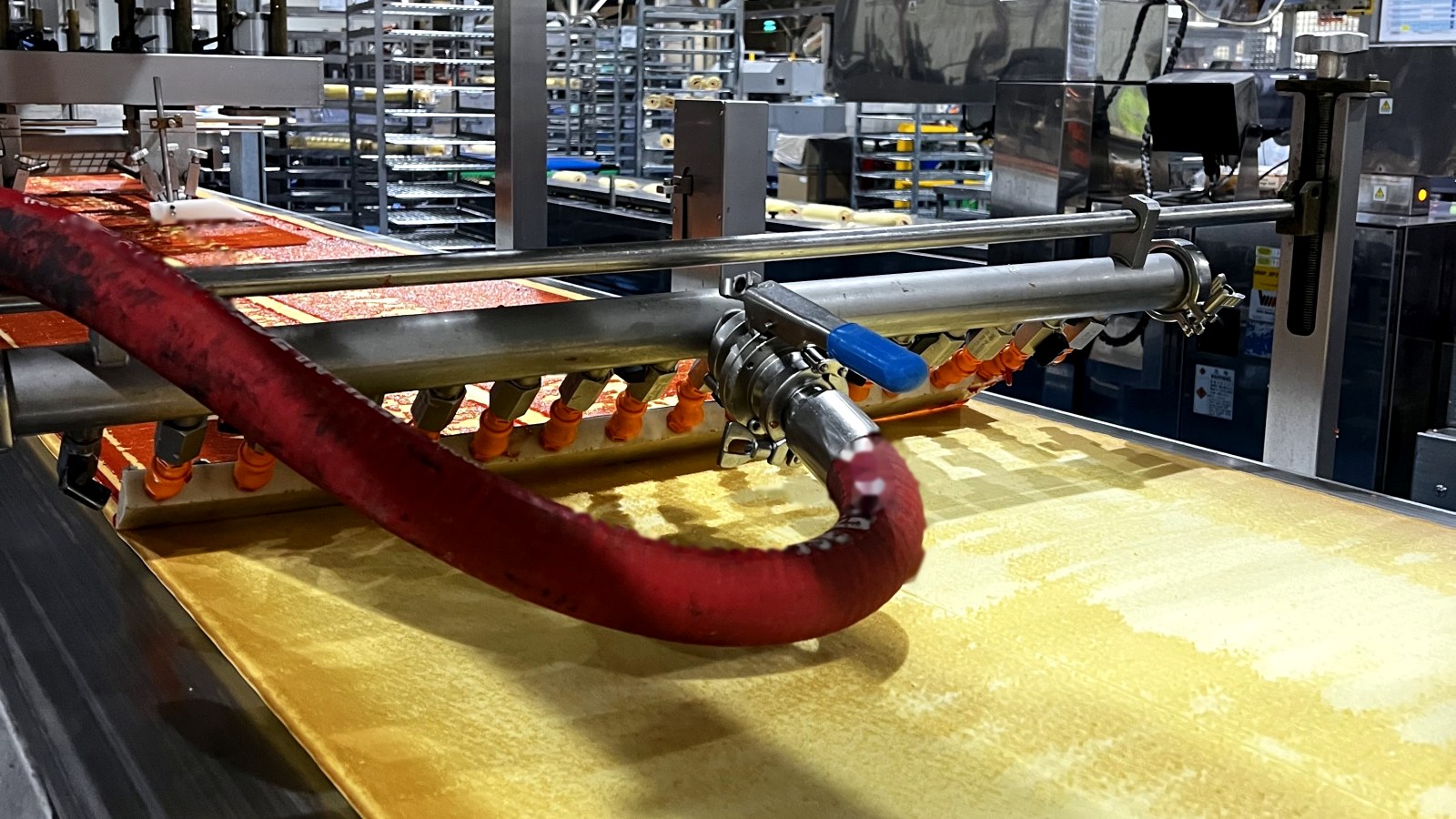
Sauce application line in an Australian food manufacturing plant
Industries / Hygiene-Critical & Life Sciences / Food, Beverage & Abattoirs
Industries · Hygiene-Critical & Life Sciences

Ultrasonic Cleaning for Food, Beverage & Abattoirs

Food processing contamination is chemistry at both extremes: baked carbon on oven and fryer hardware, fats and proteins through processing lines, beer stone and mineral scale in beverage plant — all needing removal with chemistry an auditor will accept near product.

Misonics systems clean processing equipment to audit-ready condition with food-safe chemistry — faster than soak tanks, gentler than burn-off, documented every cycle.
The Contamination Problem

What we remove in food, beverage & abattoirs

Baked carbon & polymerised oils

On oven trays, fryer baskets and roasting hardware.

Fats & proteins

Through slicers, mincers, moulds and abattoir equipment.

Beer stone & mineral scale

Oxalate and carbonate scale in brewery and beverage hardware.

Starch, sugar & product films

Baked onto moulds, depositors and line hardware.

Biofilm

In fittings and hardware where CIP does not reach.

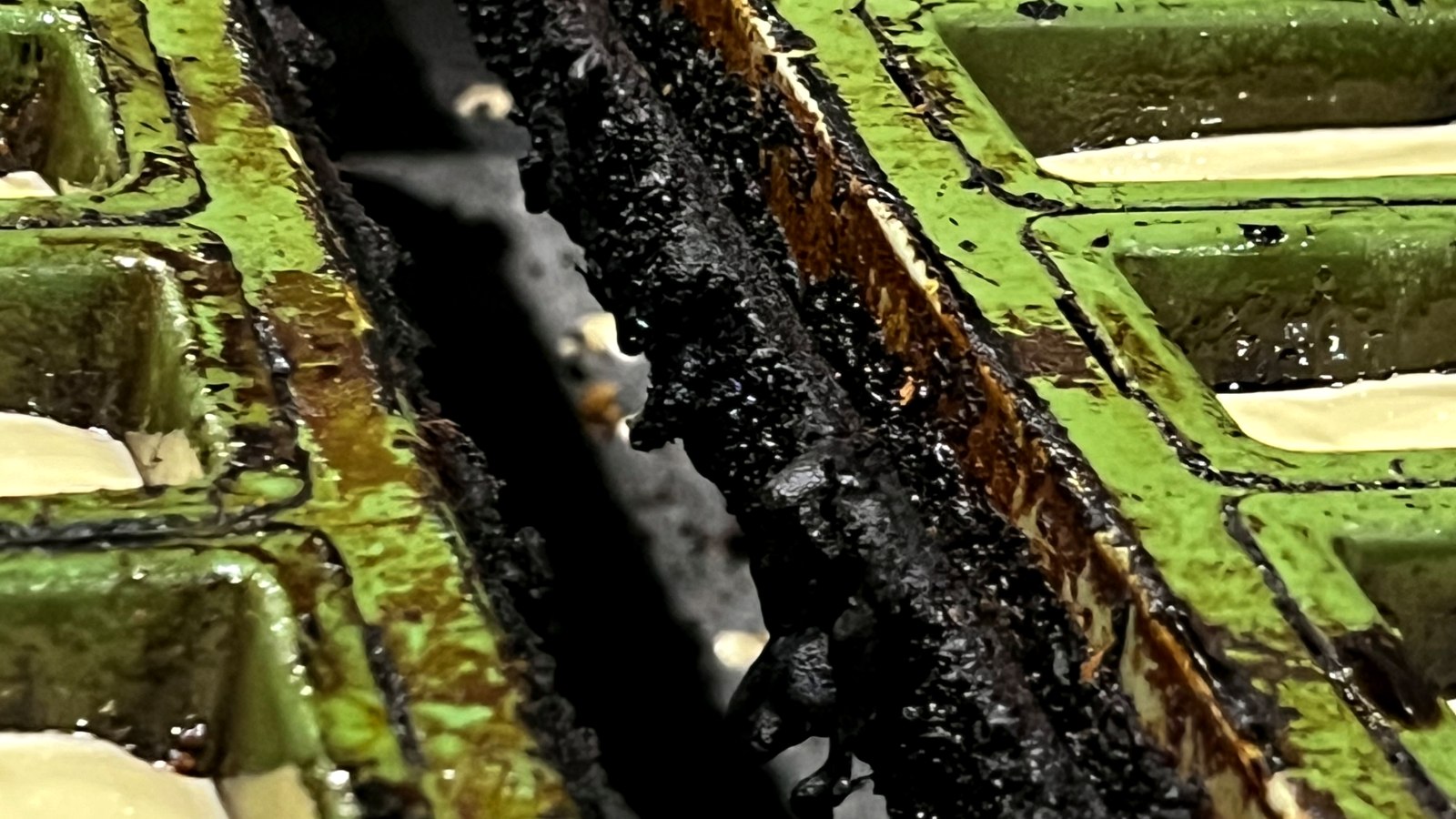
Carbonised product build-up between baking mould trays — before cleaning
Carbonised product and baked-on residue between mould trays on an Australian bakery line — the build-up scraping and clean-in-place leave behind, and exactly what cavitation removes. — click to enlarge
The endpoint is a defined, repeatable process condition — cycle time, chemistry, concentration, frequency and temperature are recorded parameters, not operator judgement.
Trial Evidence

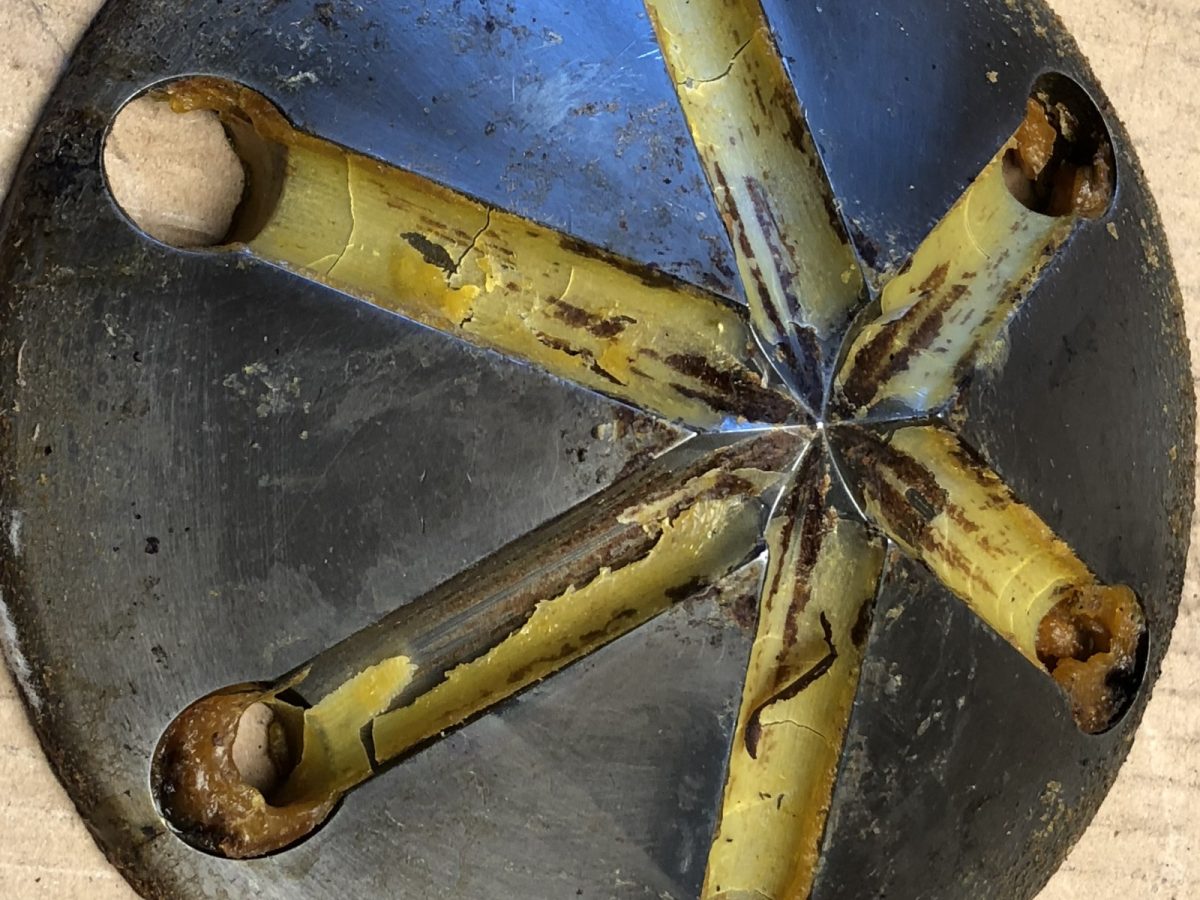
Extrusion tooling, before and after

Food-industry extrusion tooling photographed as it came off the line and after a documented cycle. Drag the handle across to compare.

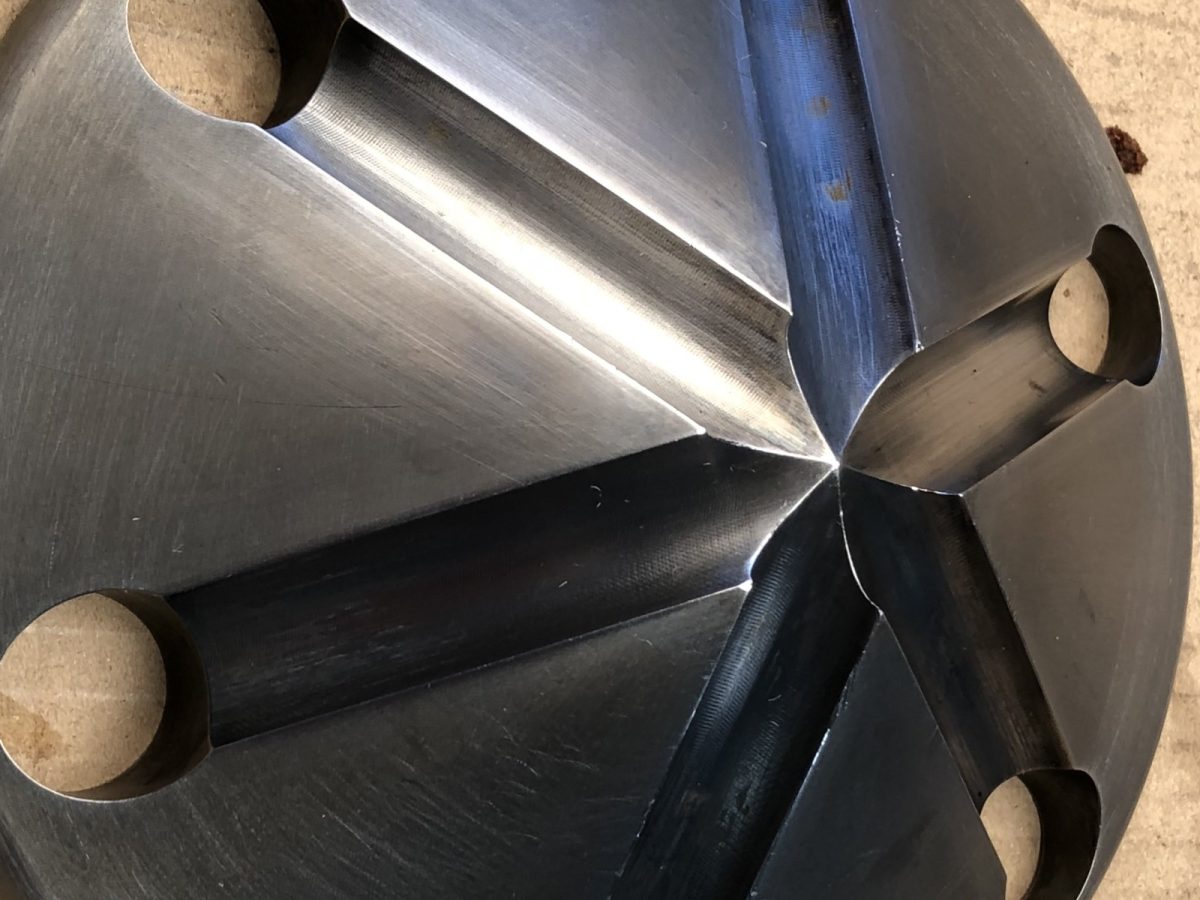
Die plate apertures. Every aperture plugged with carbonised starch on the left; every one open on the right. Open area is the product spec.

Die insert ports. Six ports, six plugs of hardened residue. Food-contact surfaces cleaned without abrasives and without dismantling further.

Same trials, photographed separately

Slotted die cone — before and after ultrasonic cleaning — as received
As received
Slotted die cone — before and after ultrasonic cleaning — after the cycle
After cycle

Slotted die cone. Burnt-on product welded into every slot. Changeover time is set by how long this takes to clear, and cavitation clears it without a scraper near the die face.

Components We Clean

Real parts, real materials

Bakery & confectionery

Trays, tins, moulds, depositor parts — carbon and product films off without abrasion that shortens tray life.

TraysMouldsDepositors

Meat & abattoirs

Slicer components, mincer parts, saws hardware and fittings — fats and proteins to hygiene standard.

SlicersMincersFittings

Beverage & brewing

Filler valves, keg fittings, tank hardware — beer stone and scale out of precision fits.

Filler valvesKeg spearsFittings
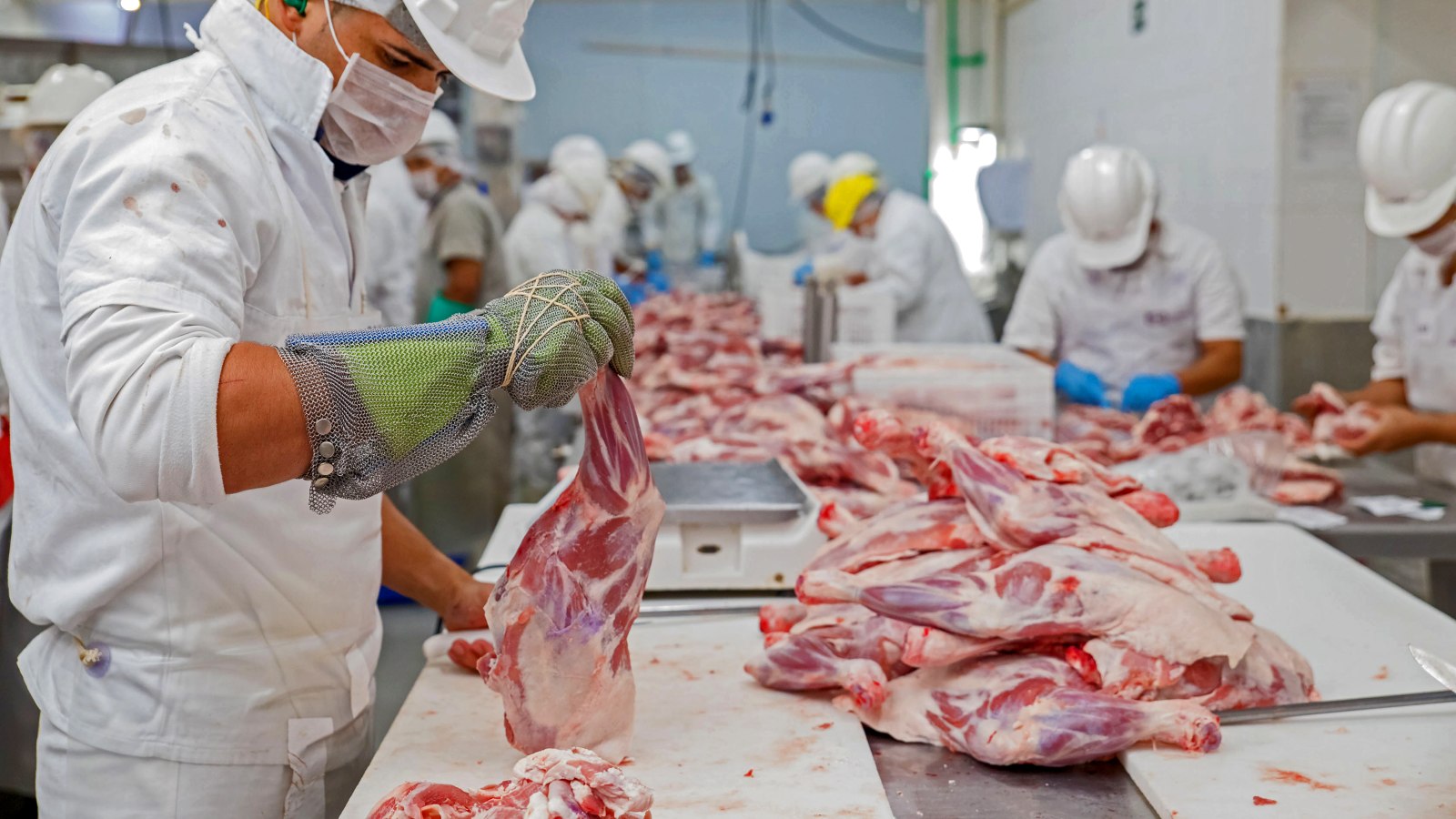
Meat processing line — boning room in production
A boning room in production — slicers, hooks, saws and fittings from lines like this carry fats and proteins that ultrasonic cleaning strips to hygiene standard between shifts. — click to enlarge
Why Ultrasonics — And Why These Machines

Cavitation cleans geometry it cannot see

Bubble collapse at the liquid–metal boundary lifts contamination from passages, galleries and cavities without anything touching the surface. Nothing abrades, nothing embeds, no metal is removed.

GeneratorResonance held all shift

The VarioSonic G5 tracks the transducer array as temperature and load shift — conversion efficiency up to 95%.

Sound fieldSweep modulation

Eliminates standing-wave hot and cold zones across a loaded basket.

Process controlLogged, recipe-driven cycles

Stored recipes and logged cycles — audit evidence produced as a by-product of running.

Bath conditionFiltration & oil separation

Multi-stage filtration and weir oil capture hold results steady as the bath loads.

SupportOver-the-air diagnostics

Most faults identified — many resolved — without a site visit.

ConstructionBuilt to work hard

Heavy 316 stainless tanks, tested before despatch, every wearing part replaceable.

Equipment Fit

The machine follows the process

From manually loaded single-tank units to automated lines — and engineered systems where the catalogue ends.

MSX

Line-side platforms for processing equipment.

Explore the range →

EvoSonic

Heavy platforms for tray and rack volume.

Explore the range →
Chemistry

Matched to the soil and the substrate

Food-contact cleaning runs food-safe alkaline and descaling formulations with free rinsing — chemistry selected with your food-safety plan, not around it.

Applications Matrix

Component coverage at a glance

Component categorySpecific parts / assembliesCompatible materials
BakeryTrays, tins, mouldsAluminised steel, aluminium
Meat processingSlicer, mincer, saw componentsStainless
BeverageFiller valves, fittings316 stainless
DairyPump and valve hardwareStainless, elastomers
AbattoirEquipment hardware, fittingsStainless
PackagingSealer and former partsStainless, PTFE-coated

Prove it on your parts

Where an application needs validation, we clean sample components in our laboratory, document the result, and specify the machine around the verified process. If ultrasonics is the wrong answer, the trial shows that too, and we will tell you.

Talk to an engineer
FAQ

What food engineers ask us

Is the chemistry food-safe?
Formulations are selected for food-contact compatibility and free rinsing — documentation supplied for your food-safety plan.
Can it replace caustic soak tanks?
Yes, faster and at lower concentration — cavitation does the work the soak was waiting for.
Will it remove beer stone?
Yes — inhibited descaling chemistry dissolves oxalate scale without attacking stainless or seals.
Does it fit a washdown environment?
Machines are specified for the environment — construction and ingress protection to suit.
Related Industries · Hygiene-Critical & Life Sciences

Also in this sector