A cleaning machine is a delivery system — the chemistry is what actually removes the contamination, and the two have to be specified together. Chemistry formulated for ultrasonic use is not the same thing as a good degreaser.
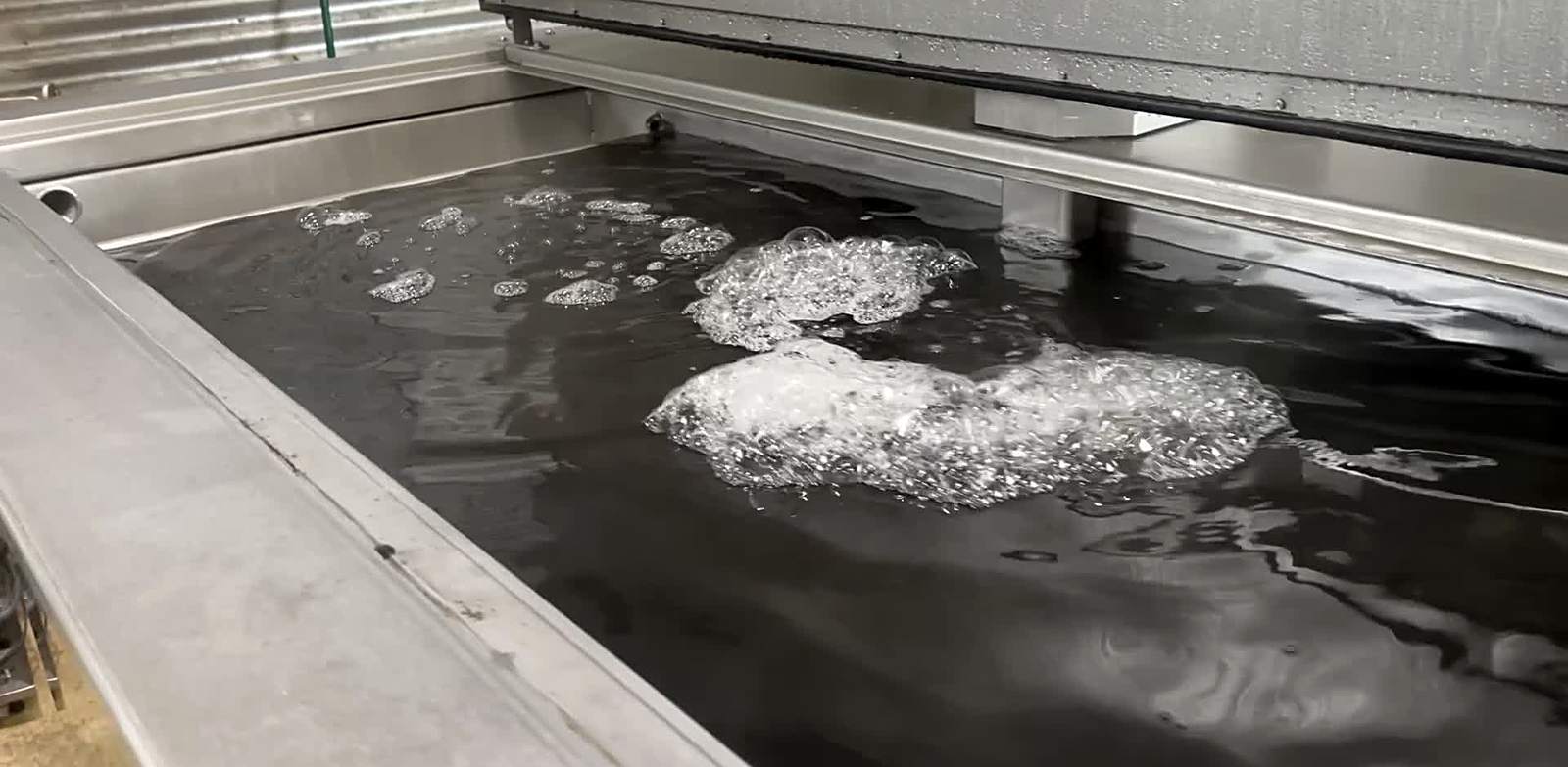
Cavitation depends on surface tension, wetting behaviour and how the solution holds soil in suspension — and it is destroyed by foam, which absorbs and scatters the sound field. That is why a generic industrial detergent disappoints in an ultrasonic tank, and why formulation is not a detail.
The formulation removes the target contamination while the substrate — aluminium, zinc castings, plated finishes, polymers — comes out untouched. Matching both is the specification, not a bonus.
Supplied as concentrates and made up in the tank, typically between 5 and 30 percent depending on soil and duty — the trial establishes the working concentration honestly.
A working bath is reclaimed many times before replacement. Weir oil separation and filtration guard the chemistry against the oils and solids that would otherwise exhaust it early — bath life is an operating cost, and the machine design protects it.
We toll-manufacture chemistries formulated for ultrasonic use and matched to the substrate and soil — proven in service across Australian industry rather than theoretical. Where an application is genuinely unusual, a chemistry can be made for it.
For specialist and regulated work we supply Brulin, a specialist ultrasonic chemical manufacturer whose aqueous chemistries carry approvals from Boeing, Airbus, Rolls-Royce, Pratt & Whitney, GE Aviation, Lockheed Martin and NASA — against specifications including Boeing BAC 5749, BAC 5753 and PS 12024, with passivation chemistry conforming to AMS 2700, ASTM A380 and ASTM A967. For an aerospace MRO or defence supplier, that removes a qualification barrier.
Chemistry is selected — or made — for the job during the cleaning trial, and proven on your parts before you buy anything. The delivered process names the product, concentration, temperature and cycle.
Trials run on parts carrying the real soil. The trial pairs machine and chemistry against it — documented, repeatable, and honest about what it took.