Added to cart
AlkalineTank Approved

Desludge

The heavy pre-wash that keeps your main bath honest

Fuel residues, sludge and gross carbon — taken out before they poison your fine-cleaning stage.

pH 13 decarbonising strength, ultrasonic-formulatedProtects the expensive bath downstream5–20% · 60–80 °C — sacrificial-stage economics
From $105.00 inc GST
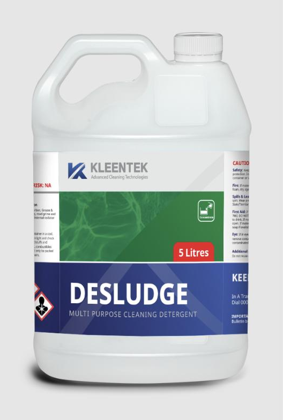
desludge container
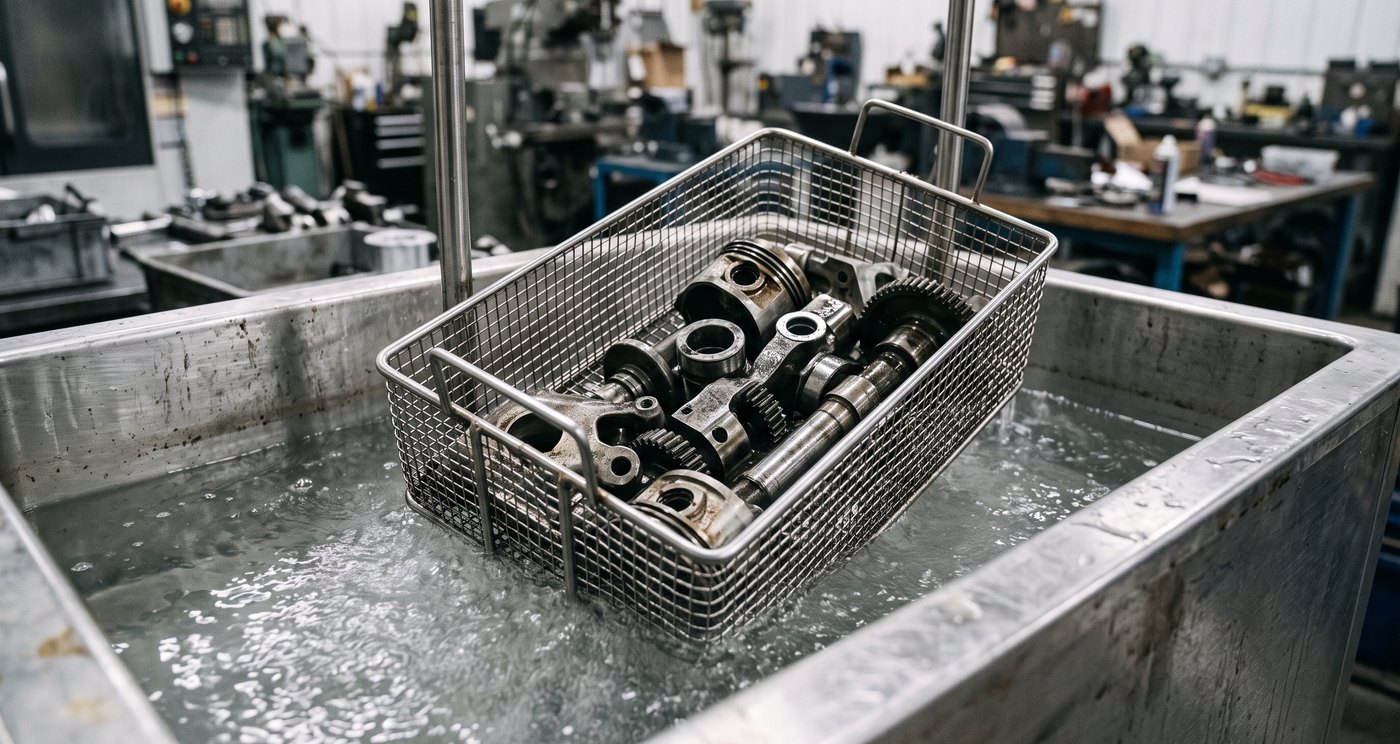
Machined steel components in a stainless mesh basket being lowered into an ultrasonic cleaning bath
The chemistry is half the process. It wets the tank and the part so cavitation can form at the surface, and it holds the soil once the ultrasound has lifted it.Illustration generated by Misonics.
Why It Wins

The heavy pre-wash that keeps your main bath honest

The fastest way to ruin a good ultrasonic bath is to feed it filthy parts. Sump sludge, fuel varnish and gross carbon exhaust the chemistry, blind the filtration and coat the tank — and suddenly your precision stage is a waste-handling stage.

Desludge is the interceptor. A pH 13 decarboniser formulated for ultrasonic use, it takes the brutal first pass — engine sludge, fuel residues, the black soup off gearbox internals — at 5–20% and 60–80 °C, so parts arrive at the main bath merely dirty instead of foul.

The economics compound: your premium chemistry lasts multiples longer, filtration loads drop, and the pre-wash bath — being cheap to make up — becomes the sacrificial stage you drain without wincing. Two-bath shops clean more, spend less, and never apologise for their finish.

Applications

Where it earns its keep

Engine decarbonising; fuel system components; sump and gearbox sludge.

AutomotiveMiningRail
Material caution: High-alkaline: ferrous metals only. Not for aluminium, zinc or soft alloys.
Temperature & Dose
SWEET SPOT 70 °C60–80 °C20 °C100 °C

Dose: 5–20%. The trial sets your exact process values; the TDS governs.

Run It Right

The working process

Why Flash Rust Happens

A freshly cleaned ferrous part is chemically active — protective films gone, surface warm and wet, rinse ions acting as electrolyte. Rust bloom can start within the hour. DI water rinsing slows it; protection stops it.

Protect It

Inhibitor in the final rinse before hot-air drying, an Anti-Rust dip between processes, or a water-displacing film for storage — matched to the next process. Tell us what happens next and the protection specifies itself.

Process Position

Right product, right job

This Page

Desludge — the pre-wash

Gross sludge and fuel residues, first pass.

Also Consider

FerroCarb

The fine decarbonising stage after Desludge

View →
Buy Desludgeinc GST
5 L$105.00
20 L$335.50
200 LPOA
Complete The Job
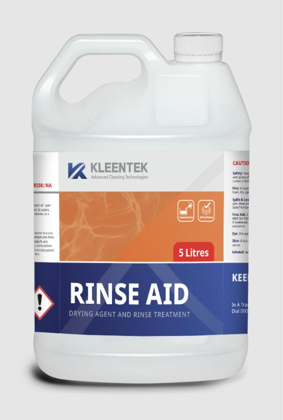
Anti-RustStops flash rust on cleaned steelView & buy →RegeniKThe ash stage after carbonView & buy →Rinse AidSpot-free final rinseView & buy →
Compatibility
Mild & carbon steelSafe in prescribed use
Stainless steelSafe in prescribed use
Cast ironSafe in prescribed use
Aluminium & titaniumDo not use
Magnesium & soft alloysDo not use
Zinc & galvanisedDo not use
Copper & brassDiscolouration likely — test first
Plated finishes (Cd·Cr·Ni)Cadmium unsafe — confirm Cr·Ni first
Plastics & rubbersPP · HDPE · most industrial plastics safe
Painted / coated surfacesRemoves paint & coatings — that is the job
Per prescribed use — the cleaning trial confirms on your parts; the TDS governs. Full range matrix →
Transport
UN NumberUN 3082
DG ClassClass 9 · Packing Group III
Freight note: Dangerous goods attract a carrier DG surcharge, quoted at checkout. Depot pickup avoids it.
Bath Life

This is not a single-use chemical

A common misconception treats industrial chemistry like dishwater — used once, tipped out. A defended bath of Desludge works for weeks of production: weir oil separation and filtration defend the bath, solids leave through the filter, and the chemistry keeps working until genuine depletion.

Change out on evidence, not anxiety: when cycle times stretch or results fade at correct concentration, the bath has earned its retirement. Top-ups at specification carry it between changes.

Keep It Honest
  • Skim or weir oils continuously — oil load is bath killer #1
  • Filter solids; drain settled sludge from the sump
  • Verify concentration on schedule per the TDS check method
  • Log it — the trend predicts top-ups before cleaning fades
Storage

Drum and bath, both looked after

The Concentrate
  • Handling: Avoid eye contact and skin contact.
  • Avoid inhalation of vapour, mist or aerosols.
  • Storage: Store in a cool, dry, well-ventilated place and out of direct sunlight.
  • Store away from foodstuffs.
  • Store away from incompatible materials described in Section 10.
  • Store away from sources of heat and/or ignition.
  • Product Name: Desludge Reference No: KT-CC-DSL Issued: 2023-07-01 Version: 1.3 Safety Data Sheet Store locked up.
  • Keep container standing upright.
  • Keep containers closed when not in use - check regularly for leaks.
  • This material is classified as a Class 9 Miscellaneous Dangerous Good as per the criteria of the "Australian Code for the Transport of Dangerous Goods by Road & Rail" and/or the "New Zealand NZS5433:
Compliant with the product SDS.
The Working Bath

Lid the tank between shifts — holds temperature, limits evaporation, keeps dust out.

Idle periods: a warm, stagnant aqueous bath can support biological growth over extended stagnation. Circulate periodically, keep concentration at specification, never leave an open tank standing for weeks.

Extended shutdown: drain to sealed, labelled containers — or schedule changeover for restart day.

Documents & Safety

The paperwork, on the page

Safety Data Sheet (SDS)
Desludge — Australian GHS SDS for your chemical register and risk assessments. PDF, 286 KB.
View SDSDownload
Technical Data Sheet (TDS)
Properties, composition, dose and compatibility at a glance. PDF, 79 KB.
View TDSDownload
Hazard identification
DANGERPer Safe Work Australia GHS 7
Irritation - Category 1BIrritation - Category 1Skin - Category 1Acute Hazard to the Aquatic Environment - Category 2
Hazard statements
H314Causes severe skin burns and eye damage.
H317May cause an allergic skin reaction.
H411Toxic to aquatic life with long lasting effects.
Key precautions
P102Keep out of reach of children.
P103Read carefully and follow all instructions.
P260Do not breathe dust, fume, gas, mist, vapours or spray.
P264Wash hands, face and all exposed skin thoroughly after handling.
P272Contaminated work clothing should not be allowed out of the workplace.
P273Avoid release to the environment.
Compliant with the product SDS — full document available for your chemical register.
PPE & exposure controls
  • National occupational exposure limits: No value assigned for this specific material by Safe Work Australia.
  • Biological Limit Values: As per the "National Model Regulations for the Control of Workplace Hazardous Substances (Safe Work Australia)" the ingredients in this material do not have a Biological Limit Allocated.
  • Engineering Measures: Natural ventilation should be adequate under normal use conditions.
  • Personal Protection Equipment: RUBBER BOOTS, OVERALLS, GLOVES, APRON, CHEMICAL GOGGLES.
  • Personal protective equipment (PPE) must be suitable for the nature of the work and any hazard associated with the work as identified by the risk assessment conducted.
  • Wear rubber boots, overalls, gloves, apron, chemical goggles.
  • Available information suggests that gloves made from butyl rubber, nitrile rubber should be suitable for intermittent contact.
  • However, due to variations in glove construction and local conditions, the user should make a final assessment.
  • Always wash hands before smoking, eating, drinking or using the toilet.
  • Wash contaminated clothing and other protective equipment before storing or re-using.
Compliant with the product SDS — full document available for your chemical register.
First aid
  • If poisoning occurs, contact a doctor or Poisons Information Centre (Phone Australia 131 126, New Zealand 0800 764 766).
  • Inhalation: Remove victim from exposure - avoid becoming a casualty.
  • Remove contaminated clothing and loosen remaining clothing.
  • Allow patient to assume most comfortable position and keep warm.
  • Keep at rest until Product Name: Desludge Reference No:
  • KT-CC-DSL Issued: 2023-07-01 Version: 1.3 Safety Data Sheet fully recovered.
  • Seek medical advice if effects persist.
  • Skin Contact: Effects may be delayed.
  • If skin or hair contact occurs, remove contaminated clothing and flush skin and hair with running water.
  • If swelling, redness, blistering or irritation occurs seek medical assistance.
Compliant with the product SDS — full document available for your chemical register.
Storage & handling
  • Handling: Avoid eye contact and skin contact.
  • Avoid inhalation of vapour, mist or aerosols.
  • Storage: Store in a cool, dry, well-ventilated place and out of direct sunlight.
  • Store away from foodstuffs.
  • Store away from incompatible materials described in Section 10.
  • Store away from sources of heat and/or ignition.
  • Product Name: Desludge Reference No: KT-CC-DSL Issued: 2023-07-01 Version: 1.3 Safety Data Sheet Store locked up.
  • Keep container standing upright.
  • Keep containers closed when not in use - check regularly for leaks.
  • This material is classified as a Class 9 Miscellaneous Dangerous Good as per the criteria of the "Australian Code for the Transport of Dangerous Goods by Road & Rail" and/or the "New Zealand NZS5433:
Compliant with the product SDS — full document available for your chemical register.
Disposal
  • Persons conducting disposal, recycling or reclamation activities should ensure that appropriate personal protection equipment is used, see "Section 8.
  • Exposure Controls and Personal Protection" of this SDS.
  • If possible material and its container should be recycled.
  • If material or container cannot be recycled, dispose in accordance with local, regional, national and international Regulations.
Compliant with the product SDS — full document available for your chemical register.
Transport & dangerous goods
  • Classified as Dangerous Goods by the criteria of the “Australian Code for the Transport of Dangerous Goods by Road & Rail" and the "New Zealand NZS5433:
  • Transport of Dangerous Goods on Land".
  • Australian Special Provisions; AU01: Environmentally Hazardous Substances meeting the description of UN 3077 or UN 3082 are not subject to this Code (ADG 07) when transported by road or rail in; (c) packagings that do not incorporate a receptacle exceeding 500 Kg (L); or (d) IBCs.
  • UN No: 3082 Dangerous Goods Class: 9 Packing Group:
  • III Hazchem Code: •3Z Emergency Response Guide No: 47 Limited Quantities 5L Proper Shipping Name:
  • ENVIRONMENTALLY HAZARDOUS SUBSTANCE, LIQUID, N.O.S. (CONTAINS ALCOHOLS, C12-15, ETHOXYLATED, 1- 2.5 EO)) Segregation Dangerous Goods:
  • Not to be loaded with explosives (Class 1).
  • Note 1: Materials that are fire risks Product Name:
  • Desludge Reference No: KT-CC-DSL Issued: 2023-07-01 Version: 1.3 Safety Data Sheet are incompatible with oxidising agents (Class 5.1) or organic peroxides (Class 5.2).
  • Exemptions may apply.
Compliant with the product SDS — full document available for your chemical register.
Desludge FAQ

Asked at the tank

What dilution and temperature do I run?
5–20% at 60–80 °C — and the trial sets your exact process values against your soil. Running richer than specified wastes chemical without cleaning faster. That range is the chemistry’s window — not the whole answer. The substrate sets its own ceiling, and it is usually lower: aluminium and anodised finishes discolour above about 65 °C, zinc and coated parts lower again, and magnesium is governed by pH before temperature. Run at the lower of the two. Bath temperature — chemistry vs substrate →
Why do my parts flash rust after cleaning?
Because the clean worked — protective films are gone and the bare metal is active. Rinse DI, then protect: in-rinse inhibitor, Anti-Rust dip, or a displacing film for storage.
When do I change the bath?
When cycle times stretch, results fade, or filtration stops holding the debris. Drain, clean the tank, refill — never lay fresh solution over settled sludge.
Can algae grow in the bath if it sits unused?
Over extended stagnation, any warm diluted aqueous bath can support growth as preservative systems deplete. Prevention: circulate periodically, hold concentration at specification, lid the tank. If a bloom happens: drain, clean the tank including weir and lines with hot fresh solution, rinse and refill — never dose on top of growth.
Can I get the SDS before buying?
Yes — every product ships with its SDS, and documents are available ahead of purchase for your chemical register and risk assessments.

Prove it on your parts

The trial pairs Desludge with your components — concentration, temperature and cycle documented before you order a drum. Wrong chemistry for your soil? The trial says so.

Talk to an engineer Back to the Range