Some parts are dirty. Others are in a process — and the difference decides whether a tank is enough. A machined part that goes straight to inspection, assembly, coating or bonding does not just need the soil gone; it needs to arrive dry, un-rewetted and in the same condition every time. That is three jobs, and a single tank does one of them.
A wash that ends wet is not finished
Pull a basket out of a single cleaning tank and the part is clean and covered in the bath it was just cleaned in. What happens next is what actually determines the result: it air-dries with the detergent still on it, or it flash-rusts on the bench, or someone blows it off with shop air that carries its own oil. The cleaning was fine. The process was missing.
The fix is not a better tank. It is the next two stations — a rinse that takes the chemistry off, and a dryer that takes the water off before the part is handled — with the transfer between them happening on a clock rather than when someone is free. Our multi-stage guide makes the general argument. This is one build of it.
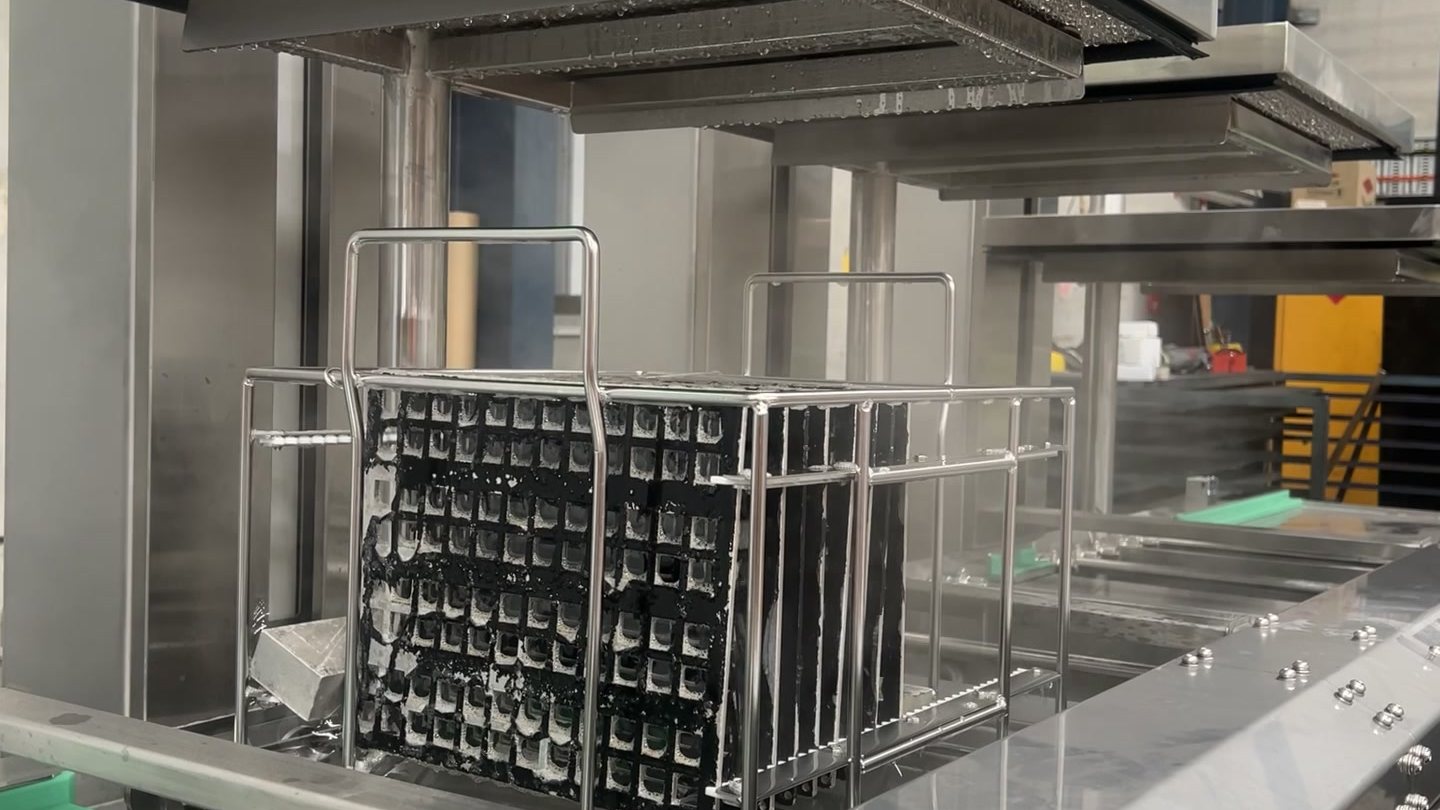
Three stations, one pass
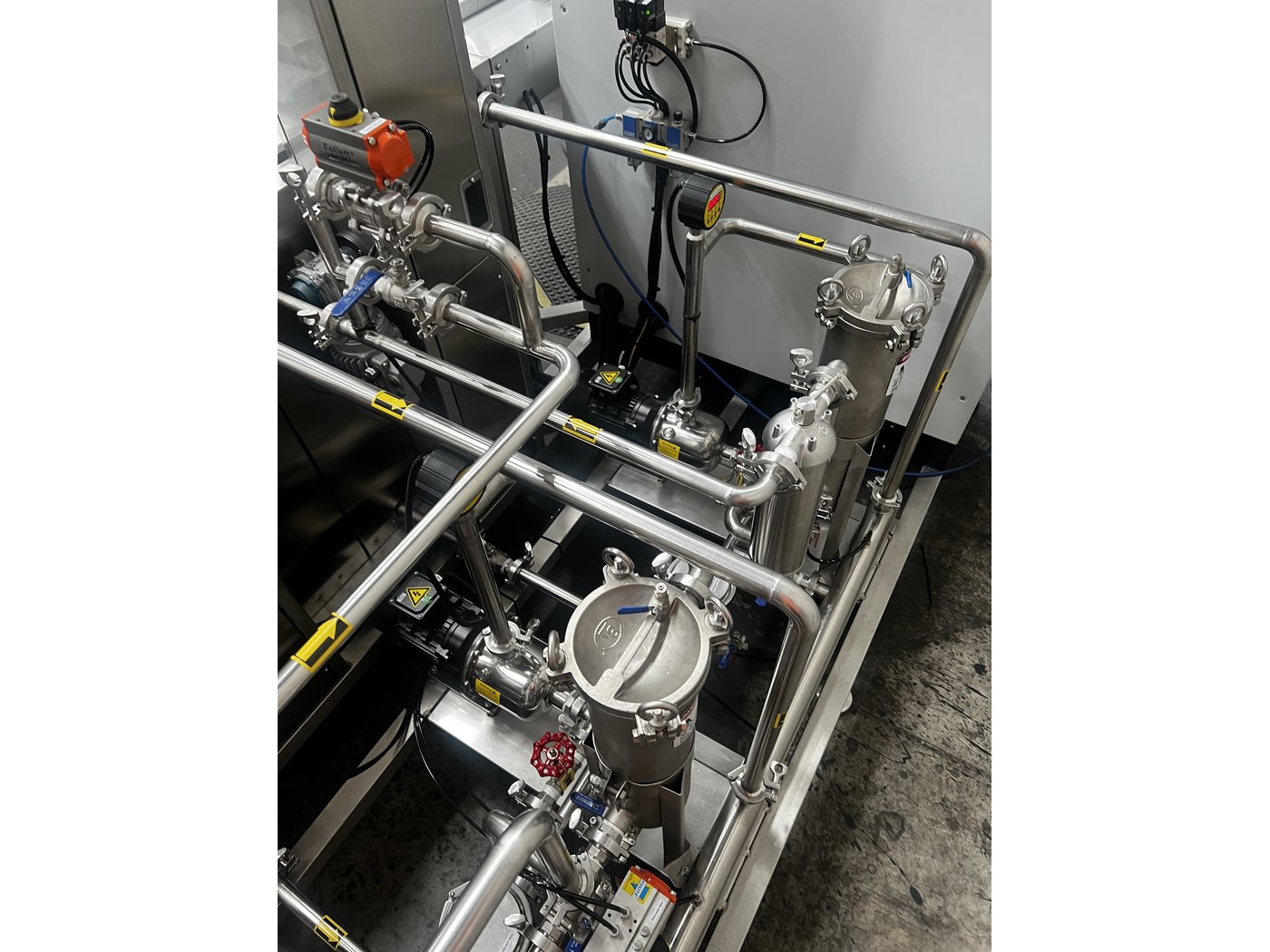
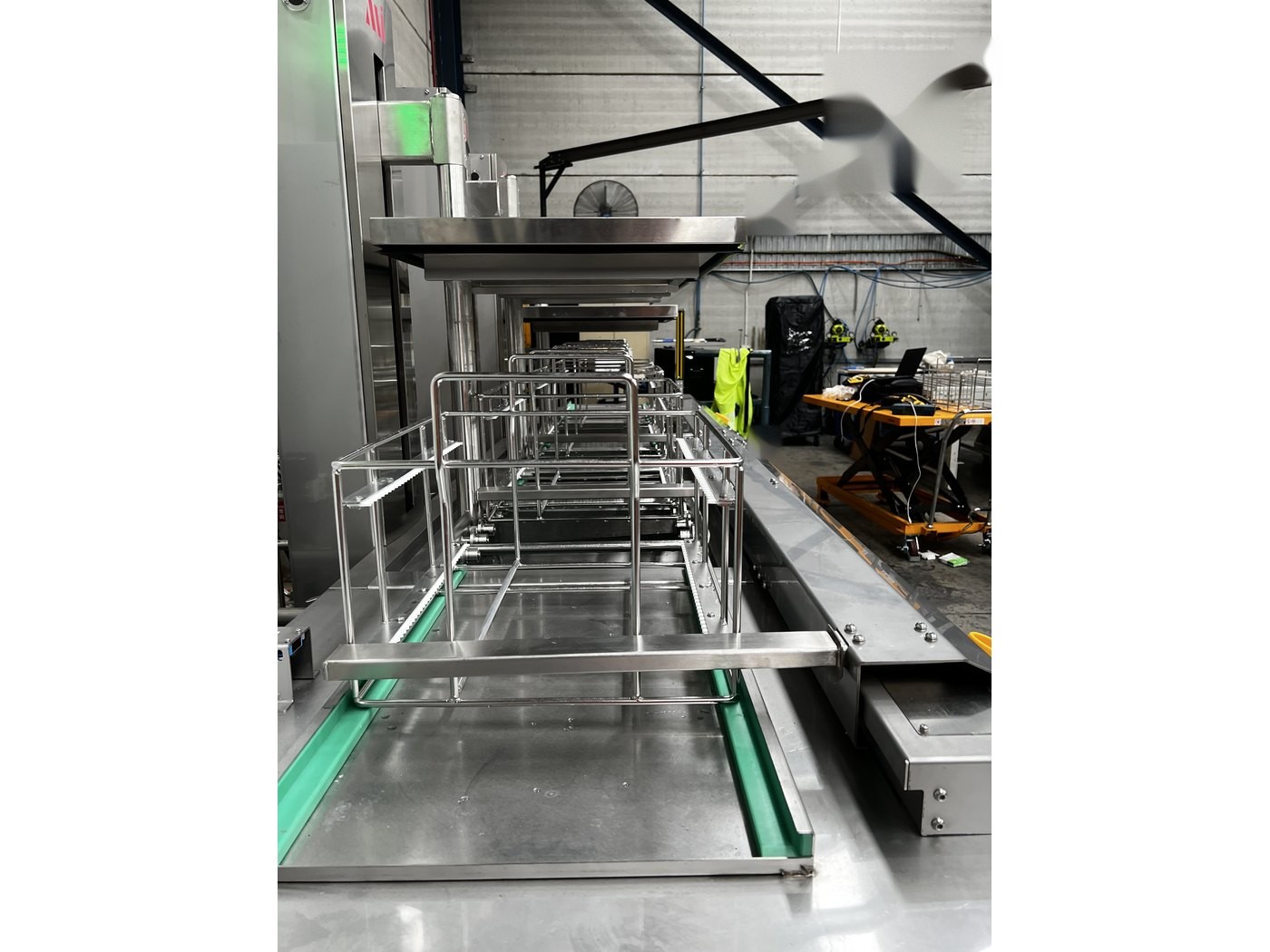
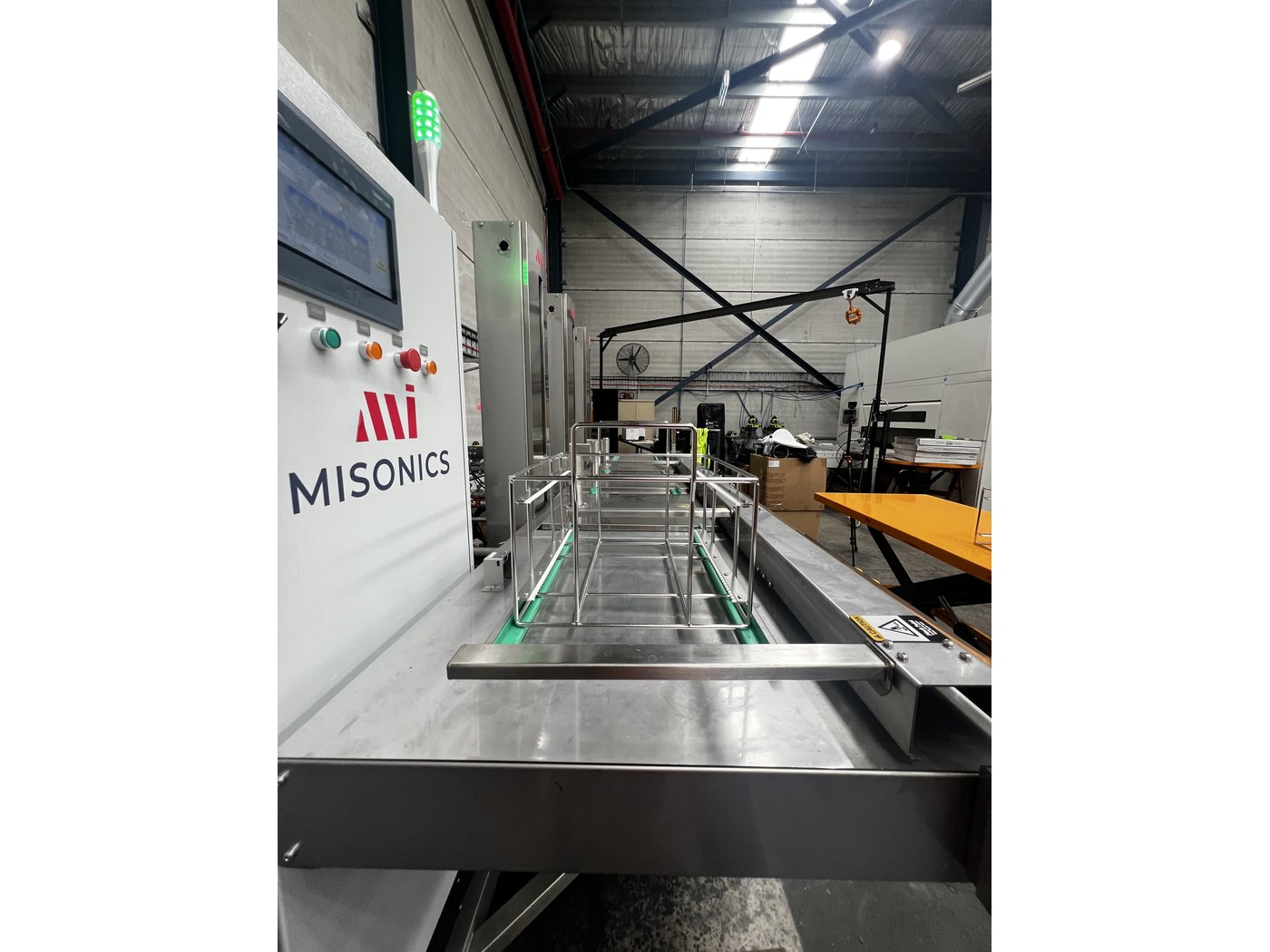
The machine in the video is a Sonos L-130 — a three-station SonoLine. The basket is loaded once at one end and comes off the other end dry.
| Station | What it does | Why it is there |
|---|---|---|
| 1 — Ultrasonic wash | Dual-frequency ultrasonic cleaning in heated aqueous detergent | Cavitation reaches where a spray cannot aim — blind holes, cross-drillings, internal passages |
| 2 — Rinse | Ultrasonic rinse; DI water on this build | Takes the chemistry off the part, so nothing dries on to the surface |
| 3 — Hot-air dry | Heated forced-air drying | The part is handled dry, which is what stops flash rust and witness marks |
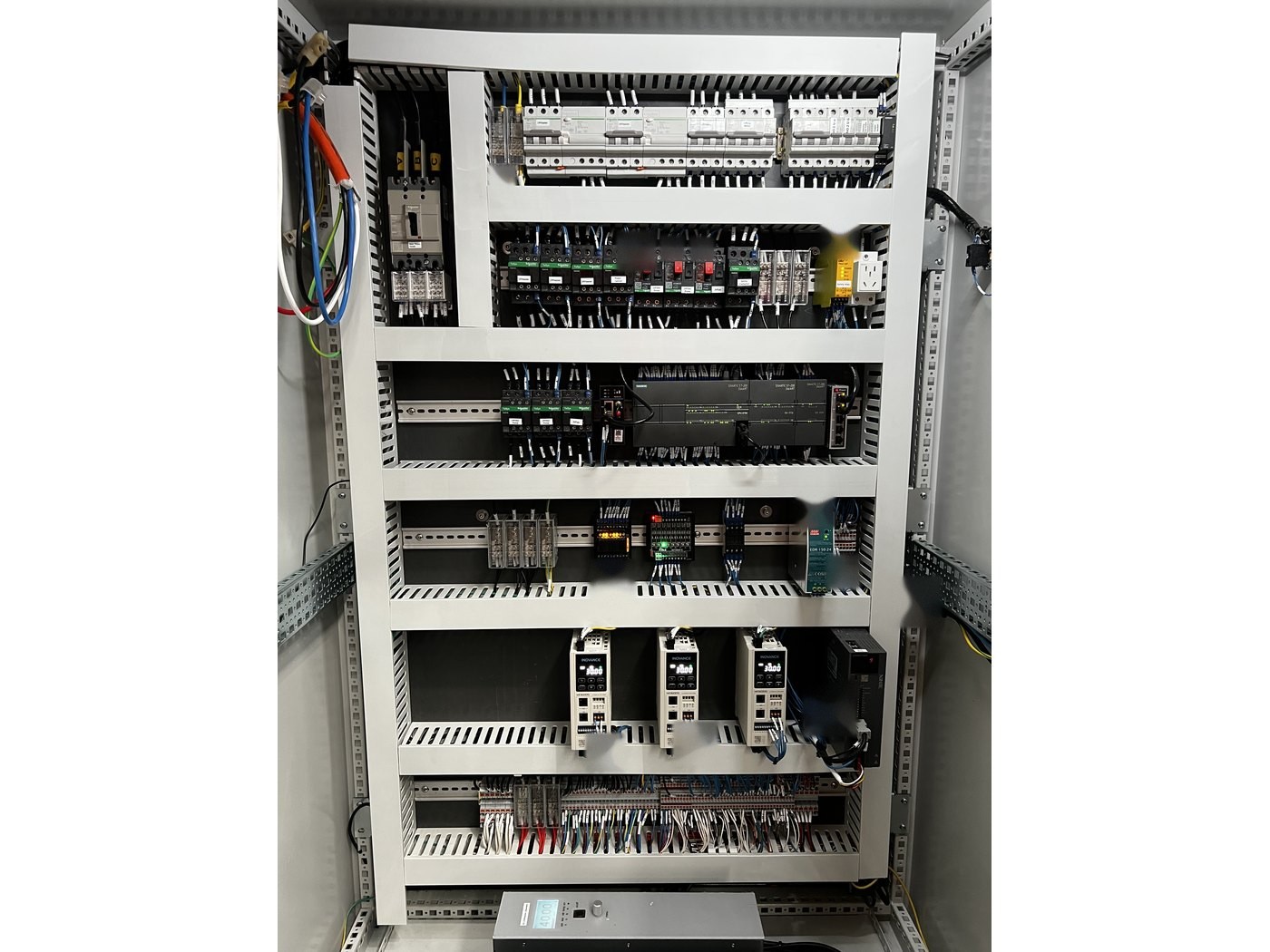
| Transfer | Powered lift at each station, basket moved automatically | Cycle timing stops depending on whose shift it is; every basket gets the same dwell |
Station count, tank sizes, drying method and connected power are engineered to the part and the takt time. Specifications are confirmed in writing at quotation.
25/45 kHz as standard — and when to ask for something else
The Sonos platform runs dual-frequency 25/45 kHz. The low band does the heavy lifting: bigger, more energetic cavitation that breaks and bulk-lifts machining soils, carbon and scale. The high band finishes — finer bubbles that get into detail and small passages the low band bridges over, at an intensity soft substrates and finished faces tolerate. Sequencing between them cleans a mixed basket to a standard neither band reaches alone, which is the whole argument of our dual-frequency article.
Other frequencies are specified per duty. This is not a brochure line: the general arrangement published on the SonoLine page is a three-tank build running 40/80 kHz — a higher, gentler pairing for finer work. If your parts want 28 kHz for heavy carbon, or a high band for precision detail, the tank is built for it rather than the process being bent to fit the tank.