An aerospace four-tank line: wash to dry without touching workshop air
The engineered system delivered for aerospace structures work — cooled ultrasonic wash, cavitation rinse, isopropyl displacement and fan-forced drying on a 5–10 minute platform cycle.
5 min readBy Misonics application engineers
When an aerospace structures manufacturer specified automated cleaning for production components, the answer was a four-tank multi-stage line: cooled ultrasonic wash, ultrasonic rinse, isopropyl dip and fan-forced air drying, with platform loading on 5–10 minute intervals. This study documents the engineered system.
Industry
Aerospace structures manufacturing
Components
Production aerostructure components
Contamination
Machining coolants · handling soils
System
4-tank automated line, manual load/unload
Chemistry
Aqueous ultrasonic stage + IPA final dip
Throughput
5–10 minute platform intervals
Why a line, not a tank
Sequence integrity
Aerospace cleanliness fails between stages, not in them: parts exposed to workshop air between wash and dry pick up exactly what was just removed. The line closes the sequence.
Thermal control
The ultrasonic wash tank runs cooled — temperature-sensitive components and chemistry stability both demand it. Cooling is a specification, not an option.
Repeatability on the clock
Platform transfer on fixed 5–10 minute intervals means every load sees the same exposure — the process card runs itself.
The process
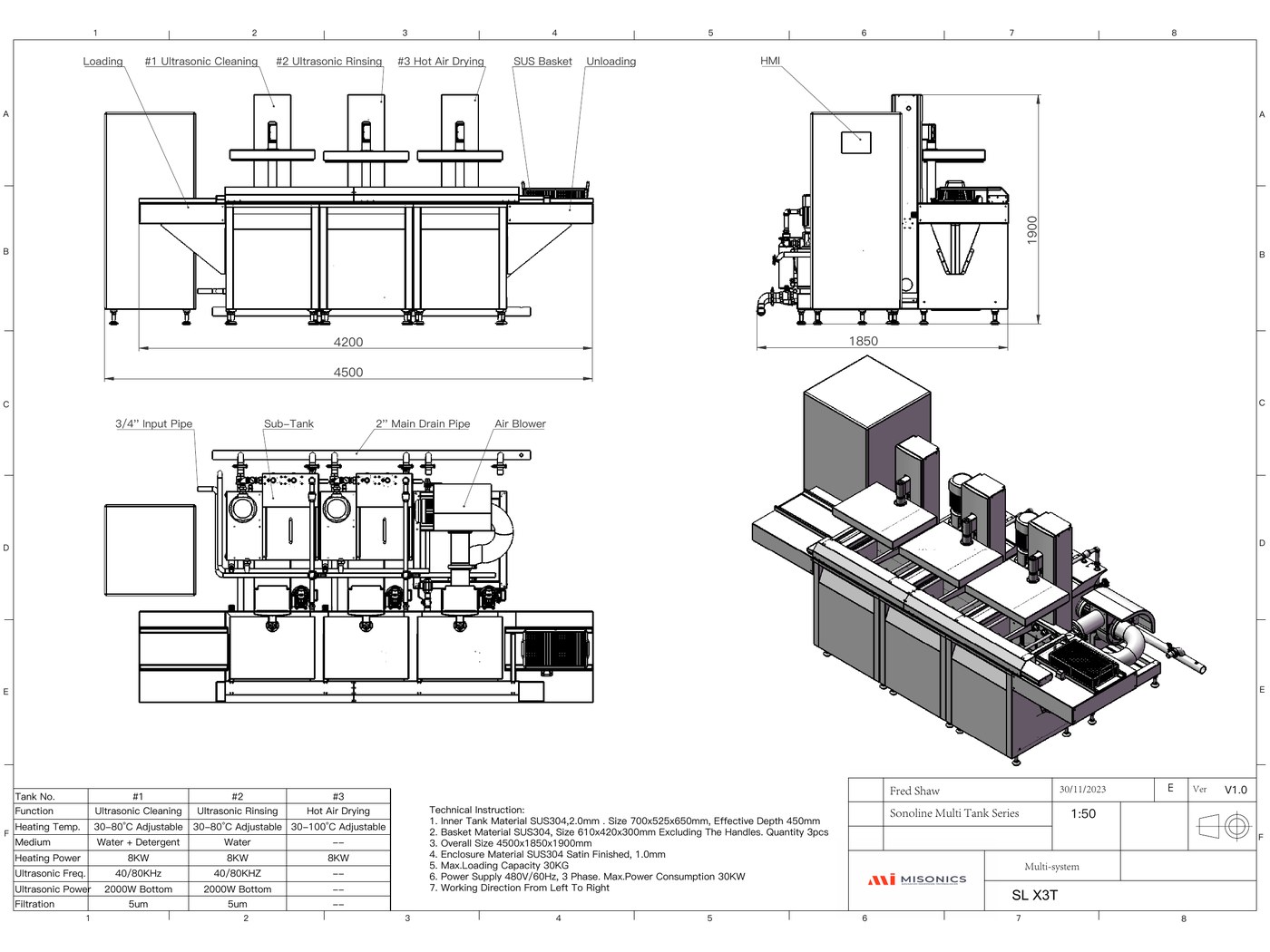
Process diagram
Stage
Function
Notes
Tank 1
Ultrasonic cleaning
Cooled; aqueous chemistry
Tank 2
Ultrasonic rinse
Cavitation-assisted rinse
Tank 3
Isopropyl dip
No ultrasonics, no heating, cooled — water displacement before dry
Tank 4
Air drying
Fan-forced cool air
Handling
Automated platform transfer
Manual load/unload; 5–10 min intervals
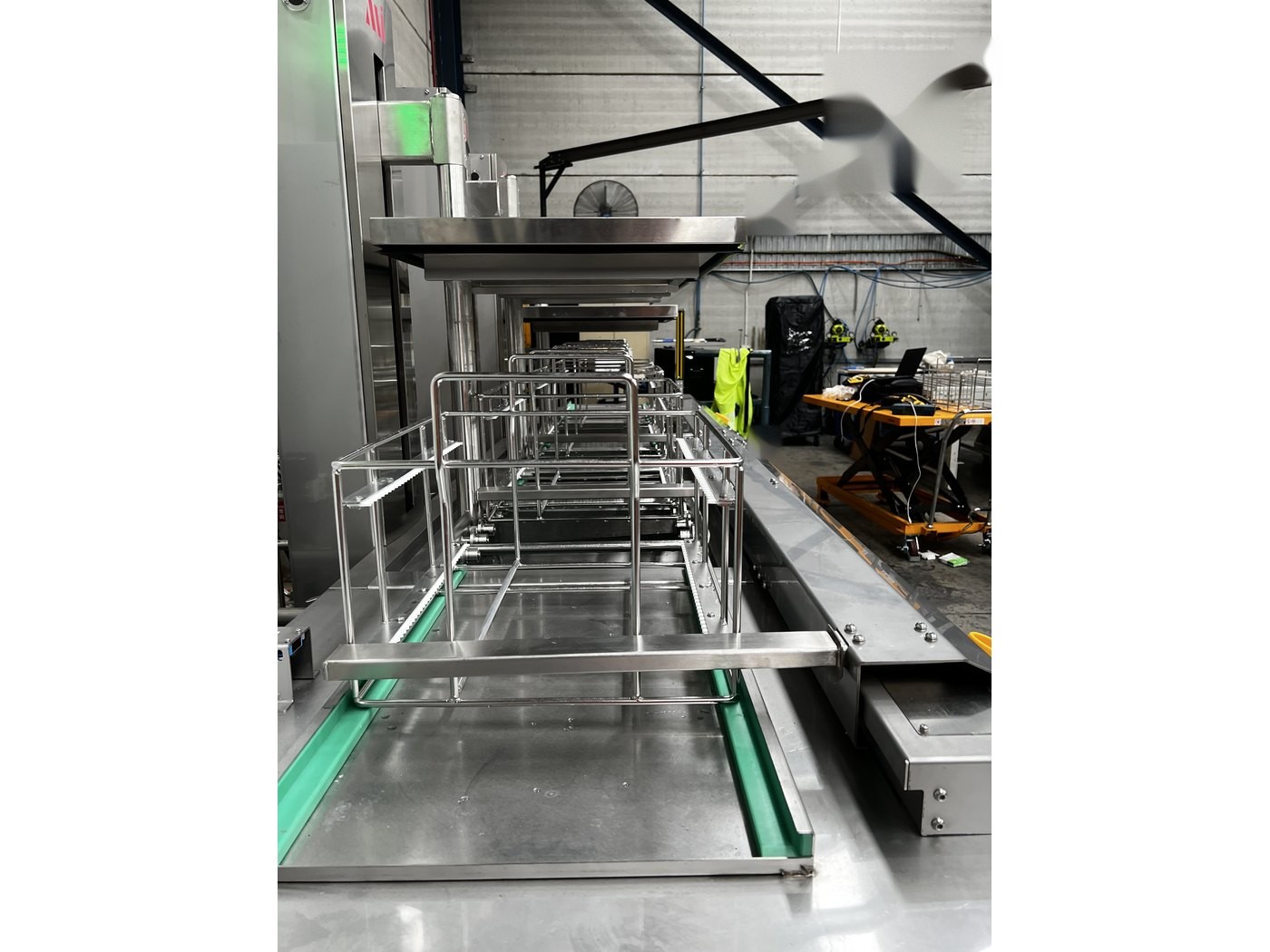
Installed line at customer facility (photo pending permission)
What the engineering answers
Nothing touches workshop air mid-process. Wash to dry inside one automated sequence — the between-stage contamination window is closed by design.
IPA displacement before drying. The dip strips residual water off the surface, so drying leaves no spotting on inspection-critical faces.
Cooled where it matters. Both the wash tank and IPA stage run temperature-controlled — chemistry stability and component safety engineered in, not hoped for.
A specified, documented line. Every stage exists in the equipment specification — the audit story is the machine itself.
Hardware
Engineered multi-stage lines
When the catalogue does not fit, systems are engineered to requirement — tank count, cooling, transfer automation and drying built around the parts and the spec.
The lesson for any precision buyer: the machine is the process card made physical. Specify the sequence your cleanliness standard requires, and the tank count follows — not the other way around.
Engineer the line your spec requires
From a cleanliness standard to a tank-by-tank specification.