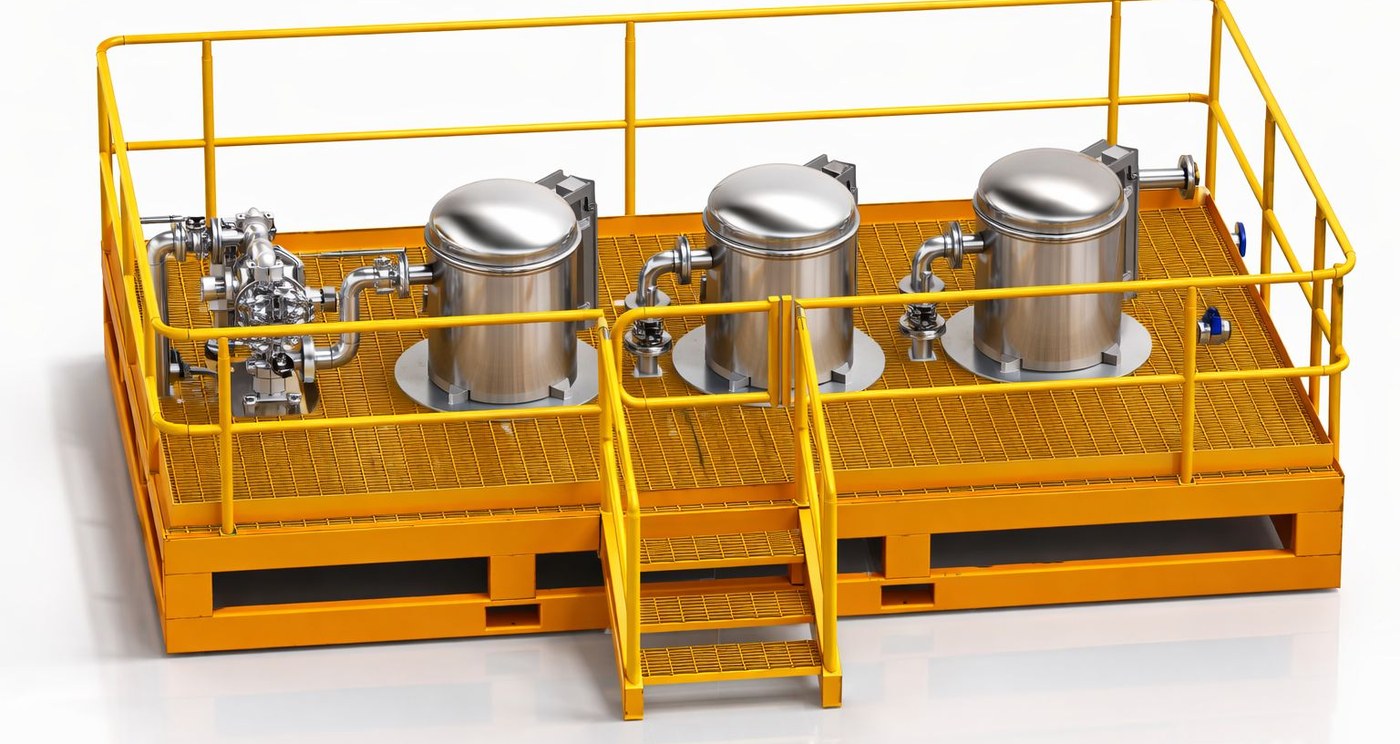
Everything your tank removes from parts goes somewhere — and without filtration, "somewhere" is back onto the next basket. Filtration is the least glamorous system on an ultrasonic machine and the one that most decides whether week two cleans like day one. Here is what you need, what you don't, and how to choose media that works instead of media that blinds.
A working bath accumulates two loads: solids (swarf, carbon fines, paint flakes, blasted-off soil) and oils. Solids stay suspended long enough to redeposit on parts and settle into a sludge blanket that insulates the tank floor — the classic slow killer of base-mounted transducers. Oils film onto everything leaving the bath. Filtration handles the solids; the weir and skimmer handle the oils (that story is №13); together they are why a defended bath lasts weeks.
What size particle matters? Rebuild work lives happily at 25–50 µm bags; precision and pre-coating work tightens to 5–10 µm; genuinely fine specifications go cartridge. Chasing finer than your process needs just buys blinding.
What is the media made of? The bag must survive the chemistry — polypropylene for most alkaline duty, compatibility-checked for acids and high temperature. A dissolving bag is contamination with a part number.
What flow does the bath need? Turnover measured in tank volumes per hour, sized to soil load — heavy rebuild duty wants faster loops than instrument cleaning. Undersized flow filters yesterday's bath.
Filter during and between cycles — but never let aerating returns churn air into the bath (returns below the surface, always). Swap bags on pressure rise, not on the calendar. And drain the sludge zone before it becomes a blanket: settled solids on the tank floor are the transducer-killer described in №1.
The other line that moves is transducer temperature: a sludge blanket on the tank floor insulates the radiating surface, and the difference between a drained sump and a neglected one shows up in transducer service life before it shows up anywhere else. Filtration is bath defence and hardware defence.
Origin Energy filter cleaning — candle and process filters recovered on program.
Read the study: the power-station filter program →One subtlety serious machines get right: reticulation is sequenced with the ultrasonic stage rather than run flat-out during it — pumping hard through a cavitating bath entrains air and fights the field. Programmed machines filter between cycles and during idle, holding bath clarity without stealing cleaning power. It is the kind of detail that separates integrated filtration from a pump bolted on afterwards.
Filtration spend is visible; its savings hide in three other budgets. Bath life extends because solids stop accumulating toward the dump threshold. Rework falls because redeposition stops sabotaging finished parts. And transducer life stretches because the sludge blanket — the insulating layer that cooks bonded plates from above — never forms. Priced against those three lines, bags are the cheapest component on the machine.
The workhorse bag rating for rebuild and general industrial duty — tight enough to break the redeposition loop, open enough to run weeks between changes.Misonics media guidance; finer ratings per specification. See the selection matrix above.
Filtration loops fail by being ornamental — a pump and a bag housing bought as an accessory tick-box, turning over the bath too slowly to matter. The sizing logic is turnover: the loop should pass the full working volume through the media several times an hour on dirty duty, which for a 500 L industrial tank means a pump specified in thousands of litres per hour, not hundreds. Media strategy is staged coarse-to-fine: a coarse bag catching the gross load cheaply ahead of the finer stage, swapped on differential pressure rather than calendar. Chasing fine micron ratings with a single bag on heavy soil just buys daily blinding — the coarse stage is what makes the fine stage affordable.
Plumbing rules are few and absolute. Draw from where the soil concentrates — low in the tank, and from the weir trough on oily duty so the skimmed layer leaves the system instead of touring it. Return the polished liquid below the surface, gently: a splashing return aerates the bath and re-gasses exactly the liquid the machine just spent its degas cycle clearing. And keep the loop running through idle periods where the duty is heavy — settlement overnight forms the floor blanket that insulates transducers and shortens their lives.
The media audit specs rating, material and flow from your actual soil — and prices the bags to run it.