Added to cart
AcidicTank Approved

Citric Acid

The descaler you can defend in a food audit

Food-compatible descaling and passivation support — gentle chemistry, clean paperwork.

Food-audit-friendly organic acidDissolves beer stone, milk stone, water scaleSupports stainless passivation
Pricing on application — trade accounts
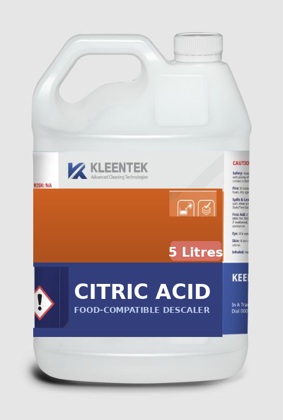
citric acid container
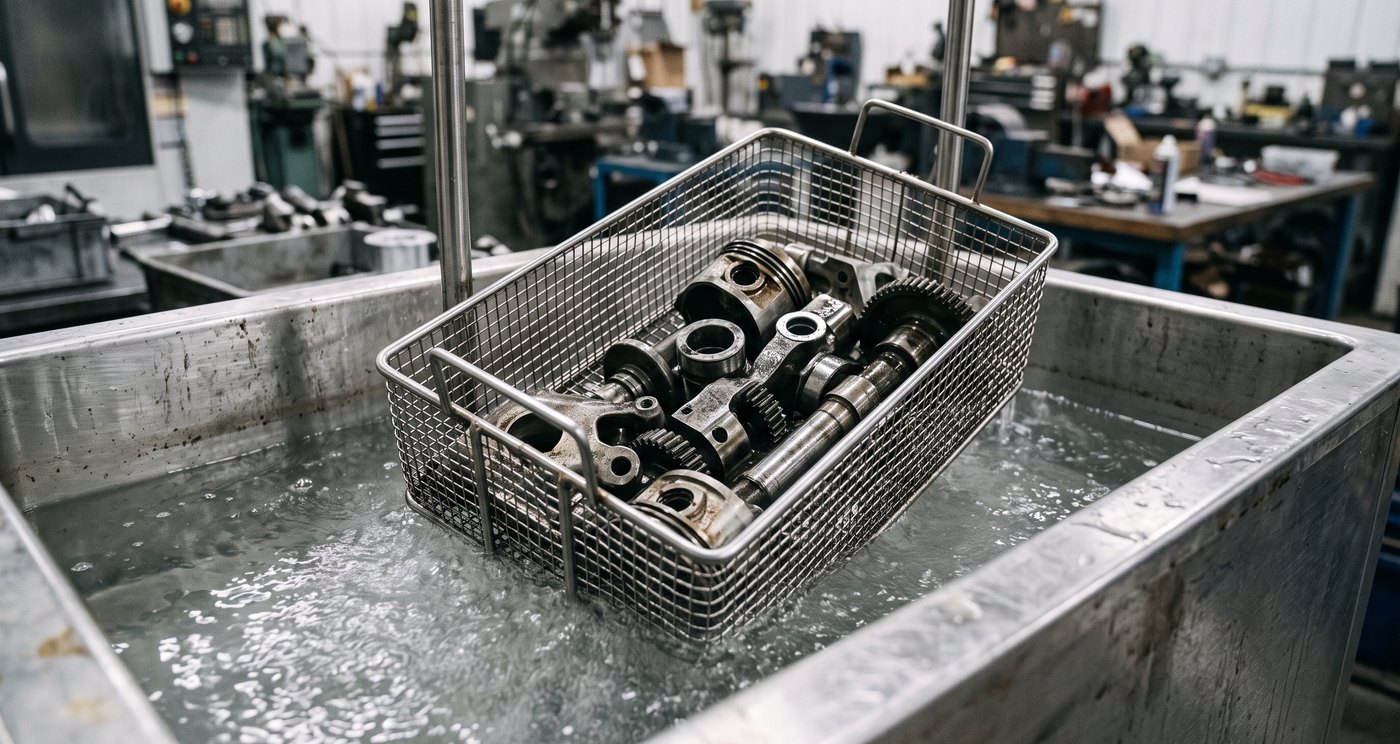
Machined steel components in a stainless mesh basket being lowered into an ultrasonic cleaning bath
The chemistry is half the process. It wets the tank and the part so cavitation can form at the surface, and it holds the soil once the ultrasound has lifted it.Illustration generated by Misonics.
Why It Wins

The descaler you can defend in a food audit

Food and beverage plant needs descaling like any other — beer stone, milk stone, water scale — but every chemical near product lines must survive an auditor's reading. Citric acid is the descaler with nothing to explain: a food-familiar organic acid that dissolves mineral scale and supports stainless passivation.

It runs gentler than mineral acids, which suits the mixed and soldered assemblies common in food hardware, and its residues rinse to nothing that troubles a swab test.

Where scale is heavy and the substrate robust, the stronger CoreKleen family works faster — but where the next visitor is an auditor, citric is the quiet professional choice.

Applications

Where it earns its keep

Food-plant descaling; passivation support; boiler-adjacent hygiene work.

Food & BeverageLife Sciences
Temperature & Dose
SWEET SPOT 57 °C45–70 °C (indicative)20 °C100 °C

Dose: Per TDS. The trial sets your exact process values; the TDS governs.

Run It Right

The working process

Acid-Side Neighbours

Right product, right job

Buy Citric Acidinc GST
5 L$ TBC
20 LPOA
200 LPOA
Complete The Job
Anti-RustProtect the freshly bared metalView & buy →Rinse AidSpot-free final rinseView & buy →
Compatibility
Mild & carbon steelCitric acid — flash-rust risk, rinse & inhibit
Stainless steelSafe in prescribed use
Cast ironFlash-rust risk — rinse & inhibit
Aluminium & titaniumTest first
Magnesium & soft alloysTest first
Zinc & galvanisedTest first
Copper & brassBrightening possible — test first
Plated finishes (Cd·Cr·Ni)Confirm plating type first
Plastics & rubbersSafe in prescribed use
Painted / coated surfacesSafe on cured coatings
Per prescribed use — the cleaning trial confirms on your parts; the TDS governs. Full range matrix →
Transport
TransportDG classification — from SDS [pending]
Bath Life

This is not a single-use chemical

A common misconception treats industrial chemistry like dishwater — used once, tipped out. A defended bath of Citric Acid works for weeks of production: weir oil separation and filtration defend the bath, solids leave through the filter, and the chemistry keeps working until genuine depletion.

Change out on evidence, not anxiety: when cycle times stretch or results fade at correct concentration, the bath has earned its retirement. Top-ups at specification carry it between changes.

Keep It Honest
  • Skim or weir oils continuously — oil load is bath killer #1
  • Filter solids; drain settled sludge from the sump
  • Verify concentration on schedule per the TDS check method
  • Log it — the trend predicts top-ups before cleaning fades
Storage

Drum and bath, both looked after

The Concentrate
  • Store cool, ventilated and sealed, out of direct sunlight
  • Segregate from incompatible chemistry and ignition sources
  • Original labelled containers only detail from SDS pending
Compliant with the product SDS.
The Working Bath

Lid the tank between shifts — holds temperature, limits evaporation, keeps dust out.

Idle periods: a warm, stagnant aqueous bath can support biological growth over extended stagnation. Circulate periodically, keep concentration at specification, never leave an open tank standing for weeks.

Extended shutdown: drain to sealed, labelled containers — or schedule changeover for restart day.

Documents & Safety

The paperwork, on the page

Hazard identification pending documentation
Baseline guidance pending SDS documentation for this product.
Replace with SDS content before publication.
PPE & exposure controls pending documentation
Baseline guidance pending SDS documentation for this product.
Replace with SDS content before publication.
First aid pending documentation
Baseline guidance pending SDS documentation for this product.
Replace with SDS content before publication.
Storage & handling pending documentation
Baseline guidance pending SDS documentation for this product.
Replace with SDS content before publication.
Disposal pending documentation
Baseline guidance pending SDS documentation for this product.
Replace with SDS content before publication.
Transport & dangerous goods pending documentation
Baseline guidance pending SDS documentation for this product.
Replace with SDS content before publication.
Citric Acid FAQ

Asked at the tank

What dilution and temperature do I run?
Per TDS at working temperature — and the trial sets your exact process values against your soil. Running richer than specified wastes chemical without cleaning faster. That range is the chemistry’s window — not the whole answer. The substrate sets its own ceiling, and it is usually lower: aluminium and anodised finishes discolour above about 65 °C, zinc and coated parts lower again, and magnesium is governed by pH before temperature. Run at the lower of the two. Bath temperature — chemistry vs substrate →
When do I change the bath?
When cycle times stretch, results fade, or filtration stops holding the debris. Drain, clean the tank, refill — never lay fresh solution over settled sludge.
Will it attack my tank?
Acid work runs in tanks specified for it — 316 stainless or polymer, never bare mild steel. Misonics acid-duty tanks are built for exactly this; if you are retrofitting chemistry into an existing tank, confirm the tank material against the card before the first fill.
Can I get the SDS before buying?
Yes — every product ships with its SDS, and documents are available ahead of purchase for your chemical register and risk assessments.

Prove it on your parts

The trial pairs Citric Acid with your components — concentration, temperature and cycle documented before you order a drum. Wrong chemistry for your soil? The trial says so.

Talk to an engineer Back to the Range