A Cat 3516B strips into more parts than a workshop can hand-clean on schedule. Sixteen heads, sixteen liners, sixteen piston assemblies, the coolers, the rails and several hundred fasteners — and every one of them has to be clean enough to inspect before any of it goes back. This is the timed evidence for doing that step in a tank.
The engine, and why it is a cleaning problem
Sixteen cylinders in a vee, 170 mm bore on a 215 mm stroke, 78 litres, quad-turbocharged, 1801 kW at 1750 rpm. It is the powerplant of the Cat 793D haul truck and it turns up across mining, marine and prime power.
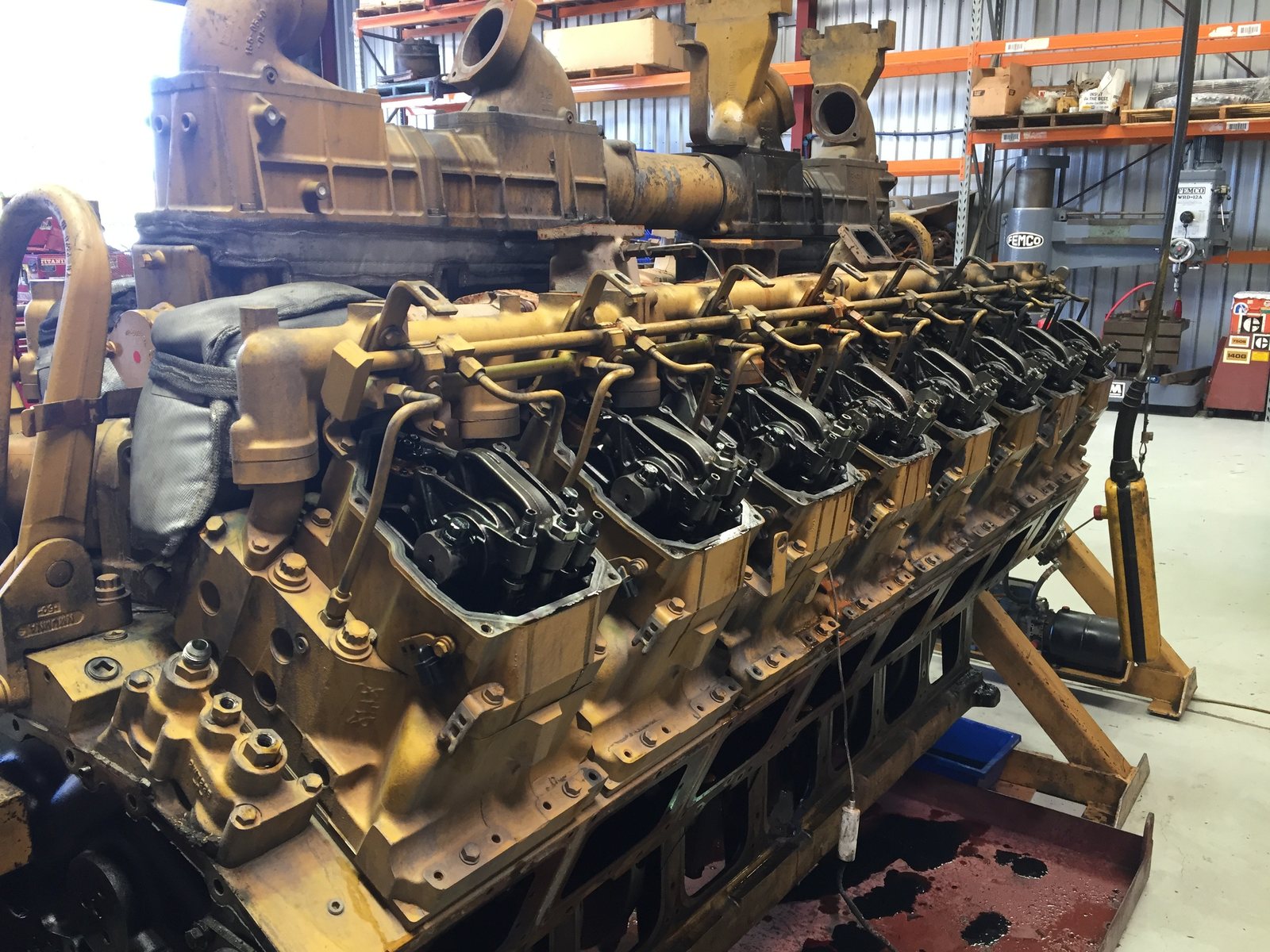
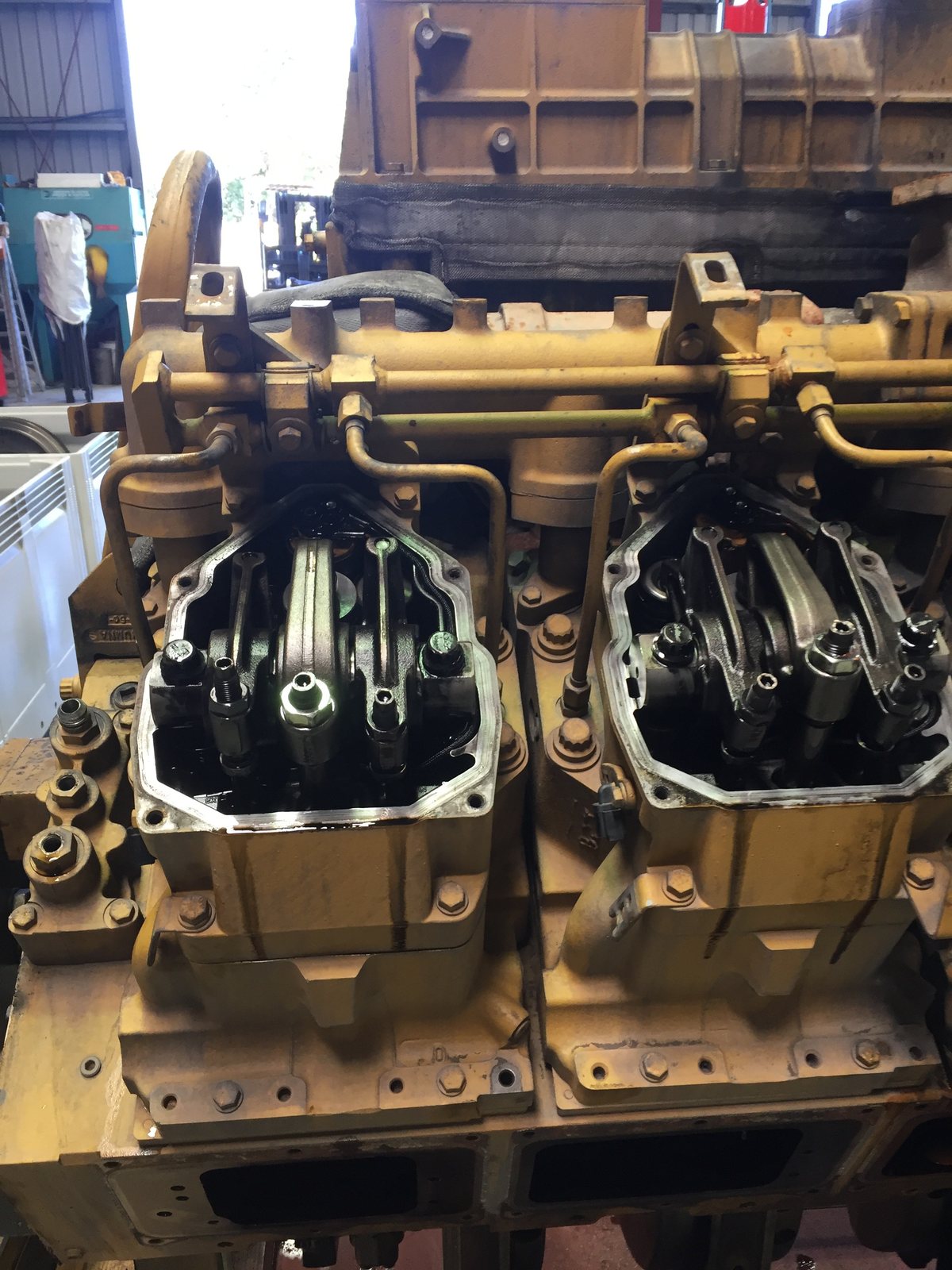
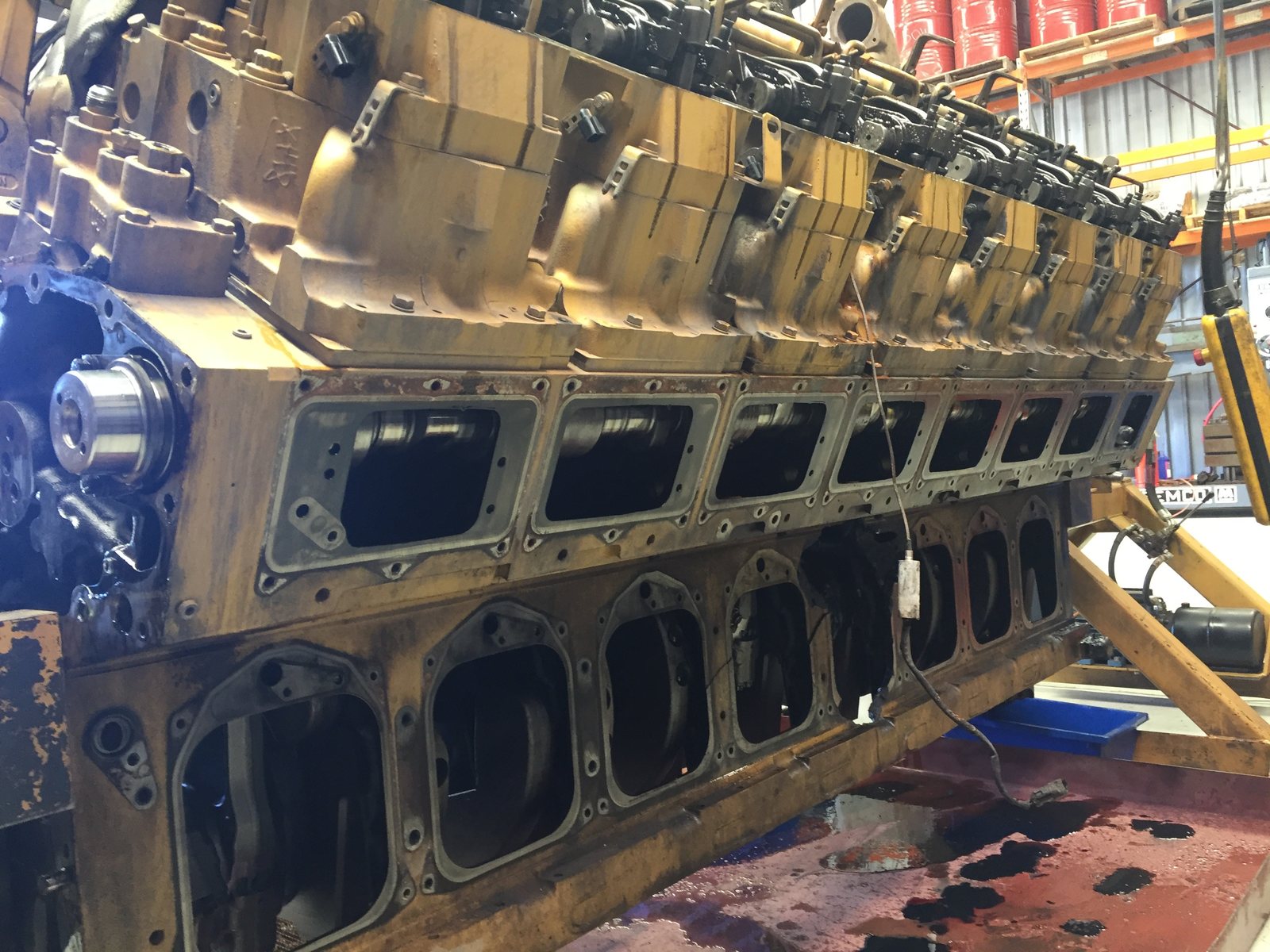
What matters for cleaning is the architecture. The 3516 carries one cylinder head per cylinder, each on four studs with its own gasket face, and a full-length row of crankcase handhole covers down each bank. Strip one and you are not looking at a block and two heads. You are looking at sixteen of everything.
Geometry a brush cannot reach
Oil galleries, water jackets, blind drillings, injector bores, cooler cores. On a rebuild the question is never whether the outside looks clean. It is whether the passages are clear and whether the surfaces can be measured and inspected without a film in the way.
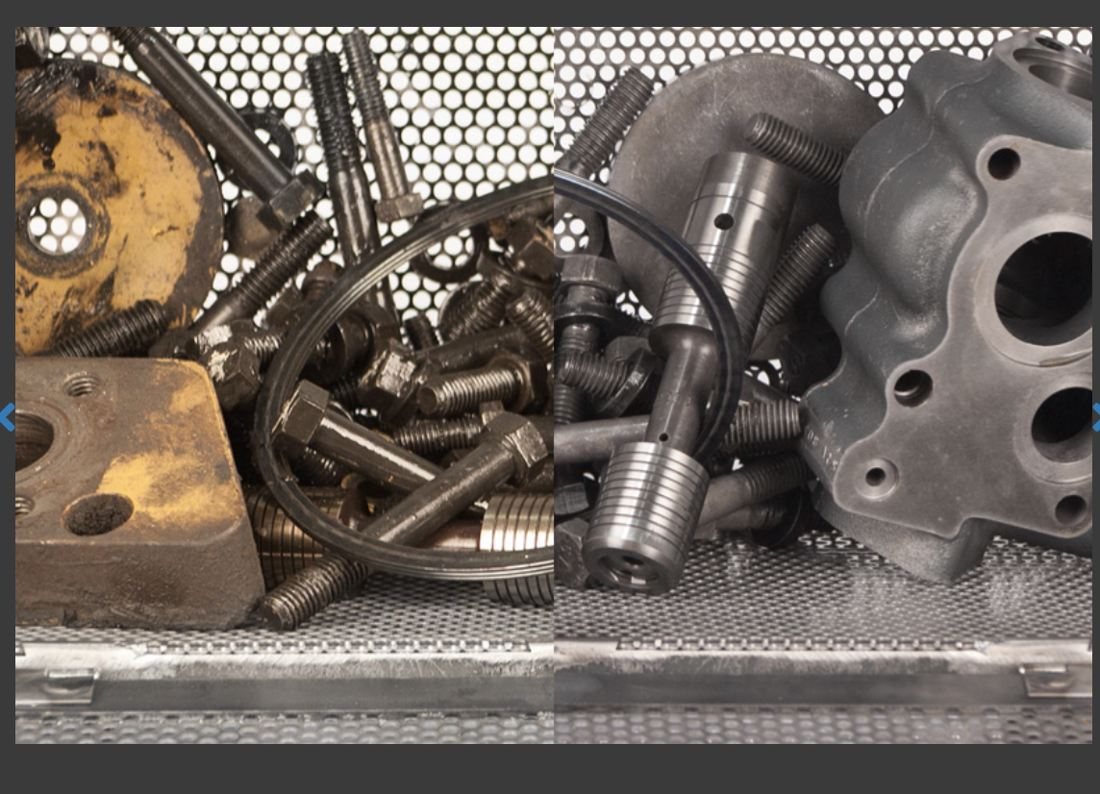
Cavitation reaches what a brush and a wand cannot. Bubble collapse at the liquid-metal boundary lifts carbon, varnish and oil residue out of internal geometry with nothing touching the surface. Nothing abrades, nothing embeds, and no metal is removed — which matters on a component that has to gauge afterwards.
The trial: stripped and timed
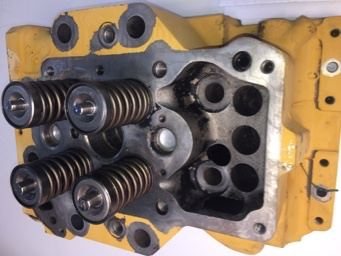
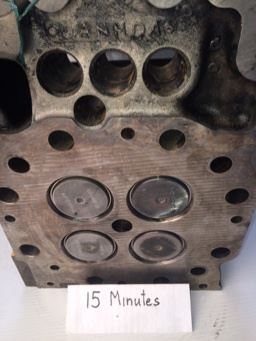
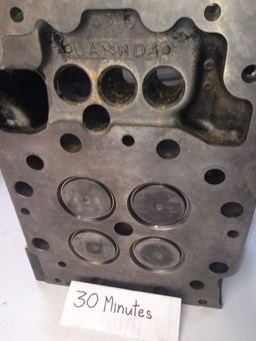
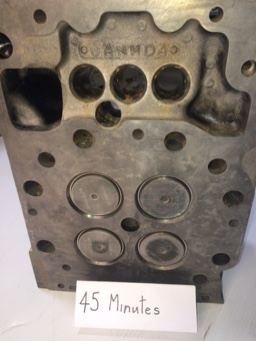
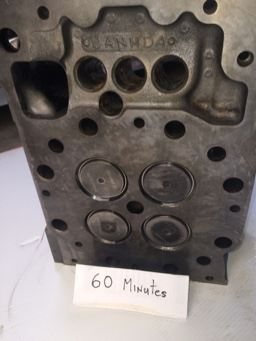
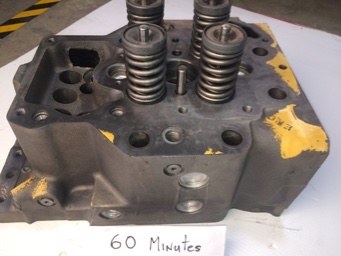
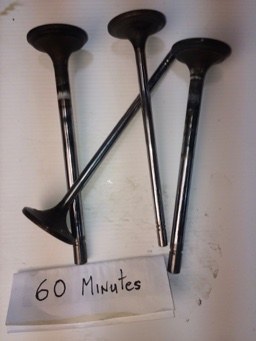
Cylinder heads off engines of this class went through the bath and came out at 15, 30, 45 and 60 minutes, photographed each time against a written card in the frame. Not one before shot and one after shot — four points on the curve, on two different faces of the part, so you can set your own cycle time rather than take ours.
Thirty per cent sits above the published 10–20% working band because the duty is heavy — carbon over paint over a service life of oil. The trial sets the number for your components, not the label.
The combustion face
Where the carbon is thickest, and where the seats have to become measurable.
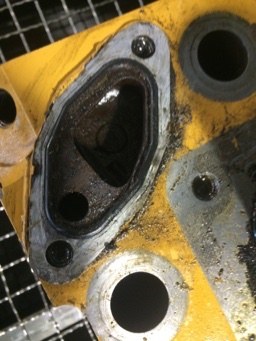
The ports
This is the face a rebuild shop actually asks about. Carbon in an exhaust port is not cosmetic — it is flow, and flow is exhaust temperature, and exhaust temperature is turbo life. A port you cannot see into is a port you cannot sign off.
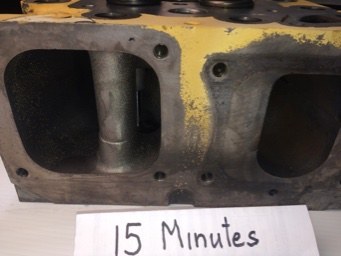
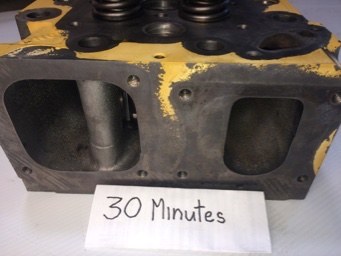
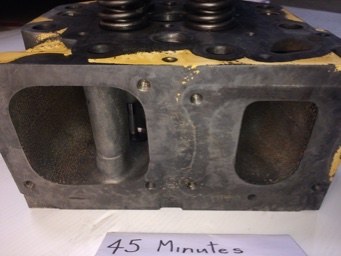
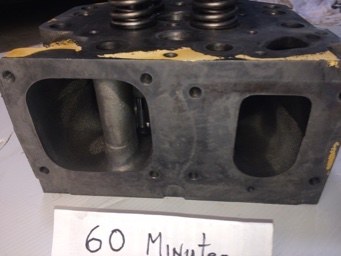
Nothing went into those ports. No wand, no brush, no media. The cavitation did the reaching and the chemistry did the lifting, which is the whole reason this works on geometry no tool fits into.
MetalTek 100 is a caustic stripper. At 30% and 70 °C it removes the original paint along with the carbon, which is what you want on a head going back for inspection and refinishing. It is not what you want on a component you intend to keep painted.
It suits cast iron and steel. Do not put aluminium or plated finishes through this chemistry — aluminium components off the same engine go through a different bath, and we specify both.
Two products, and the second one is not optional
Strip a cast iron head to bare metal in a hot alkaline bath and you have created a perfectly clean ferrous surface with nothing on it. It will flash rust on the bench, in front of you, while it dries. That is not a chemistry failure — it is what clean steel does.
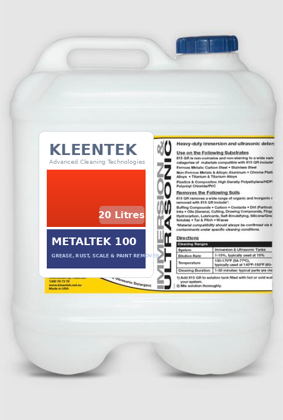
MetalTek 100 — the strip bath
pH 14, 10–20% at 70–90 °C. Grease, rust, scale, carbon and paint off ferrous in one immersion.
Product, SDS & TDS →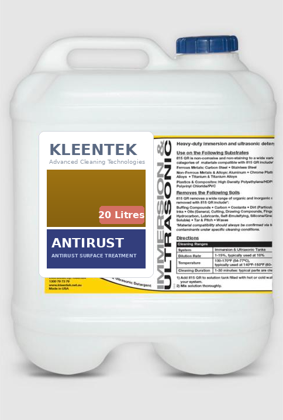
Anti-Rust — the protect bath
2–10% at 20–60 °C. Parts come out of the rinse and straight into this, so a head can queue for machining without a bloom coming up on the deck.
Product, SDS & TDS →Strip, rinse, protect. Three stages, two products, one documented cycle. A rebuild shop that skips the third stage spends the saving twice over in rework.
Sizing: the block is the constraint, not the components
| What goes in | What decides it |
|---|---|
| Sixteen cylinder heads | Batch size per shift. Four to six a load is a comfortable rhythm on a component tank. |
| Liners, pistons, rods | Ring grooves and cooling galleries. Cleaned without abrading, so dimensions are unchanged and the part still gauges. |
| Oil and aftercoolers | Core passages, where a partial blockage shows as temperature rather than as dirt. |
| Fasteners and hardware | Several hundred per engine. Thread form intact, which is the difference between a reusable stud and scrap. |
| The block | The part that decides which tank you buy. Measure it — length, width, height and lifting arrangement — before anyone quotes. |
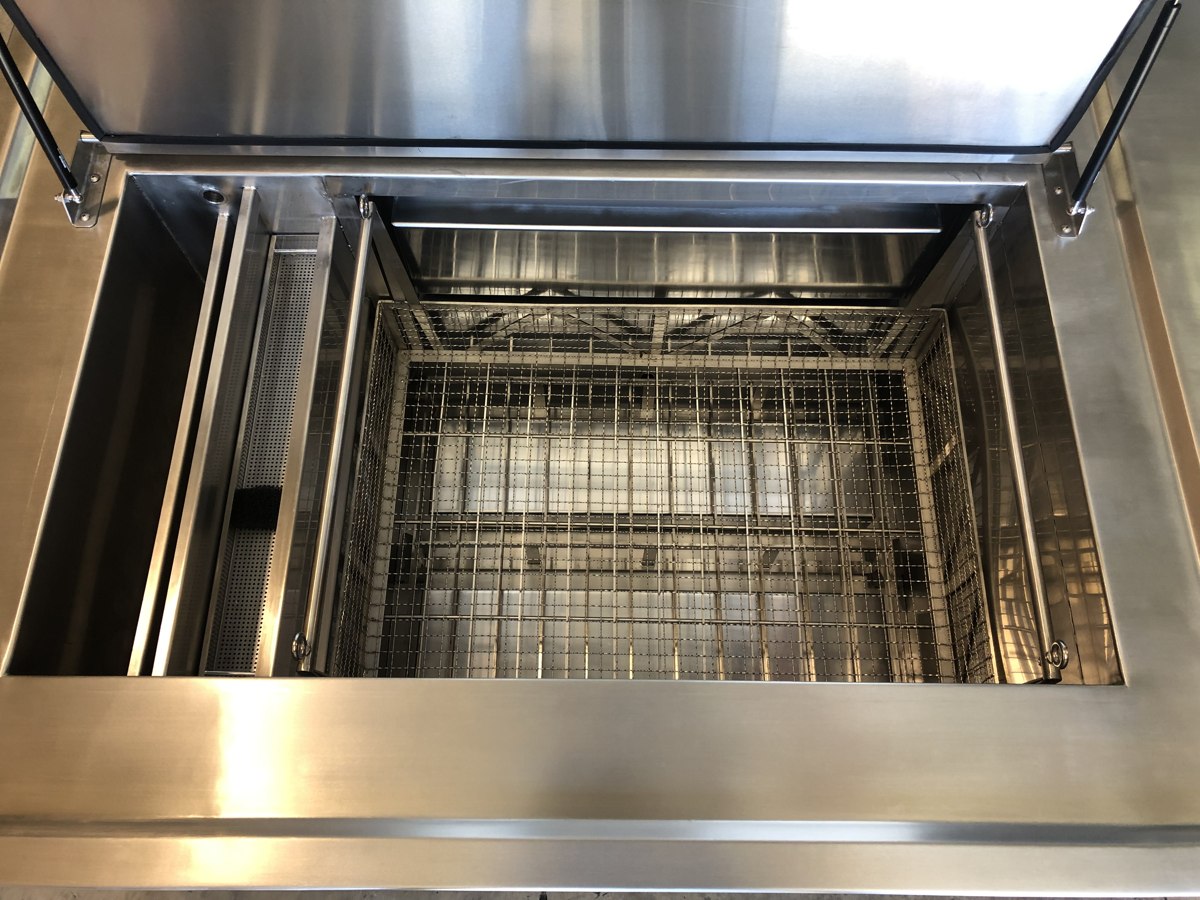
EVS 1200
1,200 L · 1500 × 1200 mm · 18 kW at 25 kHz. The component machine, under an automated double-skinned lid.
Specifications →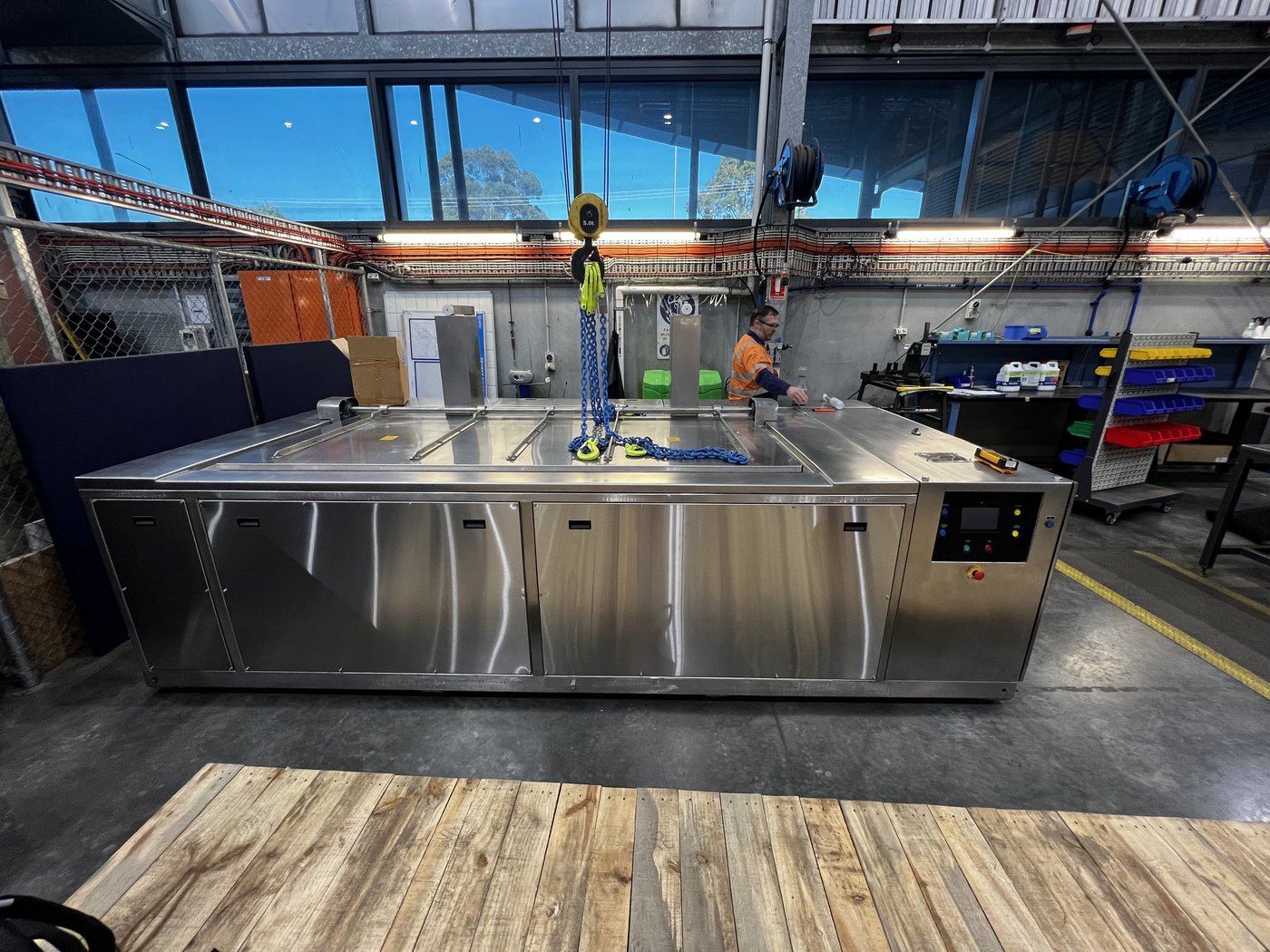
EVS 1500-PL
1,550 L · 2000 × 900 mm platform · 18 kW at 25 kHz. Motorised elevator, so a heavy load comes to deck height without booking the overhead crane.
Specifications →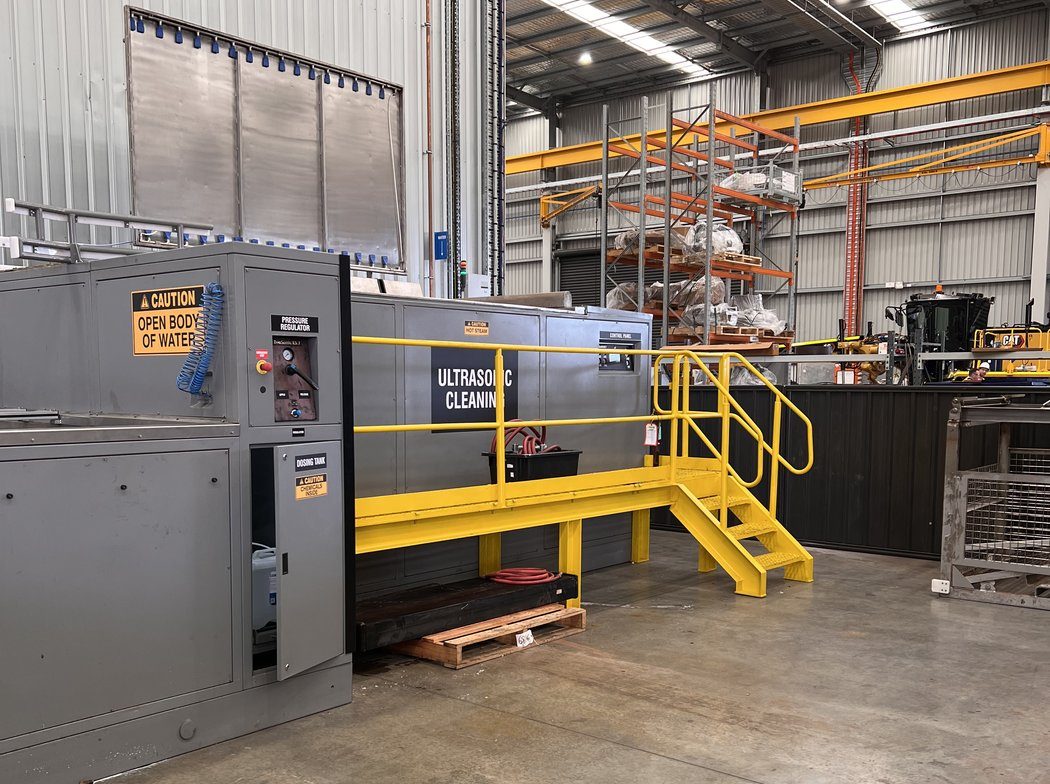
How to pick between them. Components decide the first two; the block decides the third. Heads, liners, pistons, coolers and hardware batch comfortably in a 1200 or a 1500-PL. A V16 block is a different question — measure yours, then compare it against 2495 × 1516 mm and 1,172 mm of depth. If it fits, it goes in whole. If it does not, the tank gets built around it.
Why it pays
An engine out of a haul truck is a truck that is not moving dirt. The cleaning step sits on the critical path of the rebuild, and it is usually the step quietly absorbing hours because it is manual, inconsistent and impossible to schedule accurately.
A documented cycle takes a variable off the rebuild plan. The parts come out clean on a known time, every time, and the inspector gets a surface they can actually read.
Tell us the biggest part and the batch, and we will size the tank.
Talk to our engineer
A rebuild on the critical path does not have time for a sales cycle. Send the part, the soil and the batch. You get an engineer's answer, usually the same day — and if it needs a trial we will say so rather than guess.
Talk to an engineer →Have a question?
An assistant trained on our process cards, chemistry data and machine specifications, answering at two in the morning when the question is whether MetalTek touches aluminium. Until then, 1300 MISONICS reaches a person.
Browse the knowledge centre →Provenance. Engine photographs are as-received images of a Cat 3516 stripped for overhaul, shown to establish the architecture and scale of the work; the timed trial images are of cylinder heads from engines of this class, photographed against the written card in each frame. Cycle parameters are those recorded at the time and are a starting point for your components rather than a specification. Engine specifications are Caterpillar published figures for the 3516B HD EUI as fitted to the 793D. The EVS 7000-PL is photographed on a customer floor.