A major Australian airport had 2,500-plus inset and elevated fixtures on the field and an overhaul process that worked — except for one step. The lens optics would not come good. This is the step that fixed it, and it has been running on that overhaul line since 2019.
The part, and why it fails quietly
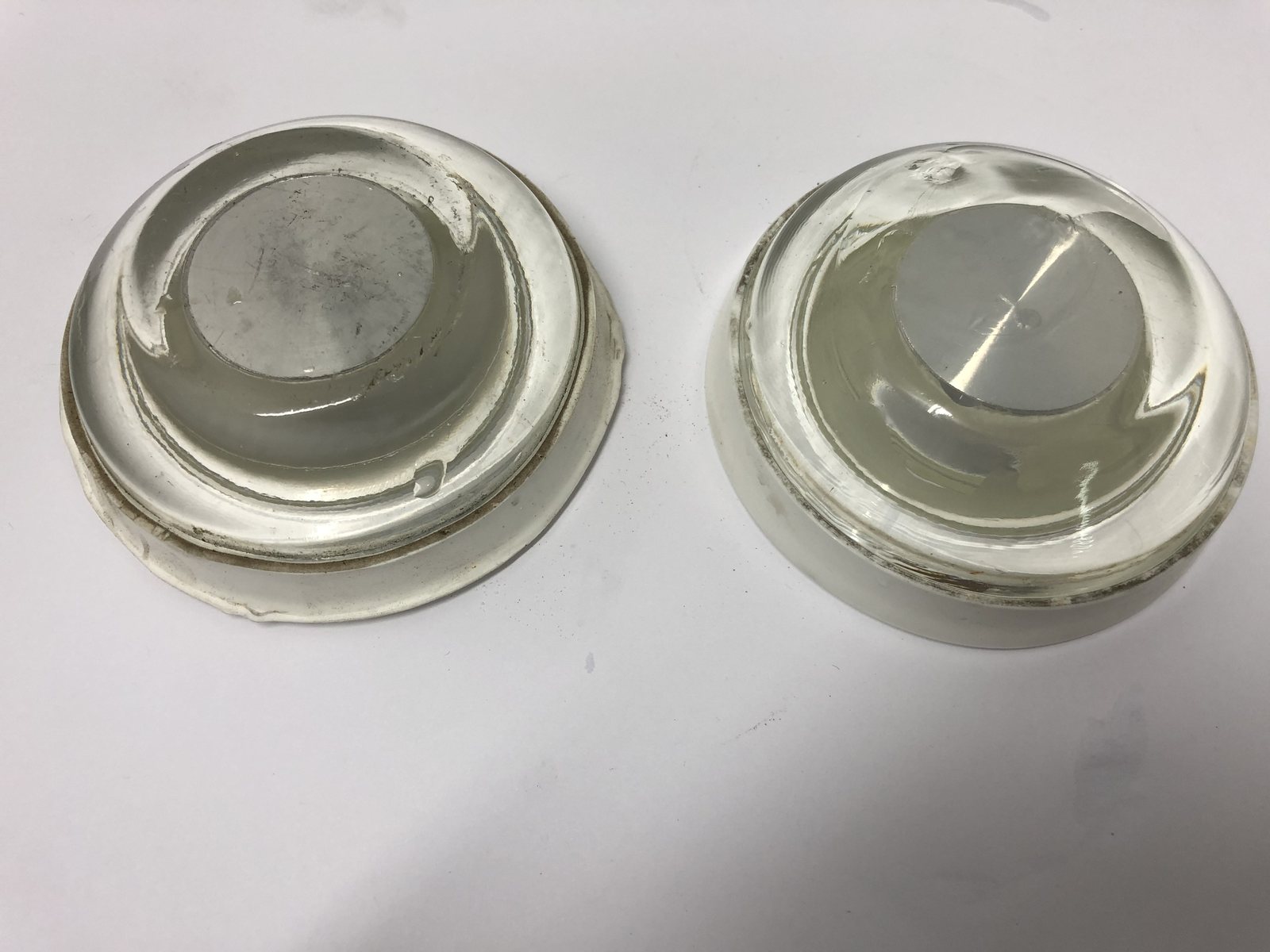
An inset runway or taxiway light is set flush into the pavement, which means the face doing the optical work is the face aircraft run over. Tyre rubber gets laid down on it and cooked on. Fuel and hydraulic residue works underneath. Runway dust works through both. The brim and the skirt of the lens stay close to untouched — the whole deposit sits on the centre optic, which is the only part of the lens doing any work.
Nothing presents as a fault
The lamp works. The circuit is healthy. From three metres the fixture looks intact. Output falls quietly until somebody puts a photometer on it.
The threshold is written down
The FAA sets it plainly: fixtures are to be cleaned when brightness falls below 70% of the minimum output required. Below that line a fixture is unserviceable.
Dirty glass is the cheap failure
Cracked glass costs a fixture. Dirty glass costs a cycle in a tank. The difference only exists if the workshop has a cycle that works.
Reference: FAA AC 150/5340-26C, maintenance of airport visual aid facilities. Australian aerodromes should read the equivalent obligation in the CASA Part 139 Manual of Standards; the engineering point is the same either way — transmission is a measured number, not an opinion.
Why hand-cleaning was the bottleneck
This customer was not shopping for a maintenance regime. They already had one. Fixtures came off the field and through a workshop overhaul, and the optics were already being removed — which is exactly what made this straightforward. The problem was that hand-cleaning a coated optic is slow, inconsistent, and it puts a cloth on the surface you are trying to protect.
The job was never to make the lens look better. It was to get transmission back without touching the glass.
The cycle
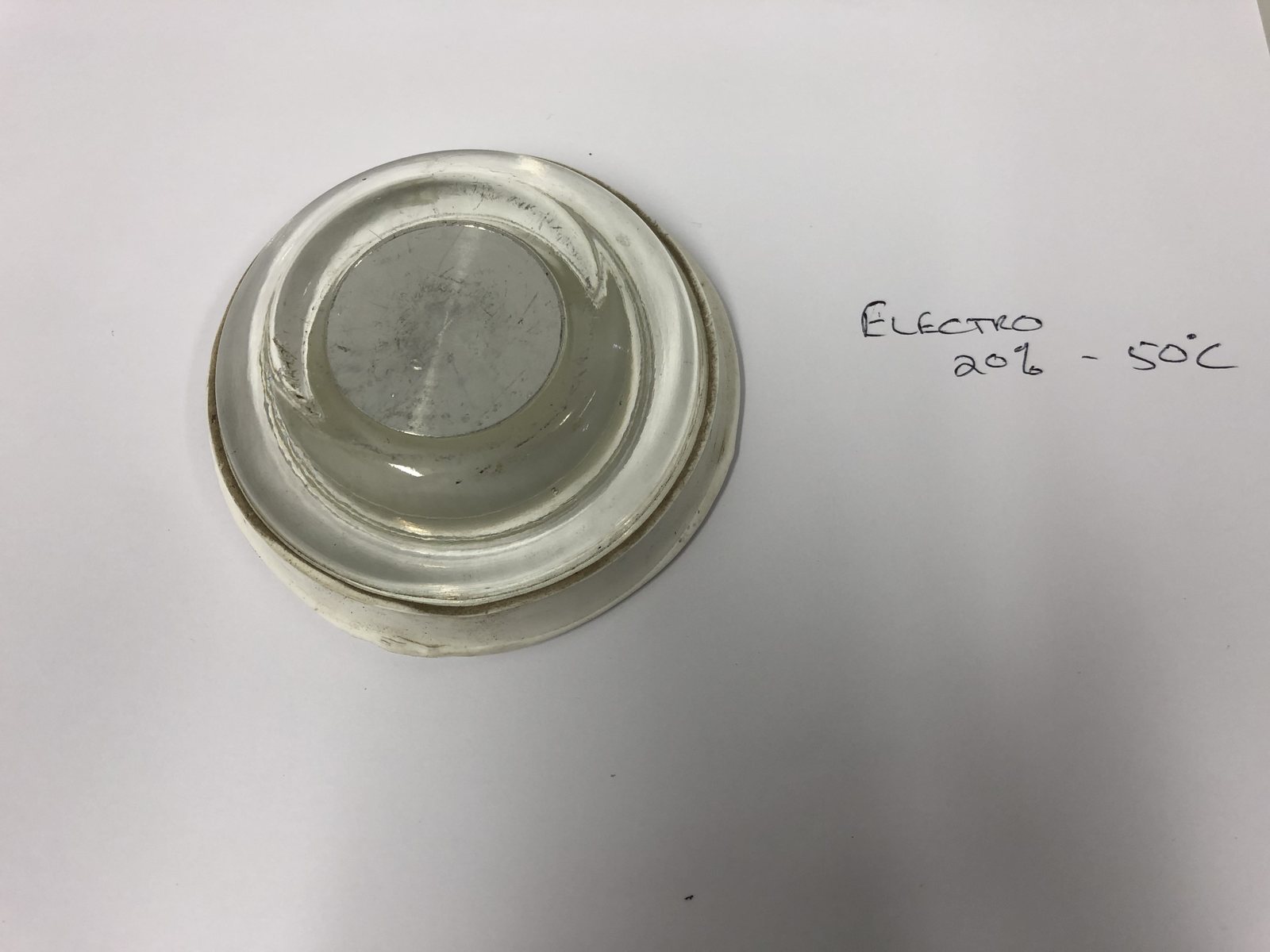
Lenses were sent to us, run, photographed and returned. Every sample was shot against its own written cycle card in the same frame, so the record is the photograph rather than somebody's recollection of it.
Chemistry: two options, and the coating decides
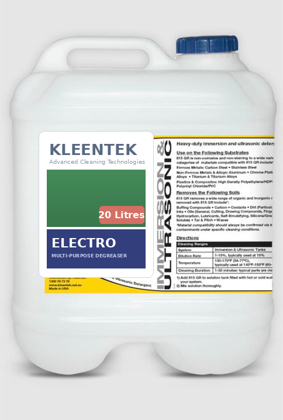
Electro — as trialled
Alkaline, pH 11.2. The chemistry that ran this job. Lifts cooked rubber, carbon and fuel residue off glass without anything touching the optic.
Product, SDS & TDS →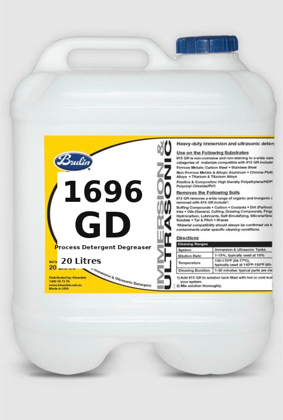
Brulin AquaVantage 1696 GD — recommended alternative
Near-neutral, pH 7.9–8.3. Where the optic carries a dichroic or filter coating, near-neutral is the safer window across repeated service.
Product, SDS & TDS →The result
The deposit came off. Not thinned, not burnished into the surface. The mould seam and the optic geometry read clearly through the centre, which is the only test that matters before a photometer gets involved.
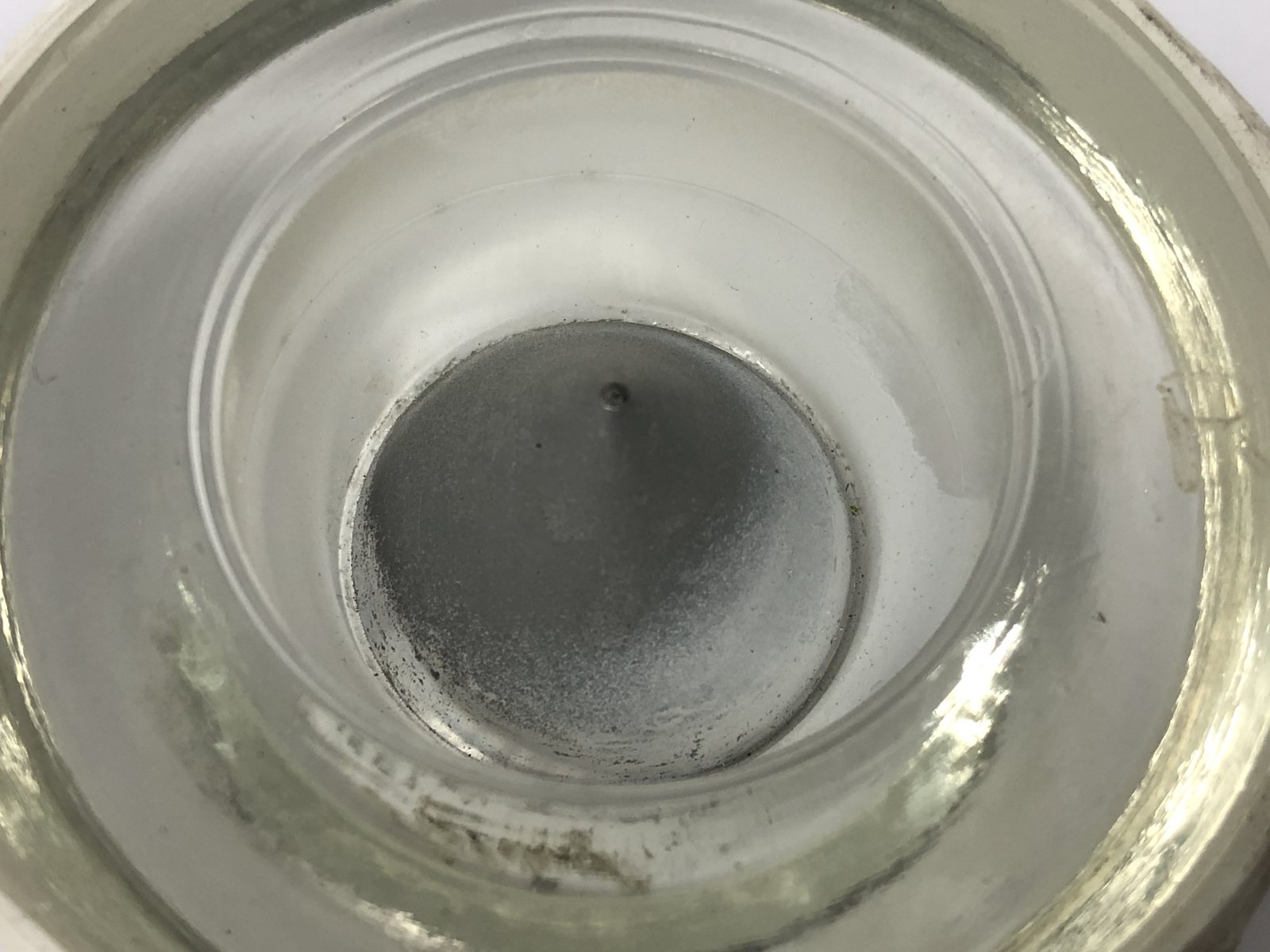
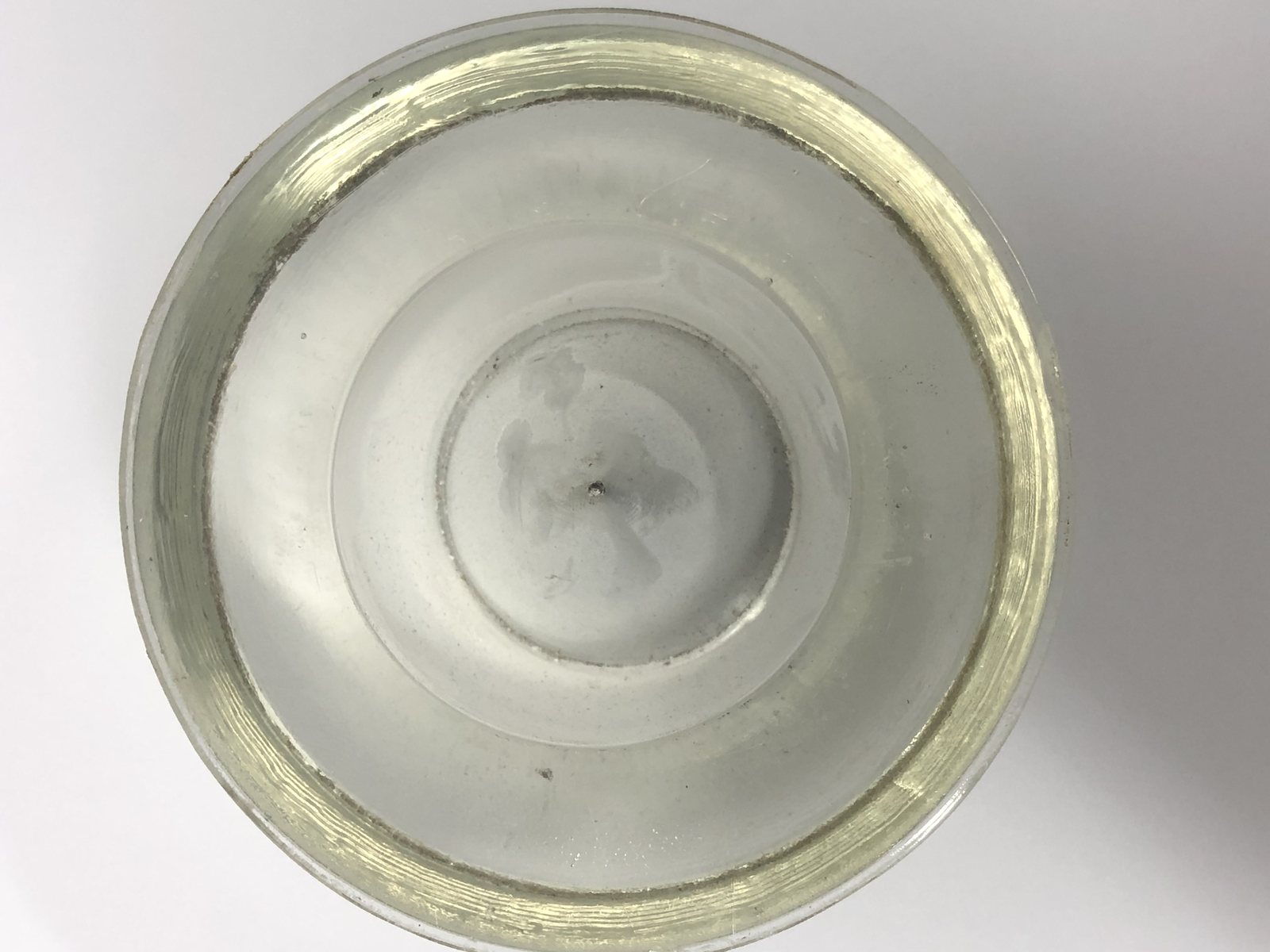
This is a labelled pair rather than a drag-to-compare slider. The frames were shot handheld, so a slider would misalign and read as a swap — two honest photographs beat a slider nobody trusts.
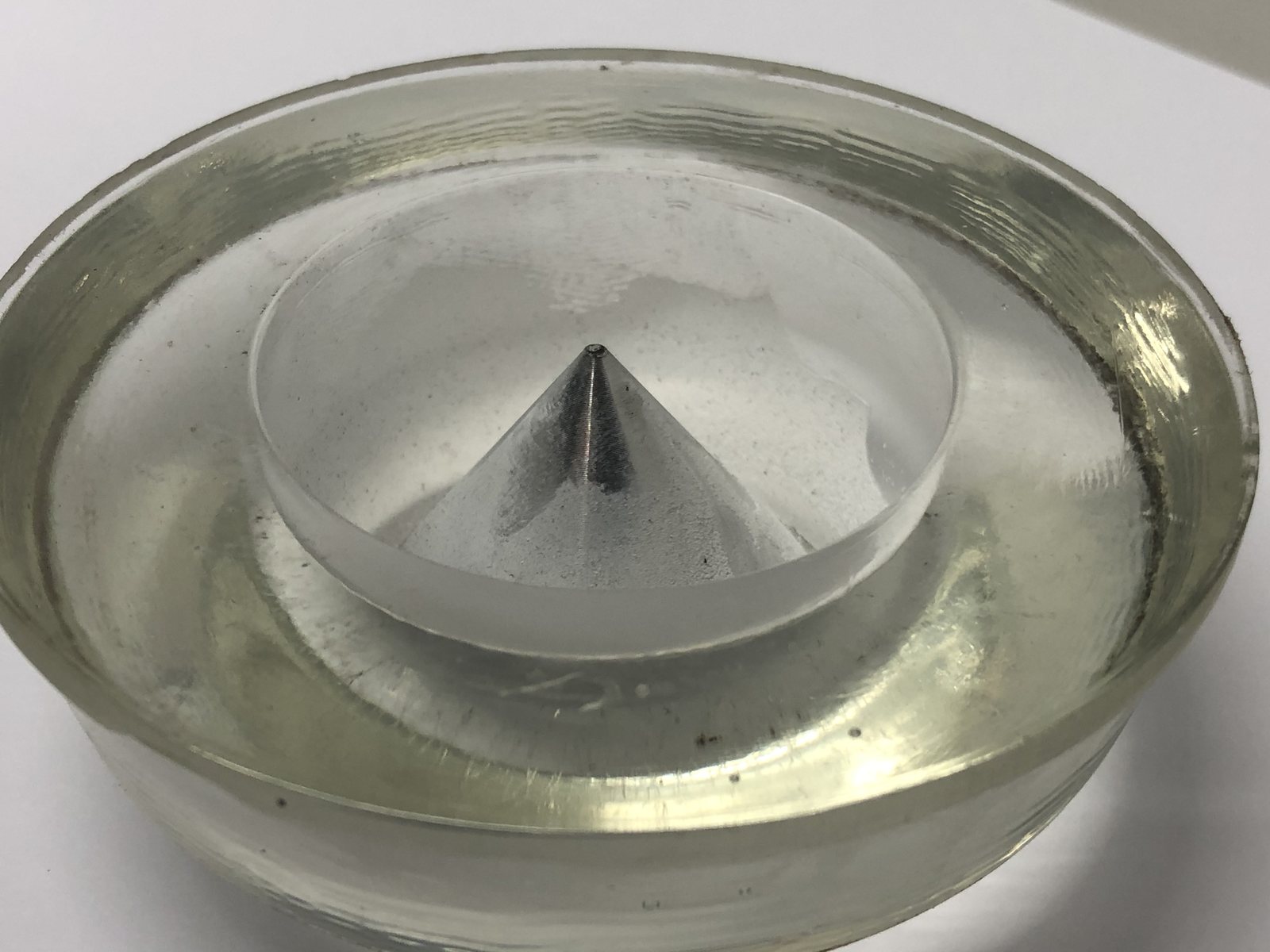
Ultrasonics takes off what was deposited. It does not take out what was worn in. Lenses abraded by grit, chipped, cracked or pitted come out clean and still fail photometric, and they should be replaced rather than returned to the field. You can see it in the photographs above — fine scratching is still there on a lens that is otherwise clear. That is service wear in the glass, not dirt on it.
Handled properly this is useful rather than a limitation: a clean lens is the only one you can actually assess. The cycle sorts a batch into optics worth reinstalling and optics that are finished, and it stops a worn lens going back into the pavement looking serviceable.
What you actually file
Cleaning is the easy half. The half worth paying for is the record, because a photometric reading either side of the process turns a maintenance activity into evidence an auditor can read.
| Step | What you get from it |
|---|---|
| Incoming photometric test | A baseline per fixture, so the result is measured rather than asserted |
| Disassembly | Optic, housing, seals and lamp separated, so each is cleaned on its own terms |
| Housing clean, 25 kHz | Rubber, carbon and oil off the casting without hand scraping |
| Optical clean, 45 kHz | Deposit off the lens with nothing touching the surface |
| Two-stage rinse, filtered dry | No mineral residue and no drying marks on the optic |
| Inspection | Pass, or a reject you can justify |
| Outgoing photometric test | The number that closes the job |
The machine
Optics want 45 kHz: high cavitation density, fine bubbles, gentle at the surface. Housings and hardware want 25 kHz and a harder chemistry. Both run in the same tank, so this is two recipes rather than two machines.
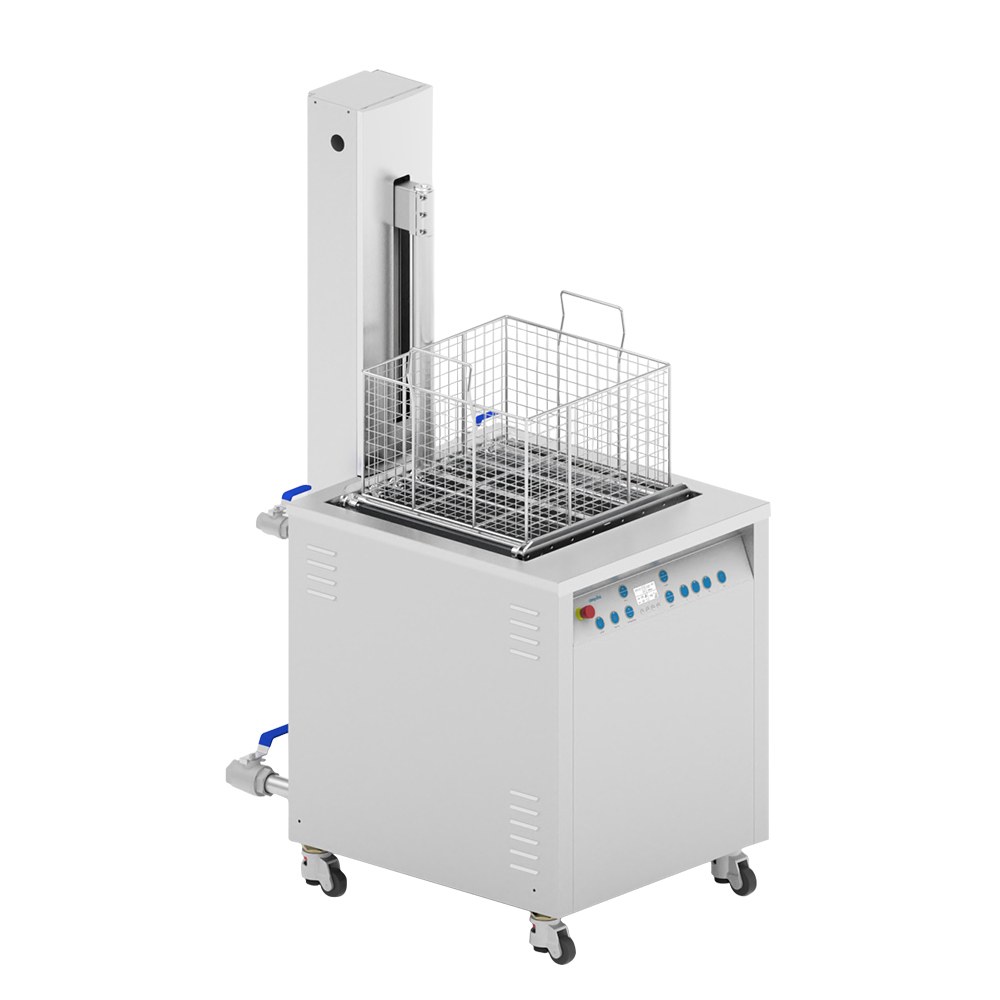
SonoLift — 25 / 45 kHz
The workshop machine for an overhaul line. Motorised basket lift, both frequencies in one tank, recipes stored per component type.
Specifications →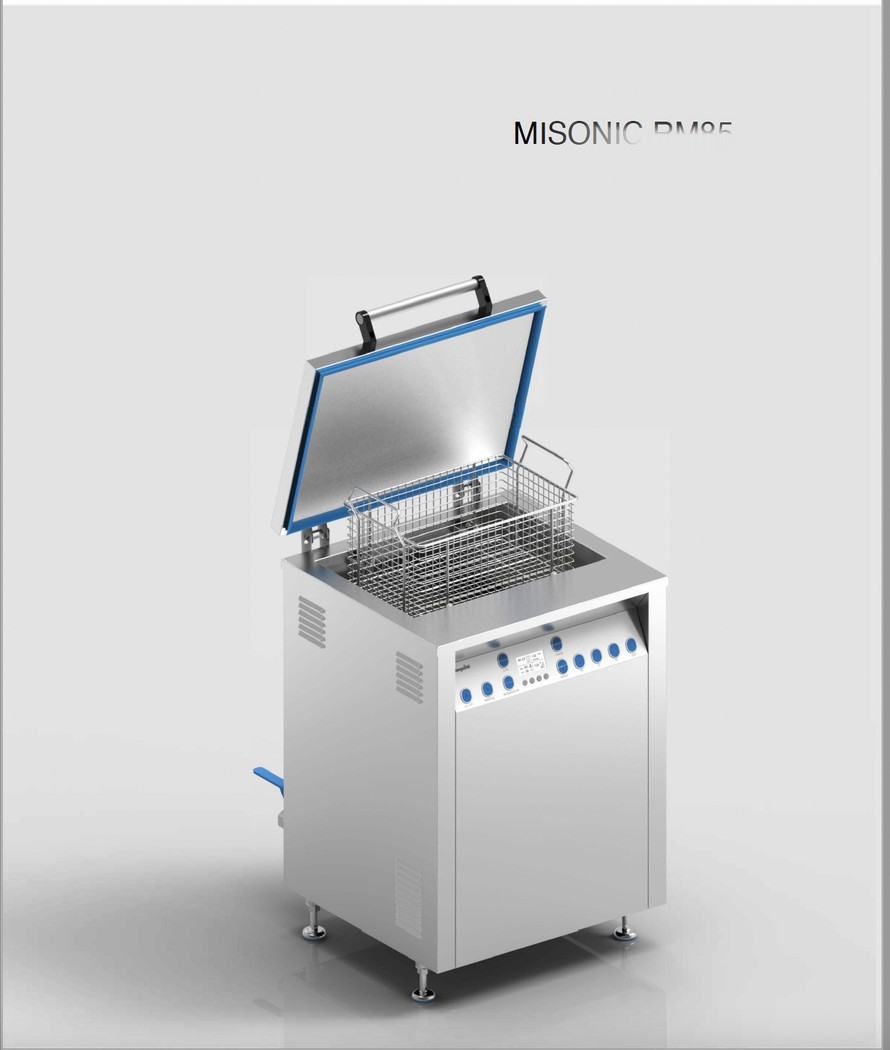
SonoWash
Where the fixture volume justifies a dedicated wash station on the bench rather than a shared tank.
Specifications →For a smaller regional aerodrome running a few hundred fixtures rather than a few thousand, the MSX 30 does the same job on a bench footprint.
Send us six lenses and a fixture housing. We will run them and send back the photographs and the cycle card.
Talk to our engineer
Airfield lighting overhaul is workshop work, and workshop questions want a workshop answer. Send the part, the soil and the batch. You get an engineer's answer, usually the same day — and if it needs a trial we will say so rather than guess.
Talk to an engineer →Have a question?
An assistant trained on our process cards, chemistry data and machine specifications, answering at the hour an MRO workshop actually works — when the question is whether a dichroic coating will take twenty minutes at 50 °C. Until then, 1300 MISONICS reaches a person.
Browse the knowledge centre →Provenance. Trial and photography 2019; the machine has been in service on the customer's overhaul line since. The customer is not named at their request. Cycle parameters are those recorded at the time, on the 2019 chemistry, and are a starting point for your fixtures rather than a specification. Coated and filtered optics vary by manufacturer and are qualified case by case before any process is recommended.