Home / Insights / Case Studies
Insights · Case Studies

Engine blocks: jackets, galleries and faces stripped in one immersion

The single-tank alkaline process that replaces the hot tank, the bead blaster and the scraping bench — documented from proven marine and automotive overhaul work.

6 min readBy Misonics application engineers

Engine rebuilding starts with a block and heads carrying everything a service life deposits: rust, carbon, paint and grease, all of which must be completely gone before machining and inspection. This application study documents the single-tank ultrasonic process that replaces the hot tank, the bead blaster and most of the scraping bench.

Industry
Engine rebuilding · marine · automotive
Components
Cylinder blocks and heads, ferrous
Contamination
Rust · carbon · paint · grease
Machine
Industrial ultrasonic tank, 40 kHz
Chemistry
Heavy-duty alkaline deruster
Cycle
1–2 hours total wash

The contamination

Rust through the water jacket

Corrosion scale in cooling passages no brush or blaster reaches — the soil that decides whether a rebuilt engine runs at temperature or above it.

Carbon and baked oil

Combustion-face carbon and galleries varnished with a service life of oil — the hot-tank soils, without the hot tank’s days-long soak.

Paint and gasket residue

Old paint and bonded gasket material that otherwise costs hours of scraping and abrasive attack on machined faces.

The process

Process diagram
LOADparts in basketSTAGE 1 · SONIC STRIPUltrasonic alkaline stripheavy-duty deruster15–20% typical (7% proven)70–80 °C · 40 kHzSTAGE 2 · RINSEHot rinsejackets & galleriesflushed throughSTAGE 3 · PROTECTRust inhibitor dipflash-rust window closedferrous surfaces heldfor machiningSTAGE 4 · DRYDryready for inspectionand machiningRESULTverified & loggedOne immersion does jacket, galleries, faces and exterior together — 1–2 hours replaces a multi-day hot-tank soak plus blasting and scraping.
ParameterValue
ChemistryHeavy-duty alkaline deruster, 15–20% typical; as low as 7% proven in marine overhaul
Temperature70–80 °C
Frequency40 kHz
Cycle1–2 hours total wash time
After-treatmentRinse + anti-rust dip inside the flash-rust window
Materials noteFerrous only at this strength — aluminium components run an inhibited chemistry instead

Piston skirt and crown. Baked carbon on the left, bare aluminium on the right — no bead blasting, no scraping, no dimensional change. Drag the handle across to compare.
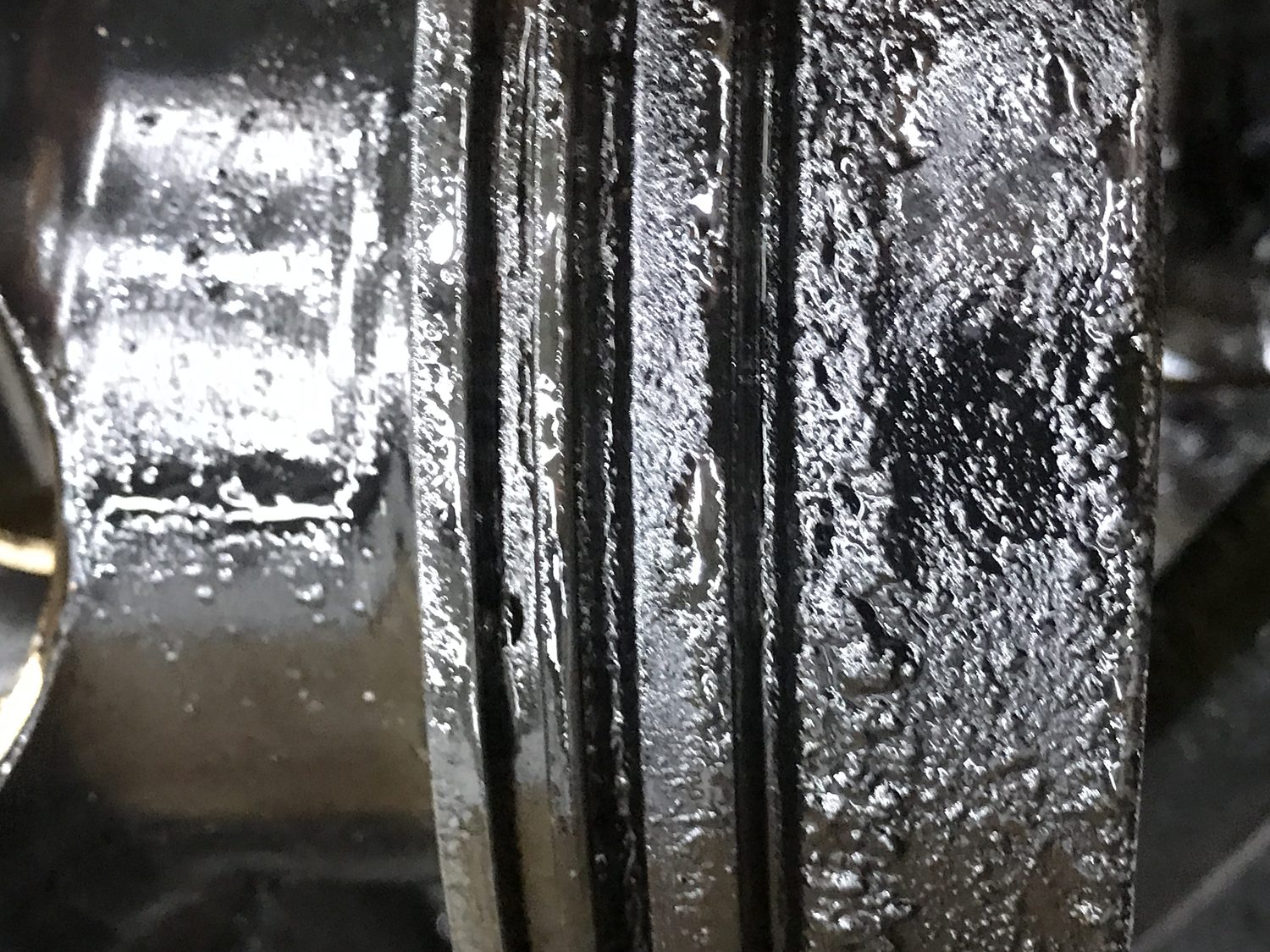
BEFOREPiston ring belt packed hard with carbon
Ring belt packed hard with carbon — the grooves that decide oil control, and the hardest place to reach by hand.
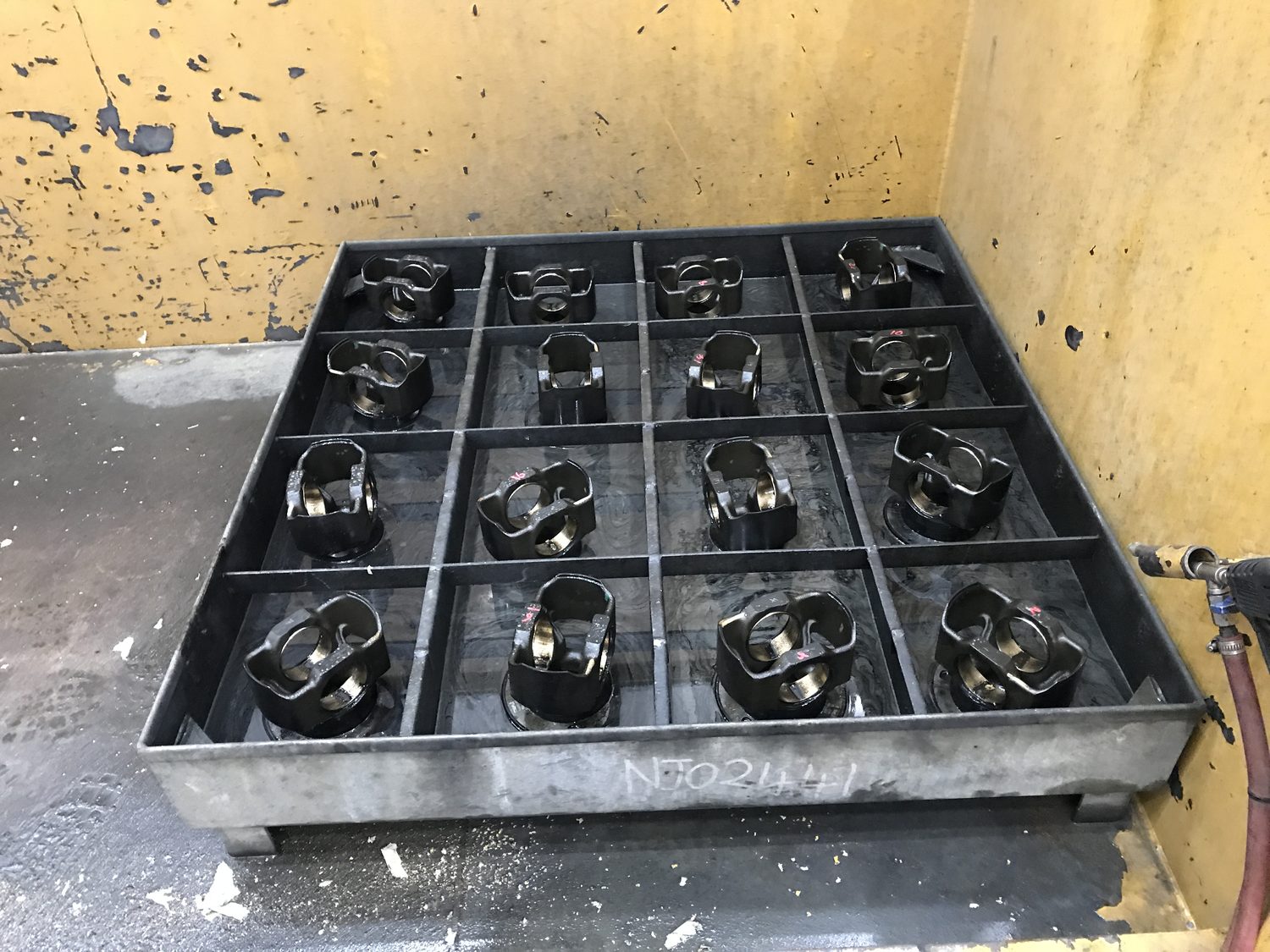
Twelve pistons loaded into a cleaning basket
Twelve pistons in one basket — a full set runs together, so every part sees the same documented cycle.

The results

Water jackets actually clean. The passage network that decides cooling performance is stripped to metal — the result no external method delivers.
One process replaces three. Hot tank, bead blaster and scraping bench collapse into a single documented immersion with no embedded media risk.
Machining-ready surfaces, protected. Blocks come out of the inhibitor dip stable enough to queue for machining without flash rust.
Hours, not days. 1–2 hour cycles turn engine prep from the rebuild bottleneck into a scheduled step.

Hardware and chemistry

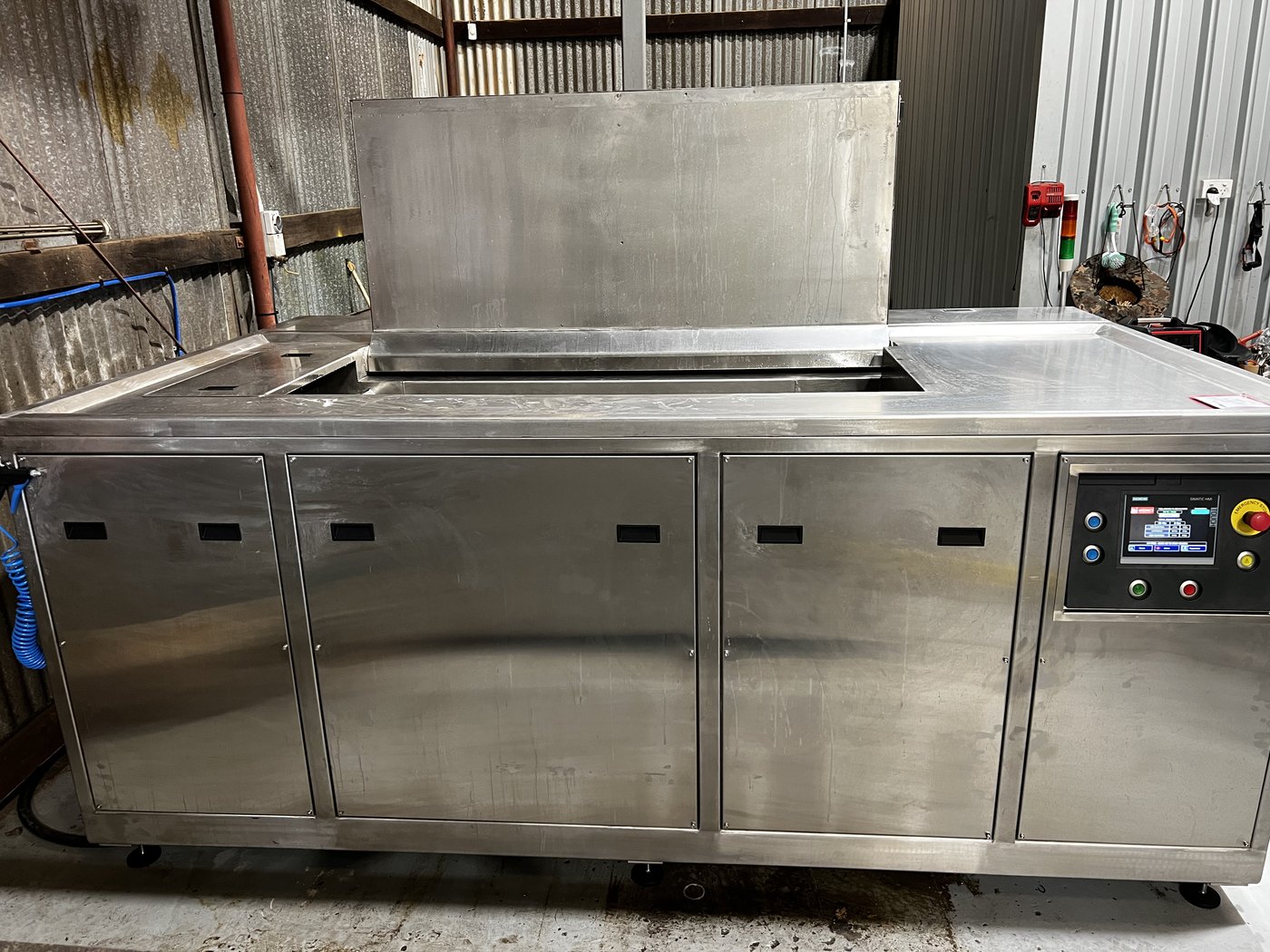
Industrial ultrasonic tank sized for engine blocks and heads

Heavy-duty industrial tank

40 kHz industrial tank with weir, filtration and a basket rated for block weights — sized to the largest engine in the program.

Ask about block-tank sizing →
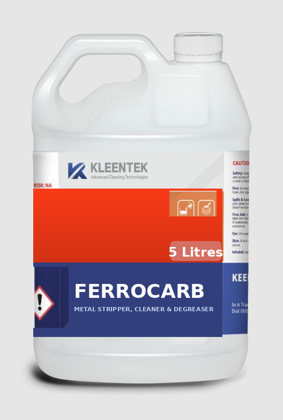
FerroCarb heavy-duty deruster chemistry, 5 litre

Deruster chemistry

High-alkaline rust, carbon and paint stripper for ferrous rebuild work, paired with an anti-rust dip.

Browse the chemistry range →
The rebuild economics: every hour a block spends in prep is an hour the machine shop waits. A documented 1–2 hour strip with jackets included is throughput the hot tank never offered.

Prove it on your parts

Every case study here started the same way: a box of parts and a documented trial. Send us yours.

Talk to an engineerMore Insights
Keep Reading

Next in the series