Added to cart
Brulin Engineered

Brulin MP 1793

Controlled manual cleaning, in bulk and wipes

The precision wipe solvent for the steps that stay human.

Bulk and pre-saturated wipe formatsQualified chemistry for manual stepsCloses the bench-top compliance gap
Pricing on application — trade accounts
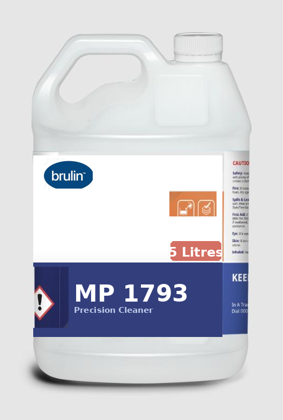
brulin mp 1793 container
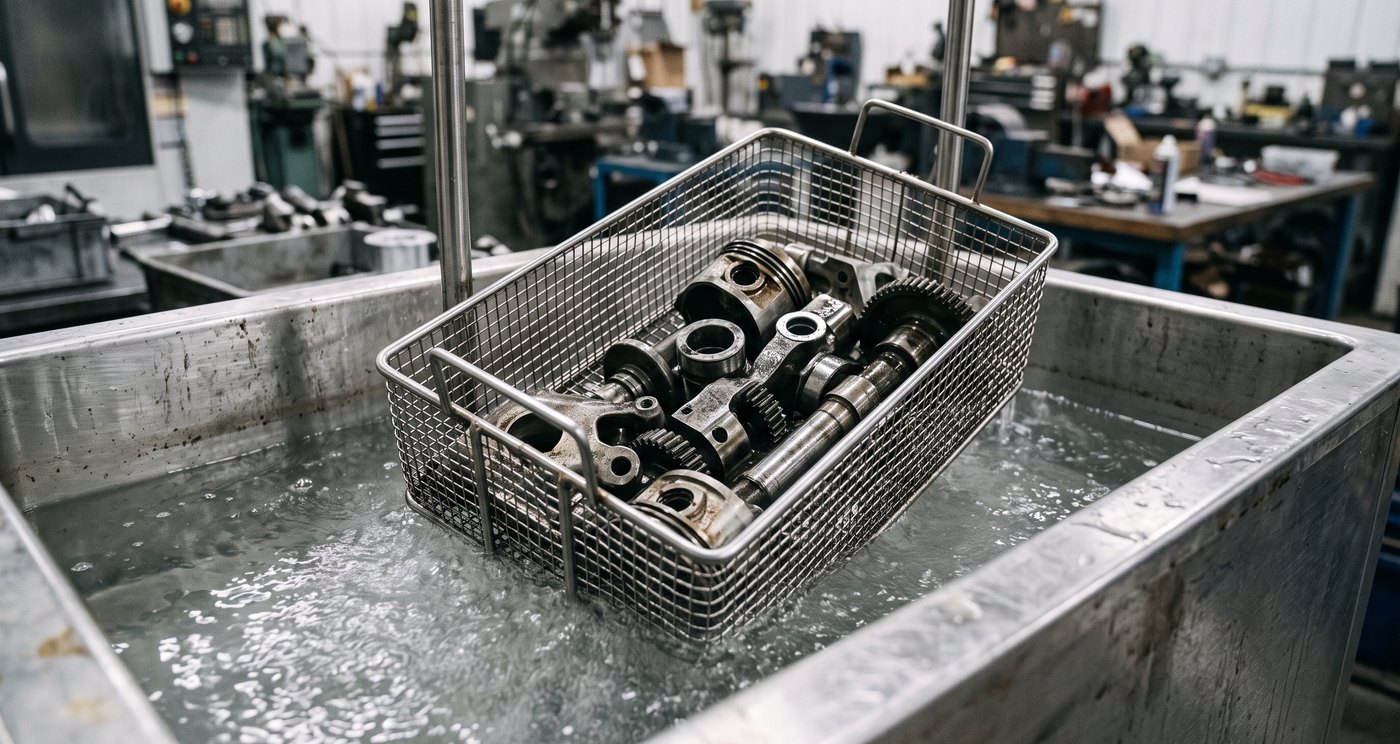
Machined steel components in a stainless mesh basket being lowered into an ultrasonic cleaning bath
The chemistry is half the process. It wets the tank and the part so cavitation can form at the surface, and it holds the soil once the ultrasound has lifted it.Illustration generated by Misonics.
Why It Wins

Controlled manual cleaning, in bulk and wipes

Not every cleaning step goes in a tank. Pre-treatment, touch-up, final inspection wipe-downs — regulated environments are full of manual steps that still demand controlled, documented chemistry.

MP 1793 is Brulin's answer: a precision cleaning solvent supplied in bulk and as pre-saturated wipes, so the manual step uses the same qualified chemistry as the process around it — not whatever aerosol was nearest.

For aerospace and defence workshops standardising their consumables, it closes the last gap between the documented process and what actually happens at the bench.

Applications

Where it earns its keep

Controlled manual cleaning steps in regulated environments — bulk and wipes.

AerospaceDefence
Temperature & Dose
SWEET SPOT 57 °C45–70 °C (indicative)20 °C100 °C

Dose: Ready to use. The trial sets your exact process values; the TDS governs.

Run It Right

The working process

Regulated Consumables

Right product, right job

This Page

MP 1793 — manual steps

Qualified wipes and bulk.

Also Consider

Brulin AquaVantage 815 GD

The tank process around the bench step

View →
Buy Brulin MP 1793inc GST
5 L$ TBC
20 LPOA
200 LPOA
Complete The Job
Rinse AidSpot-free final rinseView & buy →ZeroResidueFinal-stage cleanlinessView & buy →
Compatibility
Mild & carbon steelSafe in prescribed use
Stainless steelSafe in prescribed use
Cast ironSafe in prescribed use
Aluminium & titaniumSafe in prescribed use
Magnesium & soft alloysSafe in prescribed use
Zinc & galvanisedSafe in prescribed use
Copper & brassSafe in prescribed use
Plated finishes (Cd·Cr·Ni)Safe in prescribed use
Plastics & rubbersSolvent chemistry — attacks acrylics & rubbers, keep to metals
Painted / coated surfacesMay soften fresh paint — test first
Per prescribed use — the cleaning trial confirms on your parts; the TDS governs. Full range matrix →
Transport
TransportDG classification — from SDS [pending]
Bath Life

This is not a single-use chemical

A common misconception treats industrial chemistry like dishwater — used once, tipped out. A defended bath of Brulin MP 1793 works for weeks of production: the oil-splitting formulation sends released oils to the weir, solids leave through the filter, and the chemistry keeps working until genuine depletion.

Change out on evidence, not anxiety: when cycle times stretch or results fade at correct concentration, the bath has earned its retirement. Top-ups at specification carry it between changes.

Keep It Honest
  • Skim or weir oils continuously — oil load is bath killer #1
  • Filter solids; drain settled sludge from the sump
  • Verify concentration on schedule — titration method on the product TDS
  • Log it — the trend predicts top-ups before cleaning fades
Storage

Drum and bath, both looked after

The Concentrate
  • Precautions for safe handling Before use carefully read the product label.
  • Use of safe work practices are recommended to avoid eye or skin contact and inhalation.
  • Observe good personal hygiene, including washing hands before eating.
  • Prohibit eating, drinking and smoking in contaminated areas. 7.2 Conditions for safe storage, including any incompatibilities Store in a cool, dry, well ventilated area, removed from incompatible substances, heat or ignition sources and foodstuffs.
  • Ensure containers are adequately labelled, protected from physical damage and sealed when not in use.
  • Check regularly for leaks or spills.
  • Large storage areas should have appropriate ventilation systems.
  • Store removed from direct sunlight. 7.3 Specific end uses No information provided.
Compliant with the product SDS.
The Working Bath

Lid the tank between shifts — holds temperature, limits evaporation, keeps dust out.

Idle periods: a warm, stagnant aqueous bath can support biological growth over extended stagnation. Circulate periodically, keep concentration at specification, never leave an open tank standing for weeks.

Extended shutdown: drain to sealed, labelled containers — or schedule changeover for restart day.

Documents & Safety

The paperwork, on the page

Safety Data Sheet (SDS)
Brulin MP 1793 — Australian GHS SDS for your chemical register and risk assessments. PDF, 123 KB.
View SDSDownload
Technical Data Sheet (TDS)
Properties, composition, dose and compatibility at a glance. PDF, 80 KB.
View TDSDownload
Hazard identification
Per Safe Work Australia GHS 7
Hazard statements
H227Combustible liquid.
H304May be fatal if swallowed and enters airways.
Key precautions
P210Keep away from heat/sparks/open flames/hot surfaces.
P280Wear protective gloves/protective clothing/eye protection/face protection.
P310IF SWALLOWED: Immediately call a POISON CENTRE or doctor/physician.
P331Do NOT induce vomiting.
P378In case of fire: Use appropriate media for extinction.
P235Store in a well-ventilated place.
Compliant with the product SDS — full document available for your chemical register.
PPE & exposure controls
  • Control parameters Exposure standards TWA STEL Ingredient Reference ppm mg/m³ ppm mg/m³ Mineral Oil Mist SWA [AUS] -- 5 -- -- Biological limits No biological limit values have been entered for this product. 8.2 Exposure controls Engineering controls Avoid inhalation.
  • Use in well ventilated areas.
  • Where an inhalation risk exists, mechanical extraction ventilation is recommended.
  • PPE Eye / Face Wear splash-proof goggles.
  • Hands Wear nitrile or neoprene gloves.
  • Body When using large quantities or where heavy contamination is likely, wear coveralls.
  • Respiratory Where an inhalation risk exists, wear a Type A (Organic vapour) respirator.
Compliant with the product SDS — full document available for your chemical register.
First aid
  • Description of first aid measures Eye If in eyes, hold eyelids apart and flush continuously with running water.
  • Continue flushing until advised to stop by a Poisons Information Centre, a doctor, or for at least 15 minutes.
  • Inhalation If inhaled, remove from contaminated area.
  • Apply artificial respiration if not breathing.
  • Skin If skin or hair contact occurs, remove contaminated clothing and flush skin and hair with running water.
  • Continue flushing with water until advised to stop by a Poisons Information Centre or a doctor.
  • Ingestion For advice, contact a Poisons Information Centre on 13 11 26 (Australia Wide) or a doctor (at once).
  • First aid facilities Eye wash facilities and normal washroom facilities should be available. 4.2 Most important symptoms and effects, both acute and delayed See Section 11 for more detailed information on health effects and symptoms. 4.3 Immediate medical attention and special treatment needed Treat symptomatically.
Compliant with the product SDS — full document available for your chemical register.
Storage & handling
  • Precautions for safe handling Before use carefully read the product label.
  • Use of safe work practices are recommended to avoid eye or skin contact and inhalation.
  • Observe good personal hygiene, including washing hands before eating.
  • Prohibit eating, drinking and smoking in contaminated areas. 7.2 Conditions for safe storage, including any incompatibilities Store in a cool, dry, well ventilated area, removed from incompatible substances, heat or ignition sources and foodstuffs.
  • Ensure containers are adequately labelled, protected from physical damage and sealed when not in use.
  • Check regularly for leaks or spills.
  • Large storage areas should have appropriate ventilation systems.
  • Store removed from direct sunlight. 7.3 Specific end uses No information provided.
Compliant with the product SDS — full document available for your chemical register.
Disposal
  • Waste treatment methods Waste disposal Reuse where possible.
  • Alternatively, absorb with sand or similar and dispose of to an approved landfill site.
  • Contact the manufacturer/supplier for additional information (if required).
  • Legislation Dispose of in accordance with relevant local legislation.
Compliant with the product SDS — full document available for your chemical register.
Transport & dangerous goods
  • INFORMATION NOT CLASSIFIED AS A DANGEROUS GOOD BY THE CRITERIA OF THE ADG CODE, IMDG OR IATA LAND TRANSPORT (ADG) SEA TRANSPORT (IMDG / IMO) AIR TRANSPORT (IATA / ICAO) 14.1 UN Number None allocated.
  • None allocated. 14.2 Proper None allocated.
  • Shipping Name 14.3 Transport None allocated.
  • None allocated. hazard class 14.4 Packing Group None allocated.
  • None allocated. 14.5 Environmental hazards Not a Marine Pollutant. 14.6 Special precautions for user Hazchem code None allocated.
Compliant with the product SDS — full document available for your chemical register.
Brulin MP 1793 FAQ

Asked at the tank

What dilution and temperature do I run?
Ready to use at Ambient — and the trial sets your exact process values against your soil. Running richer than specified wastes chemical without cleaning faster. That range is the chemistry’s window — not the whole answer. The substrate sets its own ceiling, and it is usually lower: aluminium and anodised finishes discolour above about 65 °C, zinc and coated parts lower again, and magnesium is governed by pH before temperature. Run at the lower of the two. Bath temperature — chemistry vs substrate →
When do I change the bath?
When cycle times stretch, results fade, or filtration stops holding the debris. Drain, clean the tank, refill — never lay fresh solution over settled sludge.
Can algae grow in the bath if it sits unused?
Over extended stagnation, any warm diluted aqueous bath can support growth as preservative systems deplete. Prevention: circulate periodically, hold concentration at specification, lid the tank. If a bloom happens: drain, clean the tank including weir and lines with hot fresh solution, rinse and refill — never dose on top of growth.
Can I get the SDS before buying?
Yes — every product ships with its SDS, and documents are available ahead of purchase for your chemical register and risk assessments.

Prove it on your parts

The trial pairs Brulin MP 1793 with your components — concentration, temperature and cycle documented before you order a drum. Wrong chemistry for your soil? The trial says so.

Talk to an engineer Back to the Range
Compliance, Standards & Conformance

Approved and conformant — by name

MP 1793 is a wipe solvent, and its approvals reflect that: adhesive and sealant compatibility, dielectric strength, and airframe surface preparation.

Airframes
  • Boeing No. 84086
  • Boeing (McDonnell Douglas) DPM 6380-1
  • MCS 6000 Type IB · IIIB · V · VI
  • Sikorsky (UTC) QPL SS9170/204 rev1
  • Hamilton Sundstrand
Sealants & Adhesives
  • Dow Corning silicone building sealants
  • GE structural adhesives
  • Both per ASTM C794 peel adhesion
Supply
  • NSN 6850-01-466-6157 (6/100 wipe size)
Test Compliance
  • ARP 1755B Stock Loss (Cat. 9)
  • ASTM C794 Peel Adhesion
  • ASTM D877 Dielectric Breakdown to 30,000 V
  • ASTM F519 Hydrogen Embrittlement (Type 1c)
  • ASTM F945 Ti Stress (AMS 4911)

Source: Brulin published product data. Approvals are held by the manufacturer and apply to the product as supplied — confirm the current revision with Misonics before writing it into a process specification.