Diesel piston ring grooves: carbon out, dimensions untouched
Heavy coked carbon cleaned from a large-bore diesel ring belt in hot Brulin chemistry — with the grooves gauged unchanged afterwards.
6 min readBy Misonics application engineers
Ring-groove carbon is a dimensional problem wearing a cleaning costume: every mechanical method that removes the coke also removes or deforms metal the rebuild is required to keep. This documented application study cleaned the ring belt of a large-bore diesel piston in hot Brulin chemistry without anything touching the groove.
Industry
Engine rebuilding · mining · power gen
Component
Large-bore diesel piston, 3-groove ring belt
Contamination
Coked carbon · lubricant ash · oil film
Machine
Industrial ultrasonic tank, 25 kHz
Chemistry
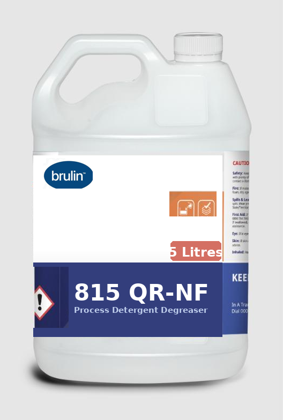
Brulin AquaVantage 815 QR-NF, 10% v/v
Constraint
Zero dimensional change to grooves
The contamination
Coked carbon
Thermally polymerised in the ring belt over thousands of hours — insoluble in solvents, concrete-hard, and bonded into the groove roots where no tool reaches without contacting the flanks.
Lubricant ash
Mineral residue from burned oil packed behind the carbon banding — chemistry alone will not lift it; it needs cavitation working in place.
The dimensional trap
Scraping, wire-wheeling and blasting all remove or peen the groove flanks. A groove outside width or flatness spec scraps the piston — the cleaning method must be non-contact.
Groove width, depth and flank flatness gauged against drawing after cleaning
Before, during, after
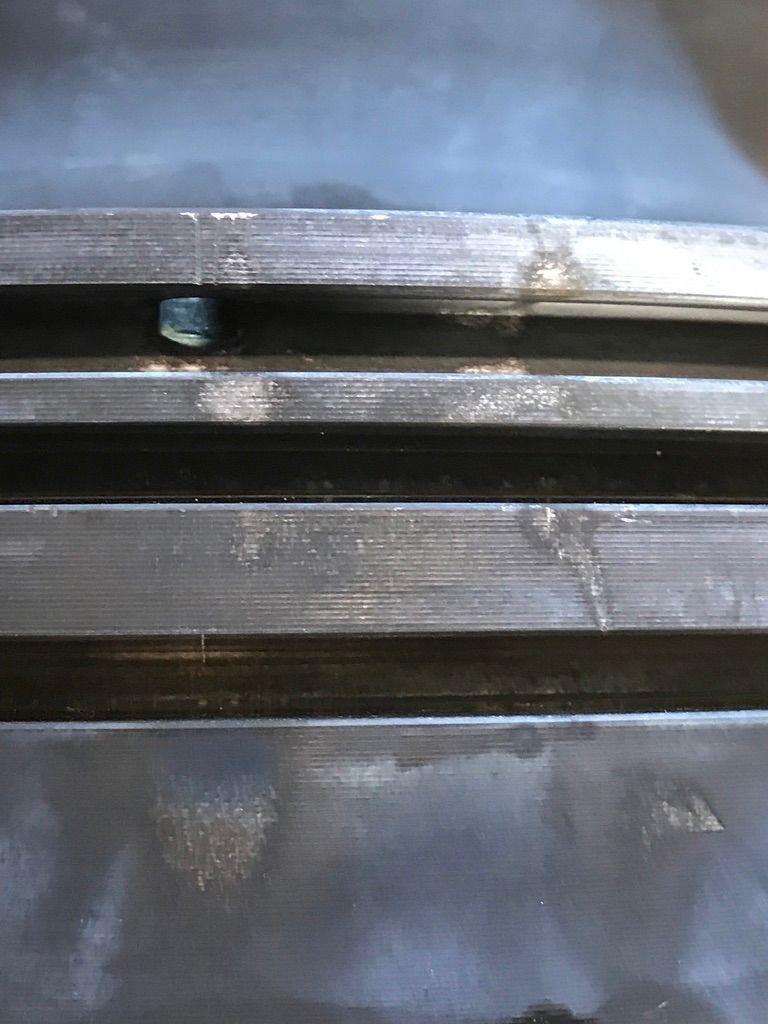
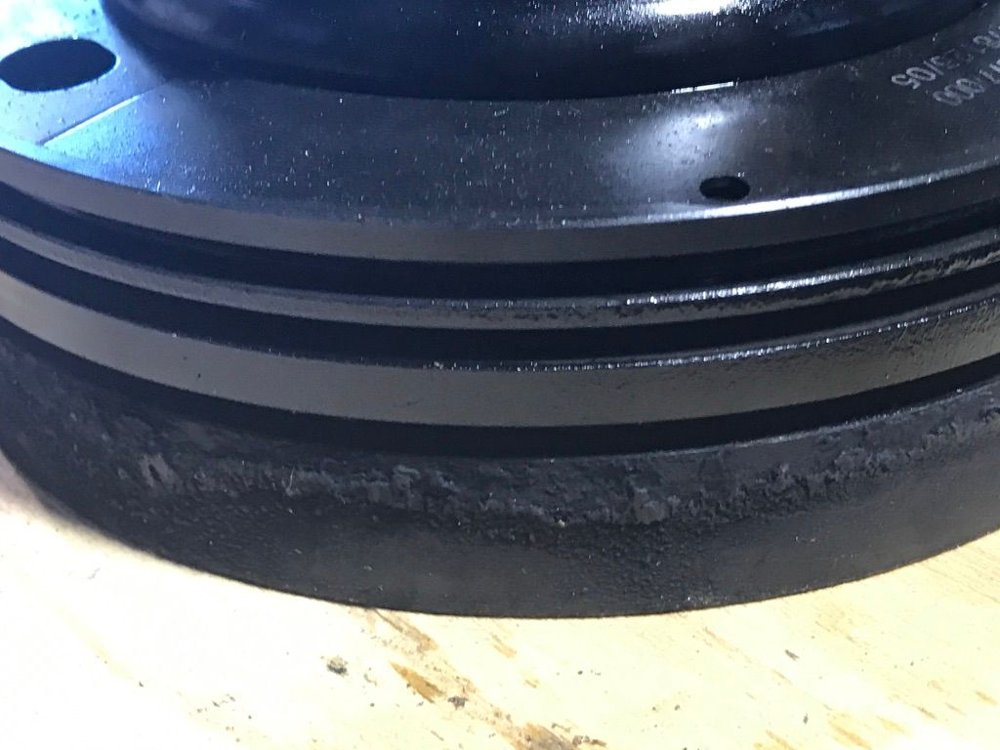
BEFOREAs received: heavy coked carbon across the crown and ring belt.BEFORE — DETAILThe ring belt close up — carbon banding below the lower groove, the deposit no tool reaches safely.
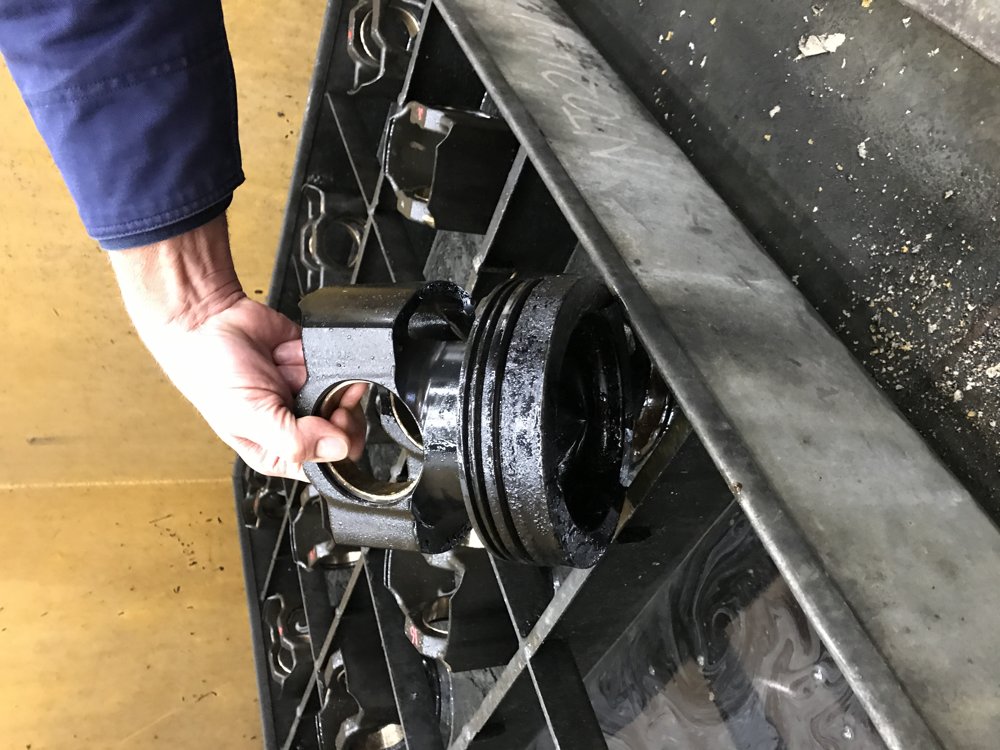
IN PROCESSPiston racked for immersion — nothing contacts the grooves at any point.
AFTER — cleaned ring belt, gauged in-spec (photo to be added from trial set)
The results
Grooves clean to the root. Carbon and ash removed from all three grooves and the banding below — including the corners mechanical methods cannot enter.
Dimensions untouched. Groove width, depth and flank flatness gauged unchanged — the entire argument for the method.
No embedded media, no peening. Nothing was blasted, scraped or wheeled; downstream seating and blow-by behaviour is protected.
A written, repeatable card. Chemistry, concentration, temperature, frequency and staging documented for every future piston.
Hardware and chemistry
Heavy-duty industrial ultrasonic tank
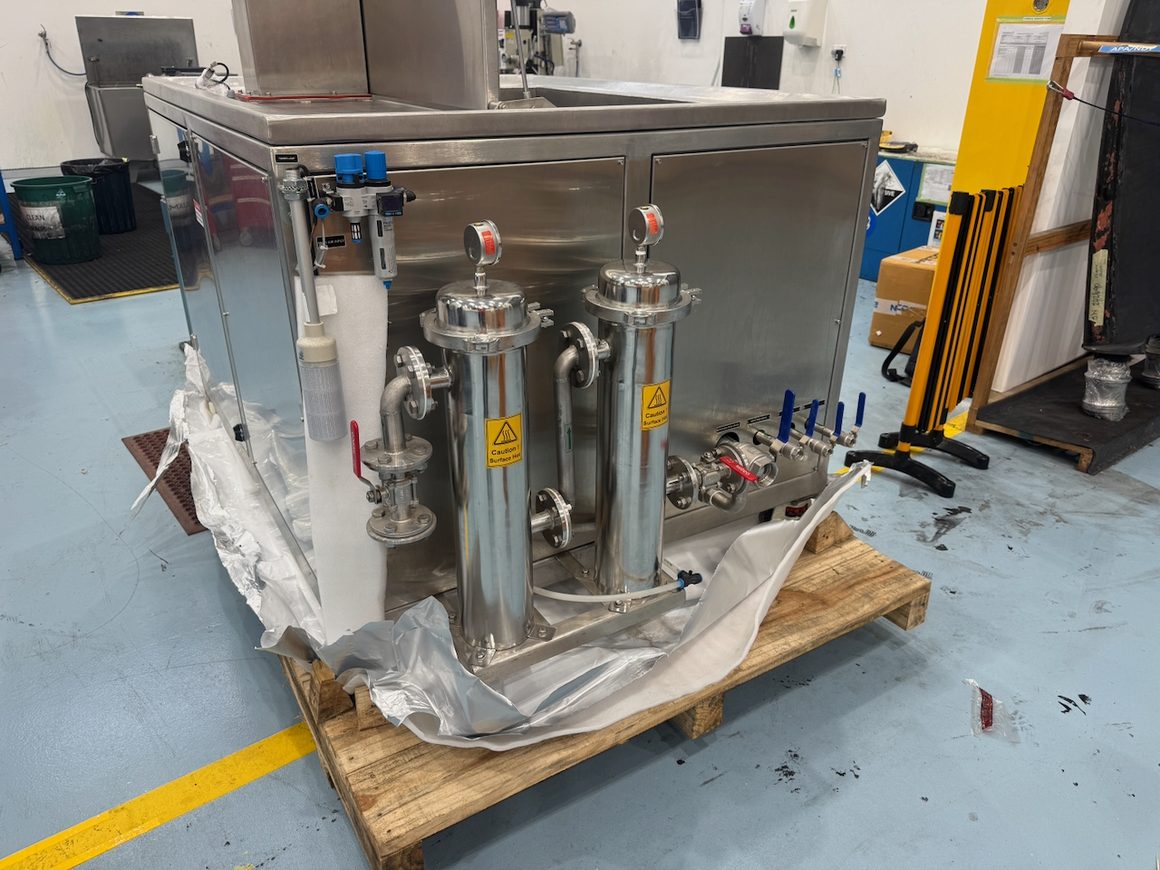
25 kHz with sweep, heated to 70 °C, weir and bag filtration keeping removed carbon out of the bath. Sized to the largest piston in the rebuild program.
The trial is the product. This study is the process card a rebuild shop runs on every piston — and the same trial-first sequence applies to your parts. Send them; the card comes back with your numbers on it.
Run this process in your shop
From a single trial piston to a documented production process.