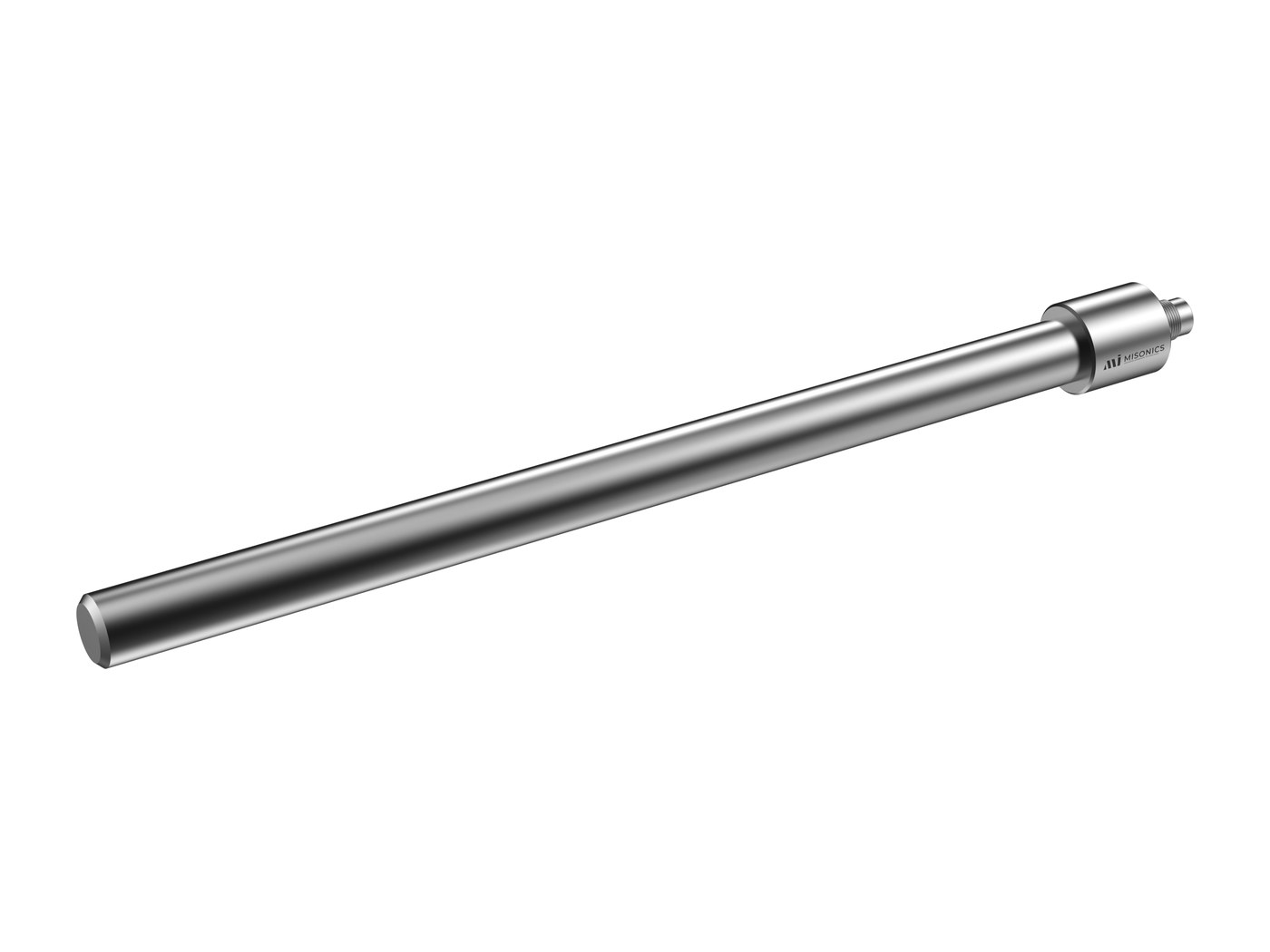
Specification
| Immersed length | 669 mm |
|---|---|
| Ultrasonic power | 1,500 W |
| Frequency | 25 kHz |
| Frequency options | Fixed per rod25 kHz standard; 40 kHz optional — on application |
| Rod diameter | 50.5 mmThe same on every length |
| Material | SS316LTitanium to order on any length |
| Mounting | G1″ threaded entryThrough a single 34 mm hole, lock nut and seal |
| Max liquid temperature | 95 °C continuous |
| Pressure | Vacuum, atmosphere or positive pressure |
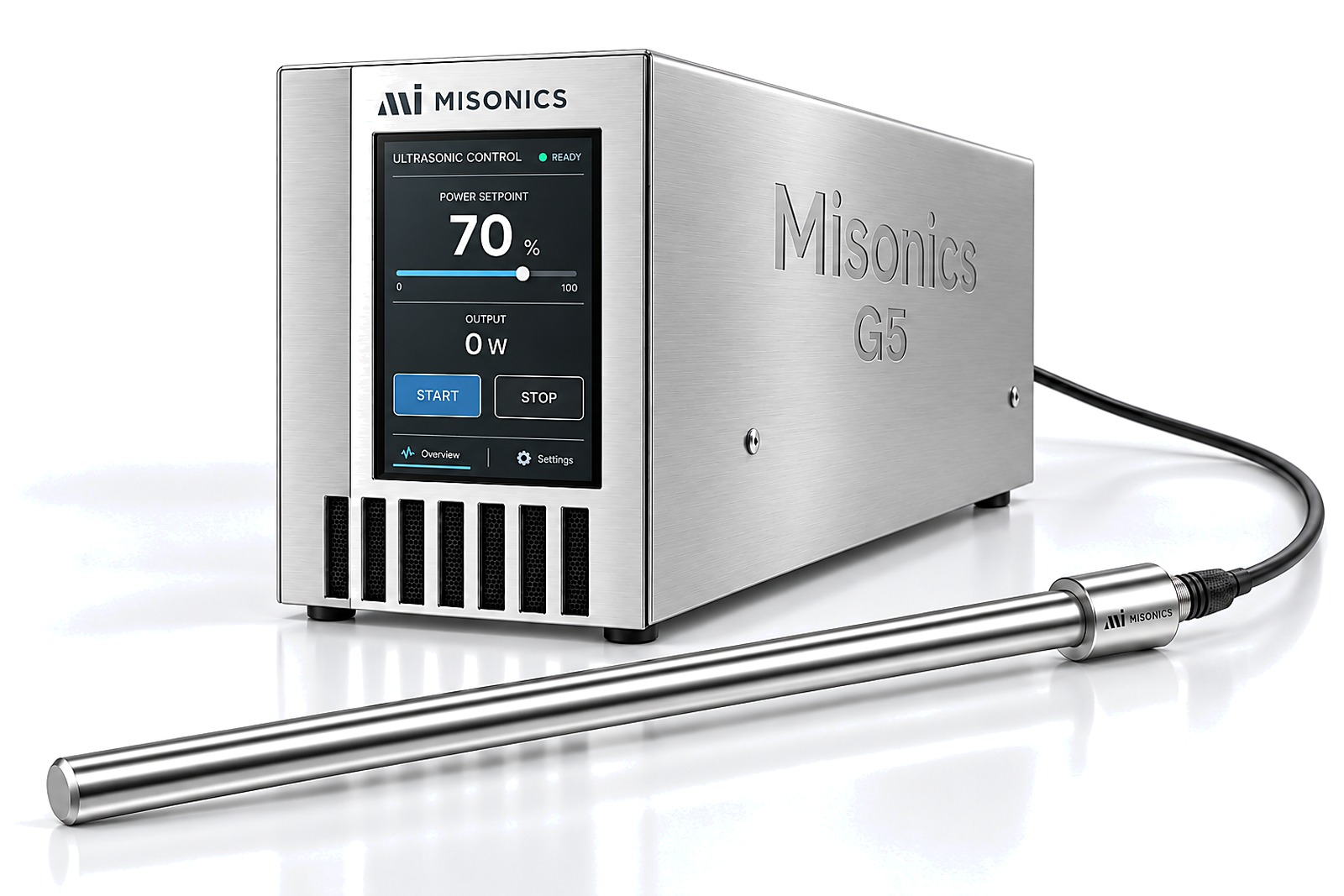
| Drive | SonoDrive G5Matched to the rod for power output — the rods do not run on the VarioSonic multi-frequency generators |
| Marking | Length, power and frequency on the collar |
Why a rod and not a plate
| It fits either way up | Horizontal across the tank or vertical from the rim. The mounting follows the vessel and the parts, not the other way round. |
|---|---|
| In and out in minutes | One fitting. A rod comes out for a bath change, a service or a move to another tank without touching the vessel. |
| More power in the same tank | A rod takes very little room. Several fit where one bonded plate would go, so where the duty needs power you add rods instead of a bigger vessel. |
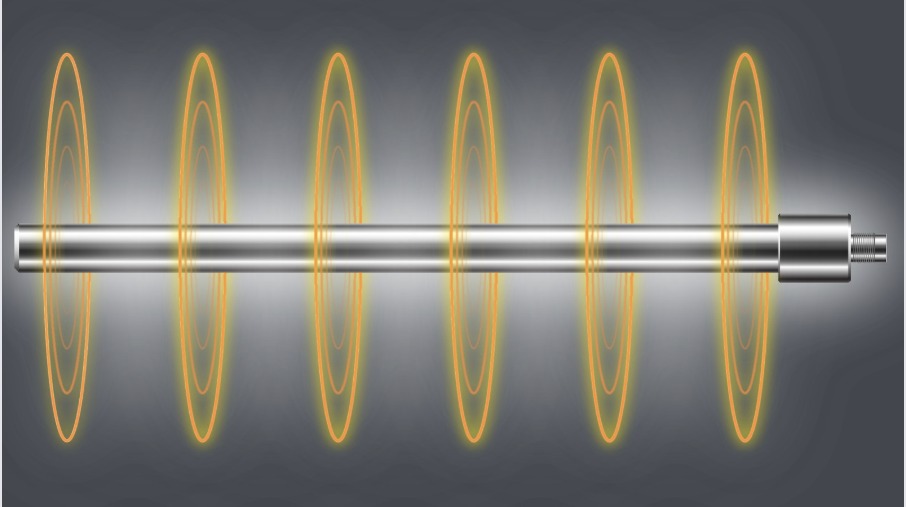
| It radiates all the way round | 360 degrees along the whole immersed length, not one face pointing one way. No dead side, and the field does not fade as it climbs. |
| Nothing settles on it | A vertical rod has no horizontal face for sludge to bury. That is what kills bonded plates in heavy-soil duty. |
| It goes in a tank you own | One 34 mm hole. No rebuild, no new vessel, same footprint and same chemistry. |
Solo 360 / 669
Twelve lengths off the same patented tubular geometry. Start with the frequency — it decides which lengths exist — then pick the one that fits under your liquid line. Quoted with the matched SonoDrive G5.
Which frequency should I choose? →
Each rod is built for one band and holds it. 25 kHz is the standard across the range; 40 kHz is made on the two shortest rods, for finer work in shallower baths.
Stainless is what most baths get. Titanium is the choice where the chemistry or the duty demands it — quoted on application, on any length.
Replacing transducers in a tank you already own? Read this firstOpen
Elements are sold on their own. Building a plate, specifying an OEM machine, or wanting elements and nothing else is a normal order, and there is no requirement to buy a generator with them.
Re-elementing an array you already own is the case that needs care. When an immersible box or a bonded array has gone deaf, replace the whole block rather than the one element that failed. Transducers age together — output falls away, the resonant point drifts and the impedance climbs. Put one new element into an aged set and the drive cannot tune to both: it hunts, the new element takes more than its share of the power, and it fails early. Where the generator is the same age as the block it was tuned for, budget for both. Tell us what is in the tank now and roughly when it went in, and we will tell you which half actually needs replacing before you spend anything.
Twelve lengths, drawn to scale
Every rod is the same tubular geometry with a single active end. What changes is the immersed length and the power behind it. The two shortest run at 40 kHz; everything from 476 mm up runs the industrial 25 kHz band. Each rod is fixed-frequency — 25 kHz is standard across the range and 40 kHz is available as an option on application.
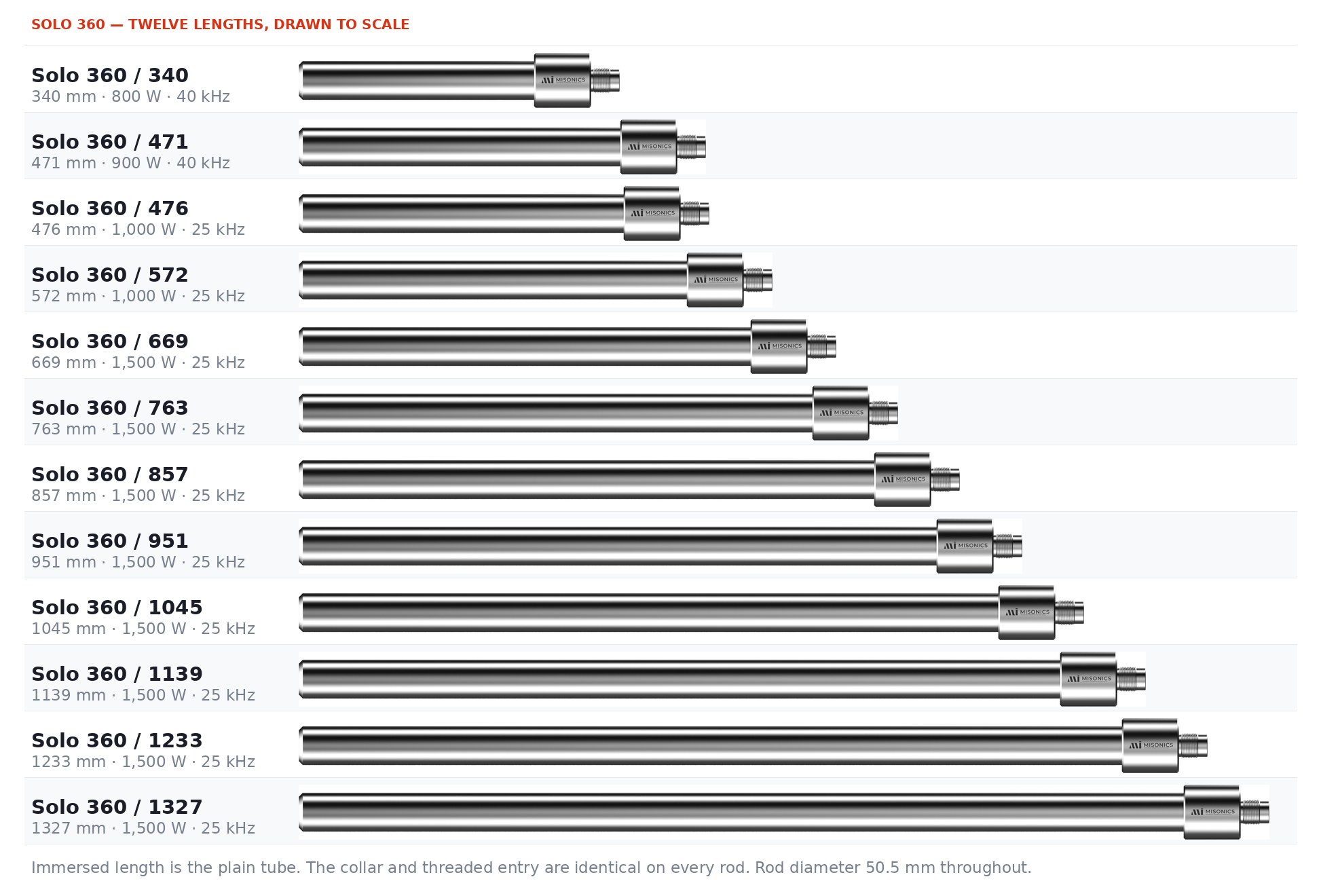
Tap a rod to load it into the configurator above — frequency, length and power fill in for you.
It radiates all the way round
A bonded plate has one face, so it fires in one direction and the sides of the tank sit in its shadow. A rod has no flat face at all. The whole immersed surface radiates, so one rod down the middle of a tank reaches the walls, the floor and both faces of the work.
The rod is quoted with its generator
A rod is supplied with the SonoDrive G5 that drives it. The generator is sized to the rod's power output and set to its frequency, and the two are matched before they leave us.
Five things and a photo
- Tank dimensions — length, width and working depth.
- Where it sits — open shop floor, in a line, or inside a process bath.
- Vessel material and remaining life — there is no point retrofitting a tank that is nearly through.
- Heating and filtration already present — what you already have, we do not need to sell you.
- Power available at the wall — the constraint on how much ultrasonic power you can actually run.
Matching the drive to the array
A generator is tuned to the array it drives, not to a frequency on a label. What has to line up: the frequency the generator tracks, the total capacitance of the array wired to it, the impedance and phase that array presents once it is in the liquid, and the voltage across the group under load. Where we supply a complete system we specify those against each other and commission the two as one. Elements bought on their own are a different thing and a normal order — the matching is then yours or your builder’s to get right, and we will tell you what the elements need.
What goes wrong when they are not matched
A new generator will not rescue an old set. Transducers age — output falls away, the resonant point drifts and the impedance climbs — so an older array is no longer the load a new drive was tuned for. A set of mixed ages is worse again: the weakest element pulls the rest off tune and the drive spends its power hunting for a resonance that has moved. What you get is a generator running hot or dropping out, a bath cleaning unevenly, and transducers failing earlier than they should — and from the outside there is no way to tell which end is at fault, so you end up replacing both anyway.
What we can and cannot stand behind. Where we supply the generator and the transducers together, they are matched and commissioned as a system and warranted as one. Elements supplied on their own go onto a drive we have not characterised, so we cannot warrant what the tank will do with them. That is the limit of what we can know, not a refusal to sell. Tell us what the drive is and roughly when it went in, and we will say where you stand before you spend anything.
Get a price on a rod
Send the working depth and we come back with the length, the power and the price. If you already know the model you want, say so and we will just quote it. If the vessel is not worth retrofitting we will say that too.