A mould is a precision tool that spends its life being coated in the thing it must not keep: release agents, outgassing residues, carbonised films. Every manual clean risks the cavity surface; every abrasive clean guarantees it wears.
Misonics systems clean dies, moulds and tooling without touching dimensions — and castings without embedding media — proven on your tooling before you commit.
Layered onto cavity surfaces, progressively degrading finish quality.
Bonded films from plastics and rubber processing, in vents and texture.
Baked residues on hot-work tooling and die casting dies.
Residues in cored passages after shakeout.
Al₂O₃ and heat scale on dies and castings.
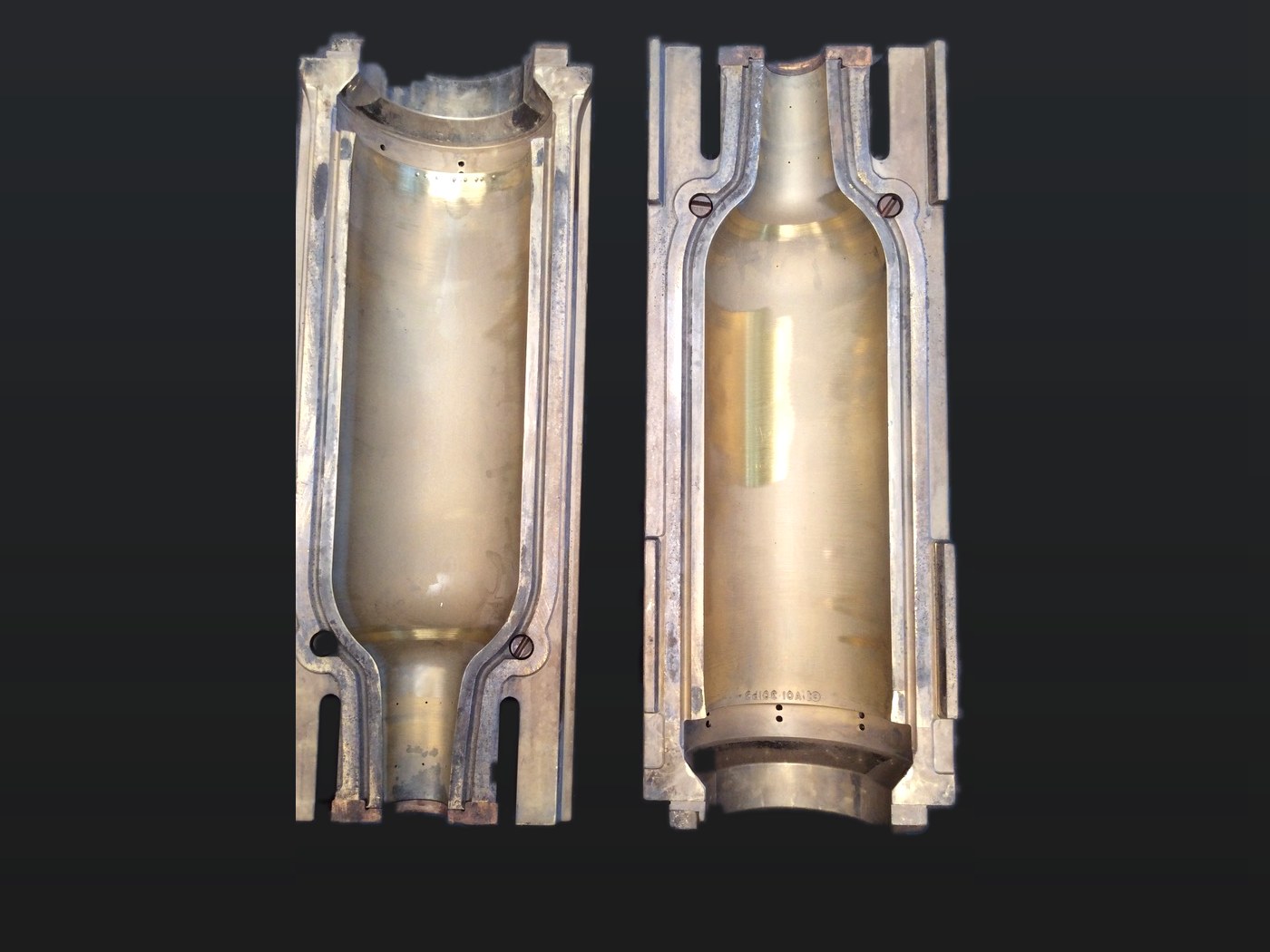
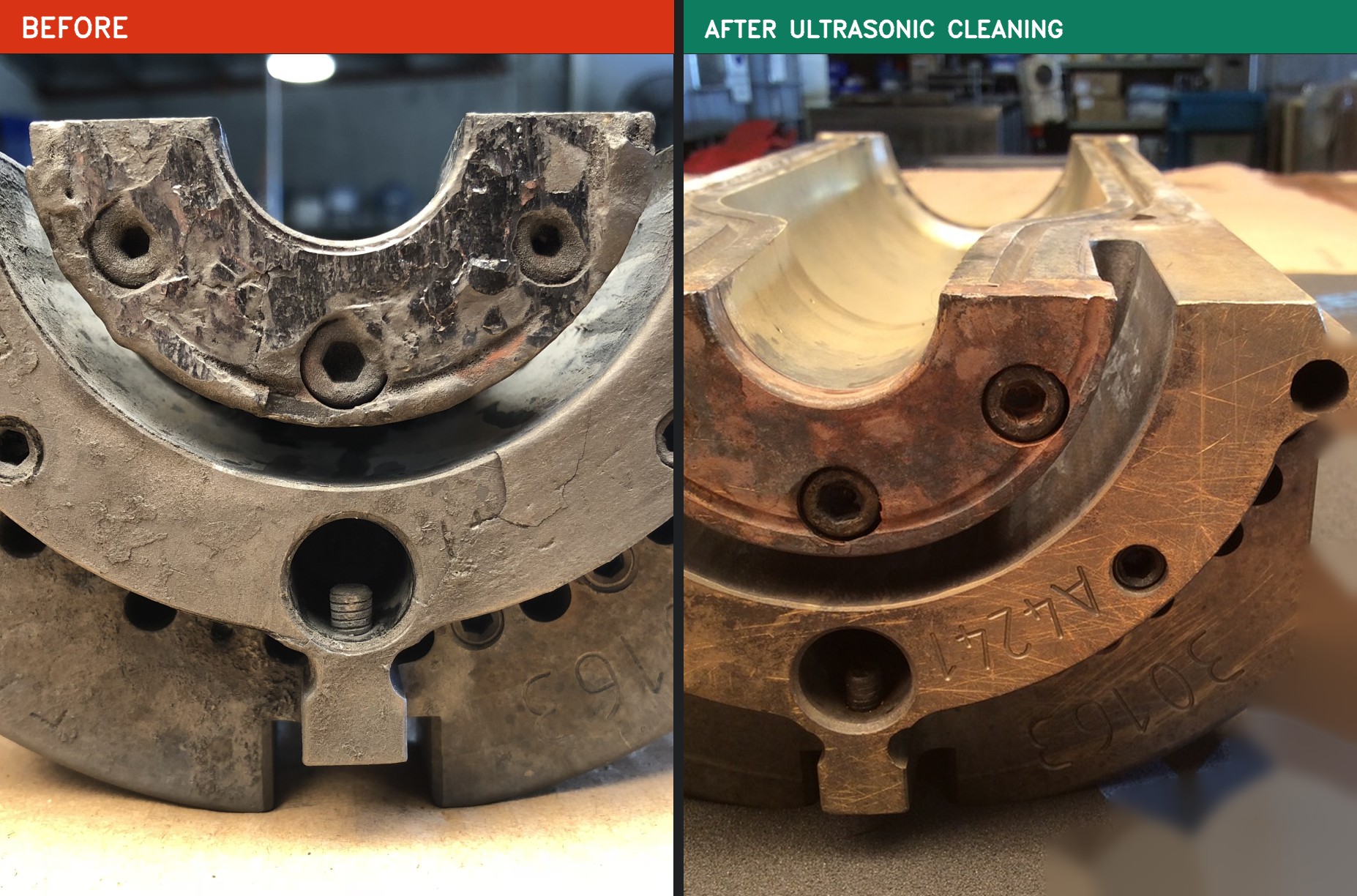
Blow-mould and injection tooling photographed as it arrived and after a documented cycle. Drag the handle across to compare.
Blow mould base cone. Release agent and polymer burn on the forming face. The vents and the machined finish are the asset — nothing here was polished out.
Bottle cavity. Stained cavity to a readable surface. A blasted mould is a shorter-lived mould; this is the alternative.
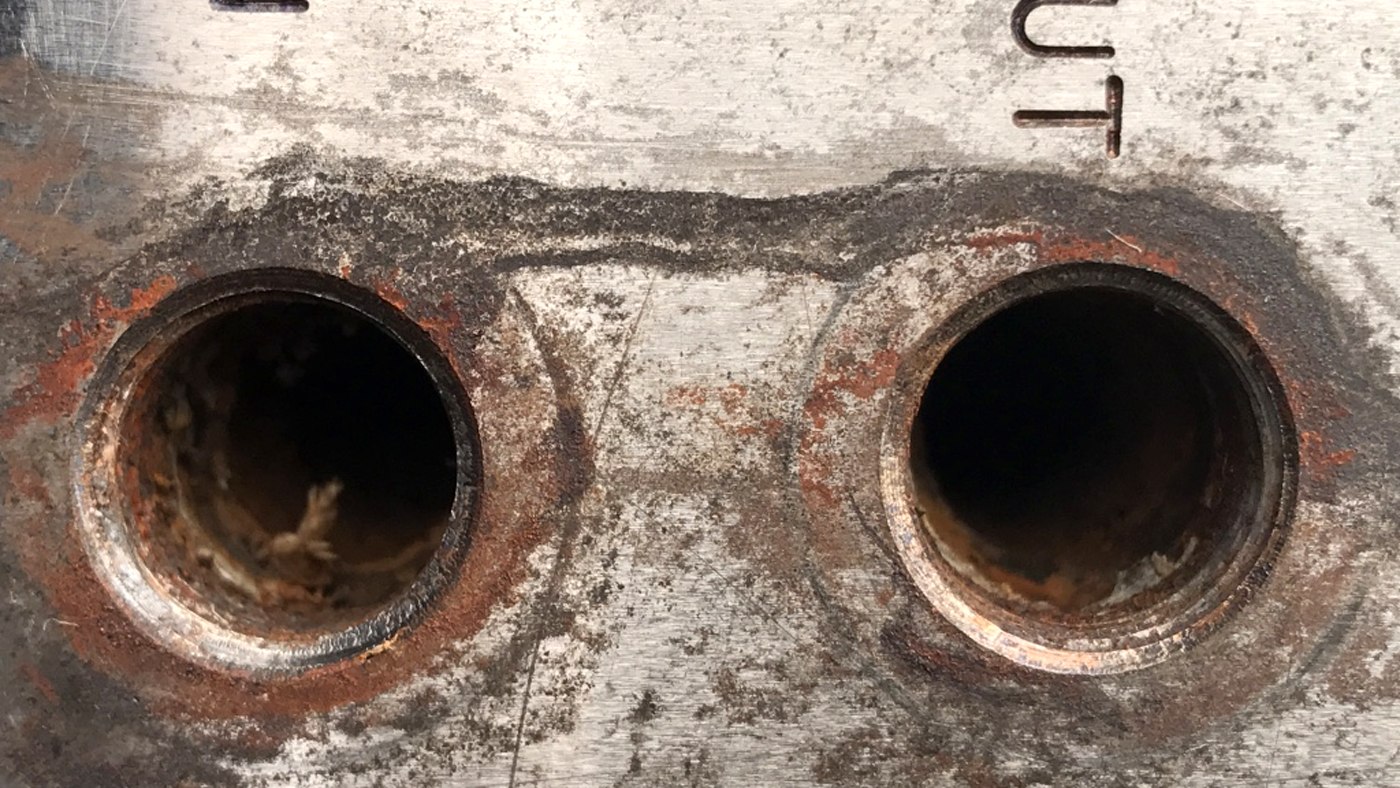
Ejector pins in the die plate. Carbonised pins standing in their bores. Pins clean in place, so the plate does not have to be stripped to get them back.
Cavity sets, cores, vents and inserts — residue out of texture and vent slots without polishing dimensions away.
Dies and tooling — carbonised films off without weld-repair-inducing surface damage.
Aluminium and iron castings — sand out of cored passages, oxide off surfaces, no embedded media.
Bubble collapse at the liquid–metal boundary lifts contamination from passages, galleries and cavities without anything touching the surface. Nothing abrades, nothing embeds, no metal is removed.
The VarioSonic G5 tracks the transducer array as temperature and load shift — conversion efficiency up to 95%.
Eliminates standing-wave hot and cold zones across a loaded basket.
Stored recipes and logged cycles — audit evidence produced as a by-product of running.
Multi-stage filtration and weir oil capture hold results steady as the bath loads.
Most faults identified — many resolved — without a site visit.
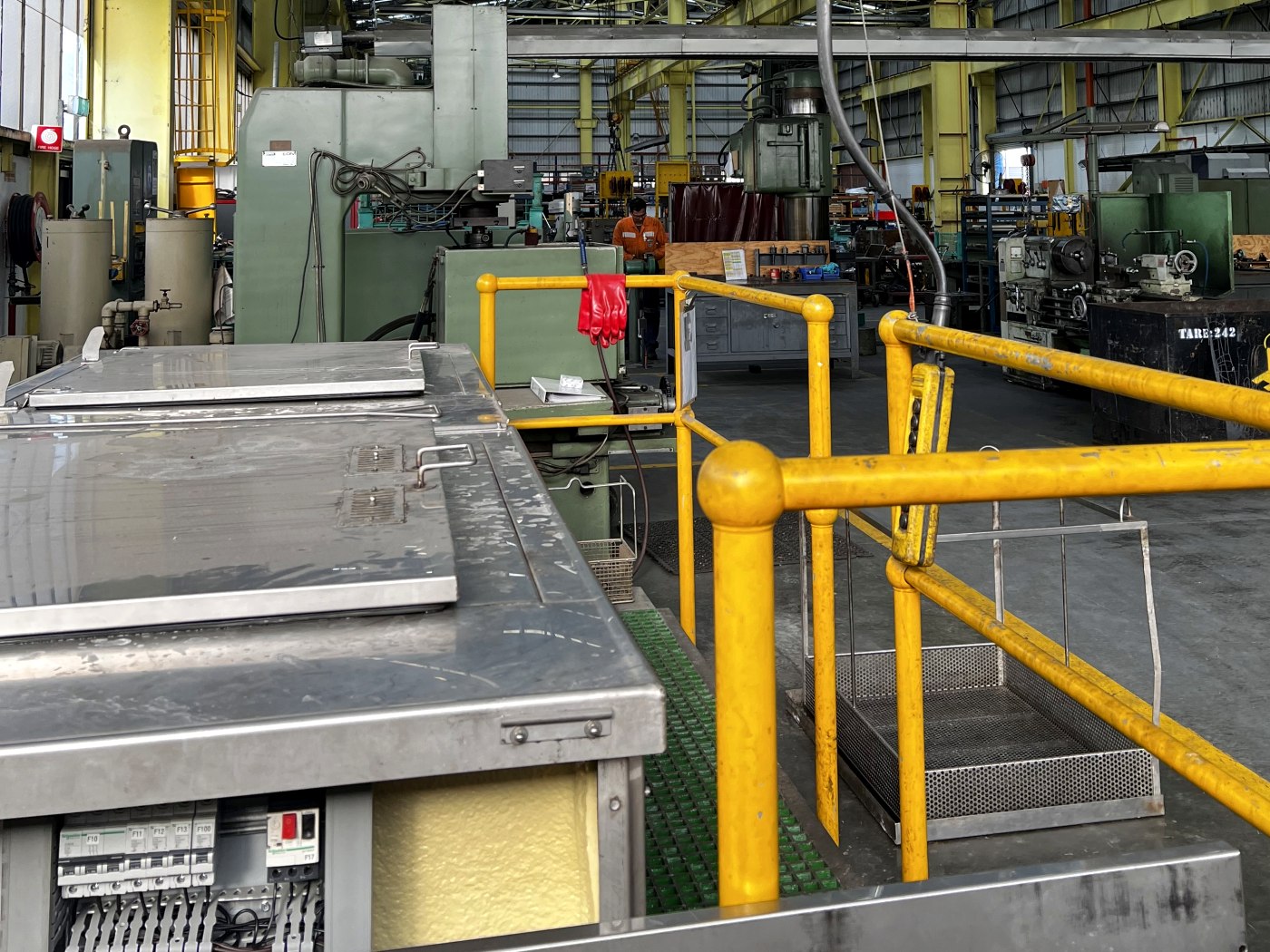
Heavy 316 stainless tanks, tested before despatch, every wearing part replaceable.
From manually loaded single-tank units to automated lines — and engineered systems where the catalogue ends.
Mould chemistry must strip resin and release films while protecting polished cavity steel and aluminium — inhibited, temperature-controlled, and proven on a sacrificial insert first.
| Component category | Specific parts / assemblies | Compatible materials |
|---|---|---|
| Injection moulds | Cavities, cores, slides | Tool steels, polished finishes |
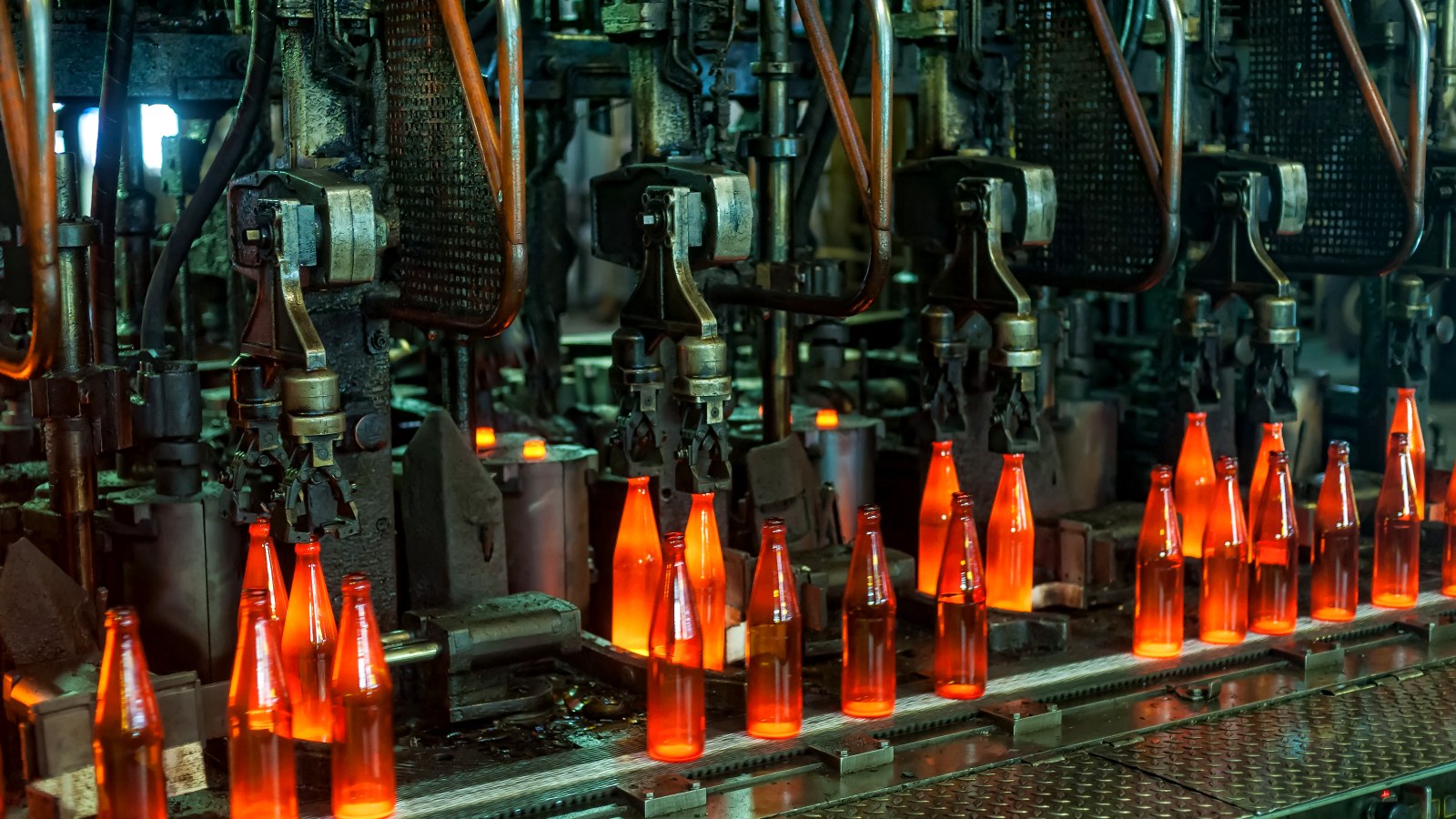
| Blow/thermoform | Blank moulds, tools | Aluminium, tool steel |
| Die casting | Dies, cores, shot hardware | H13, hot-work steels |
| Rubber tooling | Compression and transfer moulds | Tool steels, chrome plate |
| Castings | Blocks, housings, manifolds | Aluminium, cast iron |
| Foundry hardware | Core boxes, patterns hardware | Steels, aluminium |
Where an application needs validation, we clean sample components in our laboratory, document the result, and specify the machine around the verified process. If ultrasonics is the wrong answer, the trial shows that too, and we will tell you.
In-process degreasing and pre-treatment cleaning across general fabrication and machining.
End-effectors, precision actuators and component cleaning integrated into automated lines.
Pre-plate, pre-coat and pre-anodise cleanliness — the finish is only as good as the prep.