Firearms: the whole action clean in one 15-minute cycle
Carbon, lead and copper fouling lifted from assembled actions at field-strip level — with the ultrasonic lubrication stage that returns weapons to service protected.
5 min readBy Misonics application engineers
Every discharge deposits carbon, unburnt powder, vaporised lead and copper wash through the action, barrel and cylinder — into tolerances no brush enters. This application study documents the ultrasonic armoury process: complete fouling removal in a 5–15 minute cycle, at scale, without disassembly beyond field-strip.
Baked through the action, breech face, extractor and gas paths with every round — progressively hardening into deposits patches and brushes only polish.
Vaporised lead and copper wash
Metal fouling laid down in the barrel and cylinder throats at firing temperature — bonded to the steel, unreachable mechanically without wear.
The tolerance problem
Firing pins, extractors, springs and locking recesses foul inside assemblies. Ultrasonics cleans the assembled group at field-strip level — no detail strip, no lost small parts.
The process
Process diagram
Parameter
Firearms
Brass cases (reloading)
Frequency
40 kHz
40 kHz
Temperature
≤ 55 °C — protects finishes and polymers
≤ 55 °C
Cycle
5–15 minutes
15–30 minutes
Chemistry
Firearm cleaning concentrate
Brass case solution
After-treatment
Ultrasonic lubrication bath
Rinse and thorough dry before priming
Before and after
BEFORE — slide and frame at field-strip: carbon through breech face and rails (photo from armoury trial to be added)
AFTER — same group post-cycle: fouling cleared from action and gas path
The results
Complete fouling removal in one cycle. Carbon, lead and copper lifted from the assembled action — including firing-pin channels and extractor recesses no brush enters.
Armoury throughput. A rack of service weapons cleans in the time hand-cleaning does one — with the armourer supervising, not scrubbing.
Consistent, inspectable condition. Every weapon returns in the same documented state — a maintenance standard, not an operator outcome.
Brass recovered to reloading standard. Cases clean inside and out, primer pockets included, in 15–30 minutes.
Hardware and chemistry
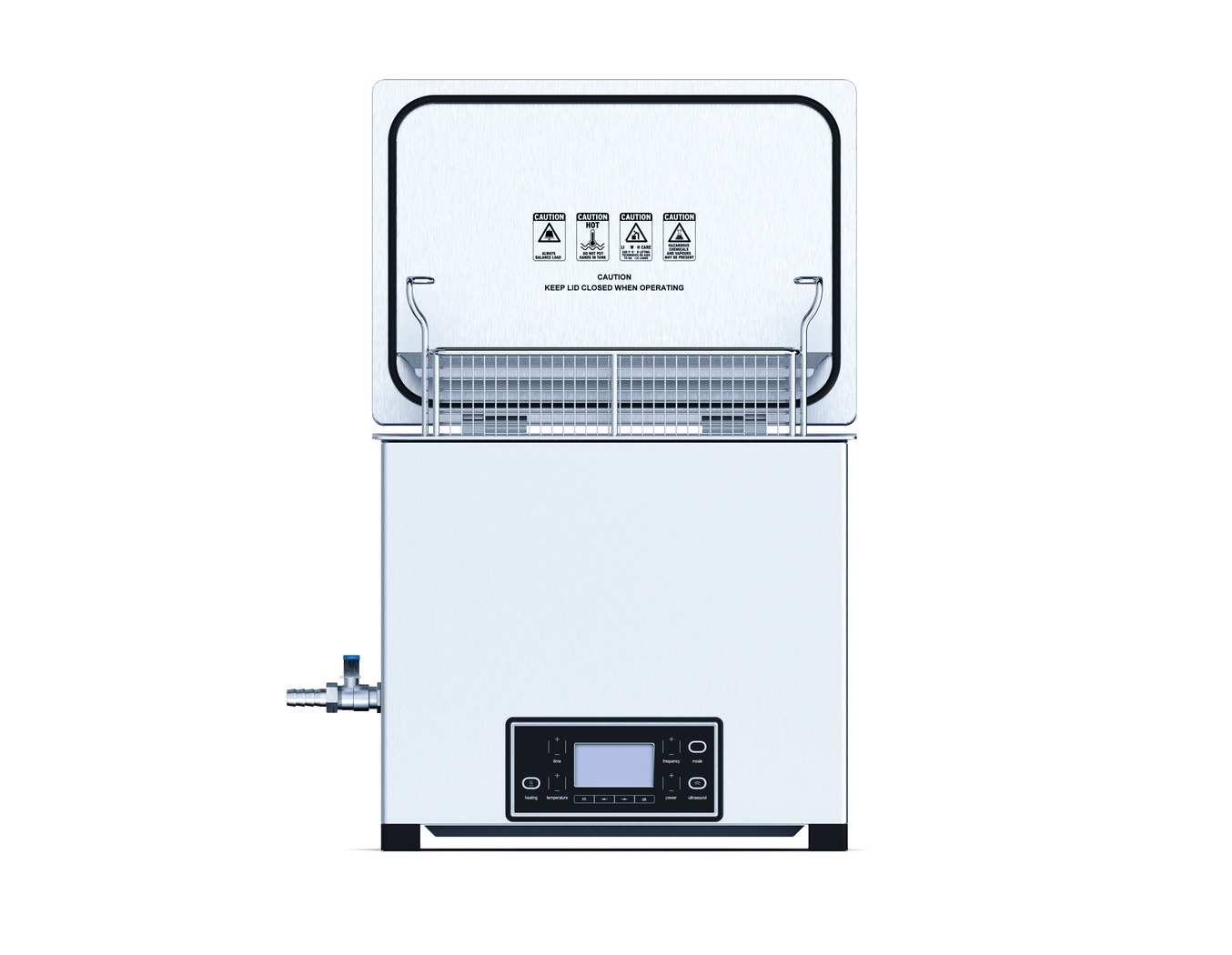
Misonics MSX bench range
40 kHz bench units sized from single-weapon to full rack throughput, with lubrication-stage tanks for the complete clean-rinse-lube sequence.
The armoury argument: hand-cleaning quality depends on who held the brush. Ultrasonic cleaning is the same cycle, every weapon, every time — and the logbook shows it.
Equip the armoury
One bench, three tanks, a documented cycle — the whole program.