Three lab jobs, one bench machine
Glassware & apparatusPipettes, flasks, condensers, joints and frits — residue films and baked deposits removed without brushes that scratch graduations and wear ground joints.
Components & fittingsValves, fittings, filters, small mechanical parts from rigs and instruments — cleaned to assembly standard between runs.
Degassing & sample prepDegas mode purges dissolved gases from solvents and buffers (HPLC mobile phases, dissolution media); short bursts disperse and dissolve stubborn samples.
What goes in the basket
Volumetric glasswareCondensers & jointsSintered fritsCruciblesInstrument fittingsSievesOptics (per spec, Low power)Sampling hardware
Why labs standardise on it
Removes the invisible variable
Trace films from previous work are cross-contamination waiting to publish. Cavitation plus the right detergent removes them to a rinse-water-clean endpoint.
Gentle on the expensive stuff
No brush scratching on graduated, ground or optical surfaces — the non-contact clean is why labs trust it with the glassware that costs real money.
Two instruments in one
The cleaning tank doubles as the degasser and sample-prep bath — bench space and budget both approve.
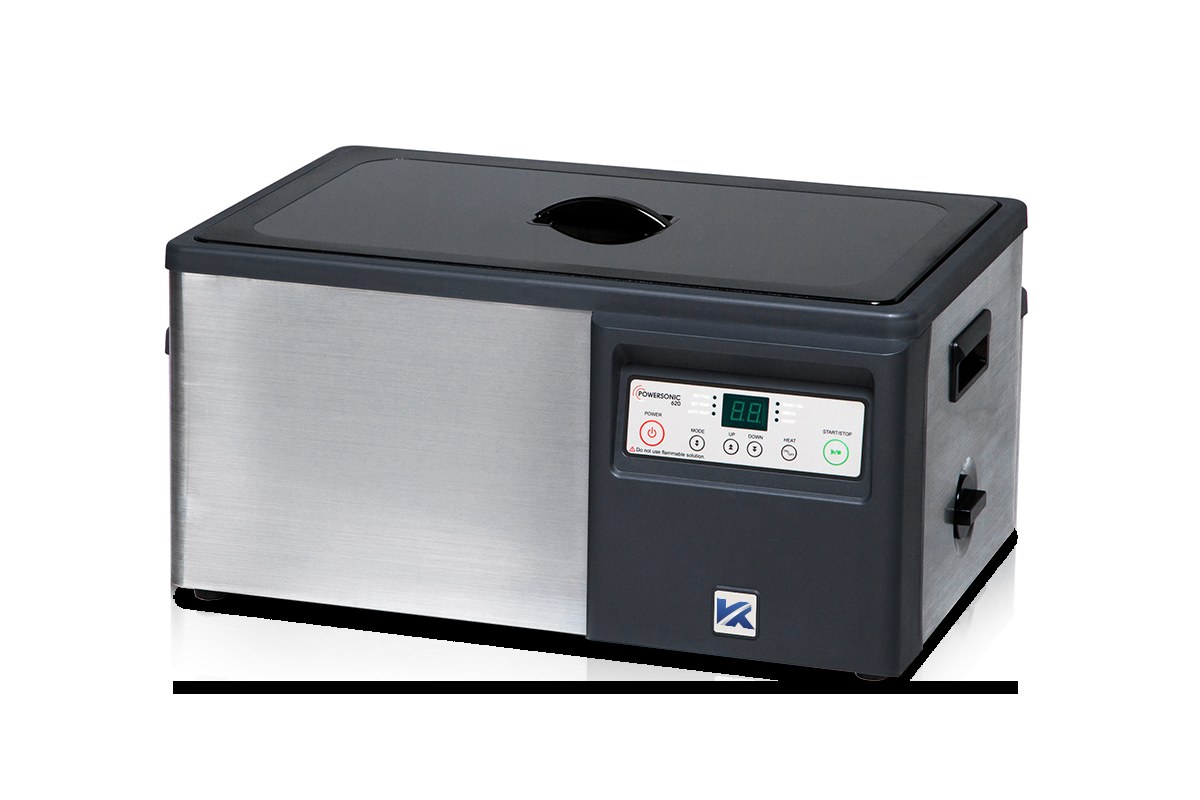
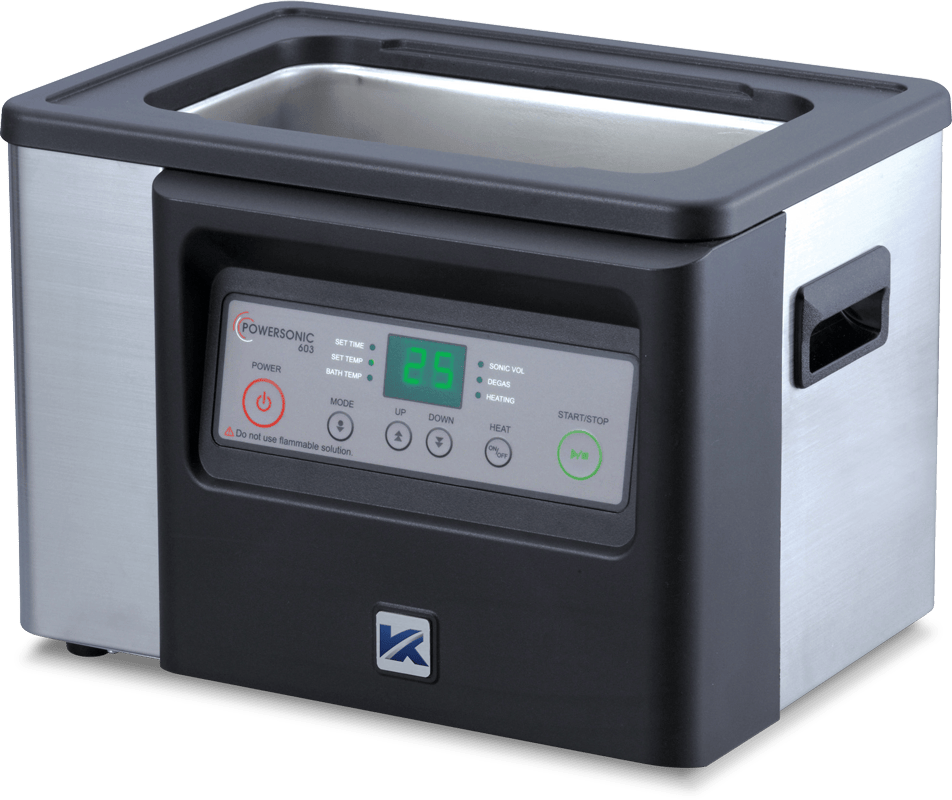
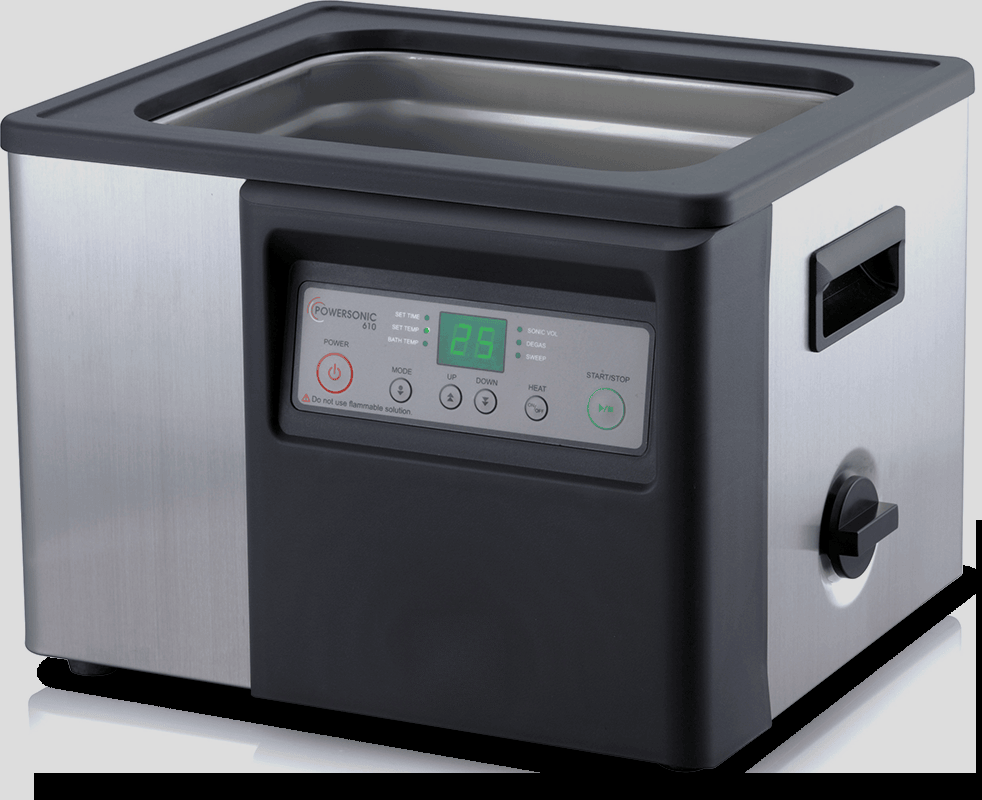
The machines labs buy
For dedicated critical cleaning at higher throughput, the MSX range adds capacity and duty cycle. PowerSonic units are also available through our laboratory equipment reseller network — ask us for your nearest stockist.
Typical starting cycle — refined in your first week
| Chemistry | Laboratory glassware detergent; DI-water final rinse |
| Temperature | 40–60 °C (per detergent) |
| Power | Low (optics/graduated) · Med (general) |
| Time | 3–10 minutes · degas 5 min after fresh fill |
| Then | DI rinse · dry · store covered |
Starting points only — part condition, chemistry and load set the final card. We help you dial it in.
Questions from this trade
Asked every week
Will it damage graduated or volumetric glassware?
No — the appeal is exactly that nothing touches the surface. Keep pieces from knocking together (rack or separate) and run Low–Med; the calibration outlives brush-cleaned glassware.
Can it clean sintered glass frits?
Yes — one of the few methods that clears frit porosity without pressure or acid heroics. Pair with the right detergent for the residue class.
Does degas mode replace vacuum degassing?
For routine mobile phases and buffers, ultrasonic degassing is the standard quick method; for the most demanding applications combine with vacuum. Either way the tank does the daily work.
What about optics and sensors?
Per manufacturer specification, Low power, short cycles, correct chemistry — many optics are routinely ultrasonically cleaned, some coatings are not rated. Check the spec; we help sort the list.
Water quality for rinsing?
Final rinse in DI/RO water for anything analytical — tap-water minerals are their own residue film. Cheap discipline, visible in the blanks.