An aerospace four-tank line: wash to dry without touching workshop air
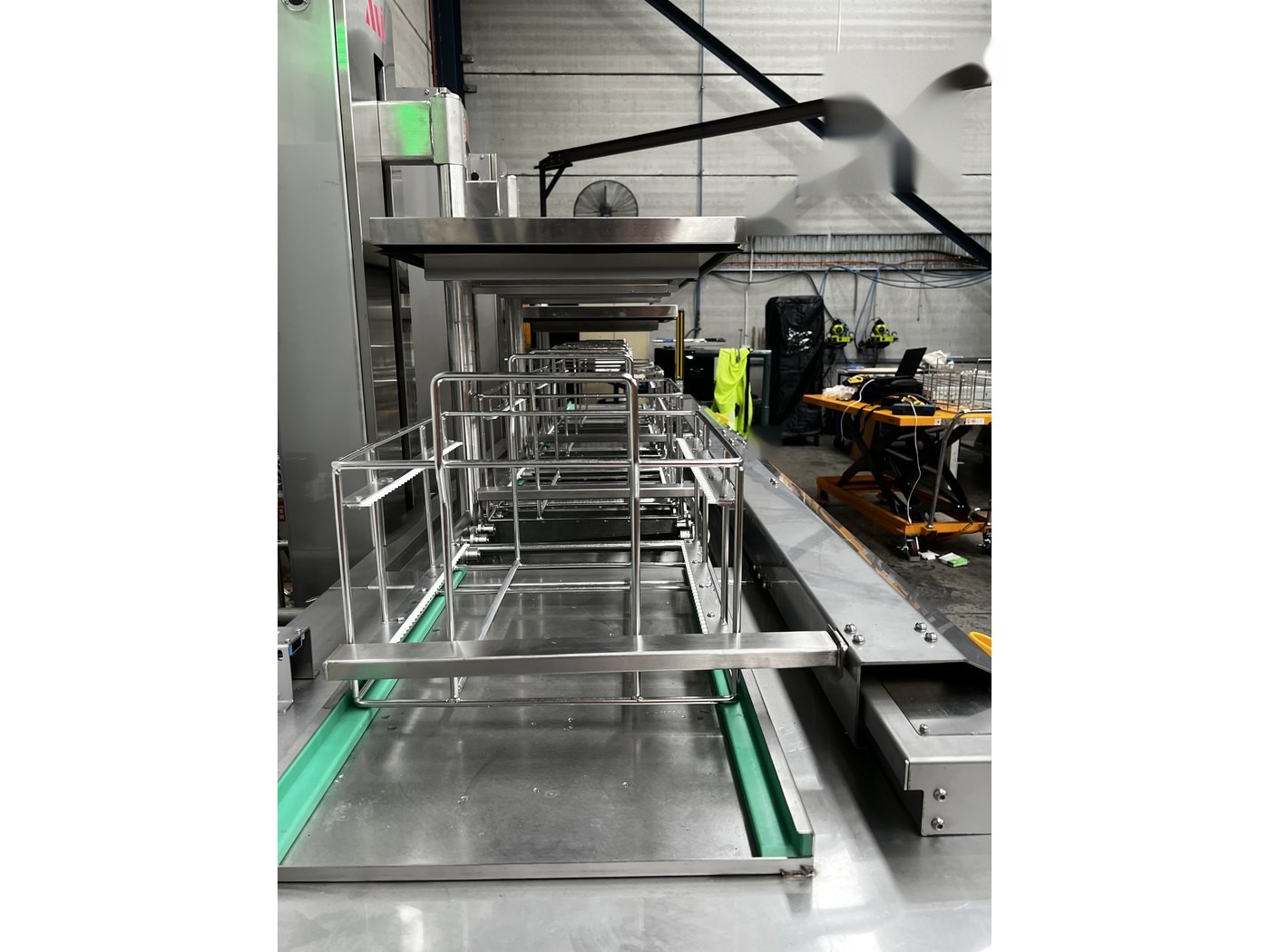
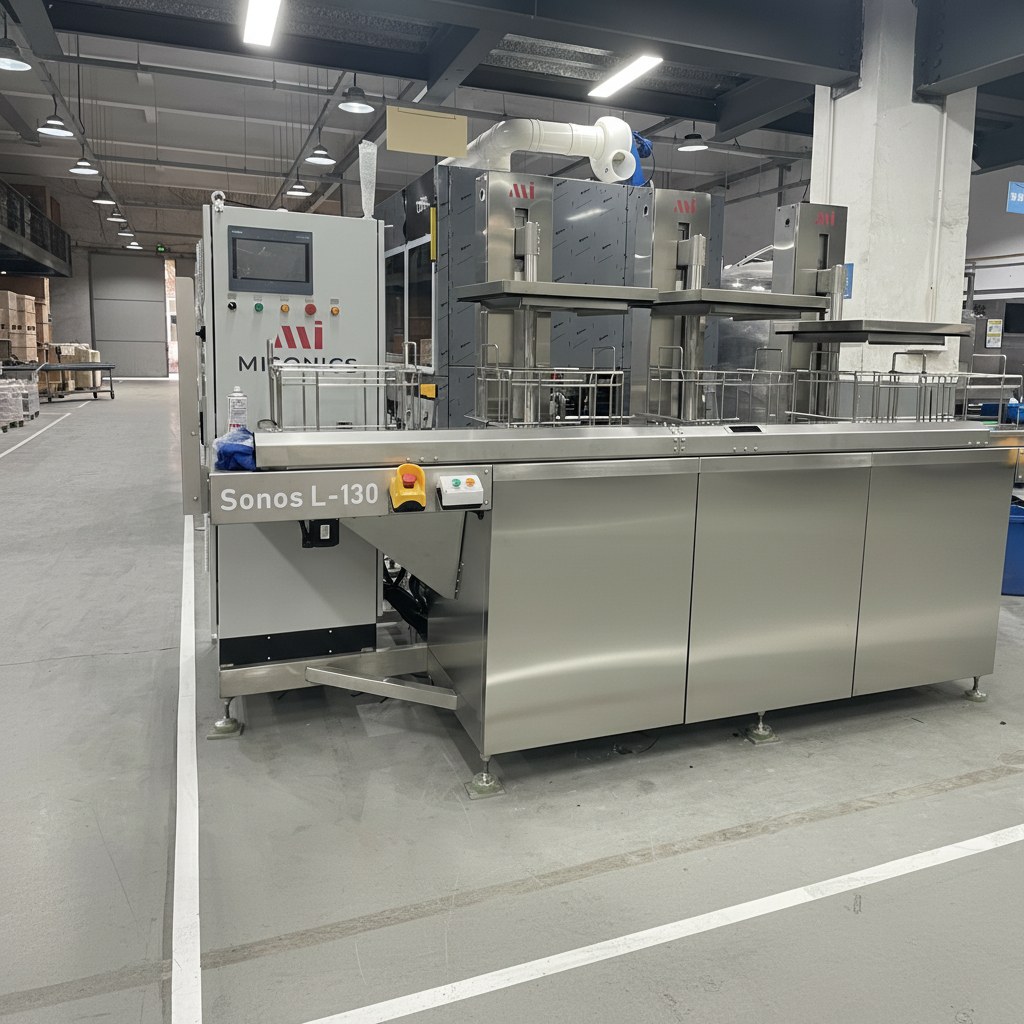
The engineered system delivered for aerospace structures work — cooled ultrasonic wash, cavitation rinse, isopropyl displacement and fan-forced drying on a 5–10 minute platform cycle.
When an aerospace structures manufacturer specified automated cleaning for production components, the answer was a four-tank multi-stage line: cooled ultrasonic wash, ultrasonic rinse, isopropyl dip and fan-forced air drying, with platform loading on 5–10 minute intervals. This study documents the engineered system.
Why a line, not a tank
Sequence integrity
Aerospace cleanliness fails between stages, not in them: parts exposed to workshop air between wash and dry pick up exactly what was just removed. The line closes the sequence.
Thermal control
The ultrasonic wash tank runs cooled — temperature-sensitive components and chemistry stability both demand it. Cooling is a specification, not an option.
Repeatability on the clock
Platform transfer on fixed 5–10 minute intervals means every load sees the same exposure — the process card runs itself.
The process
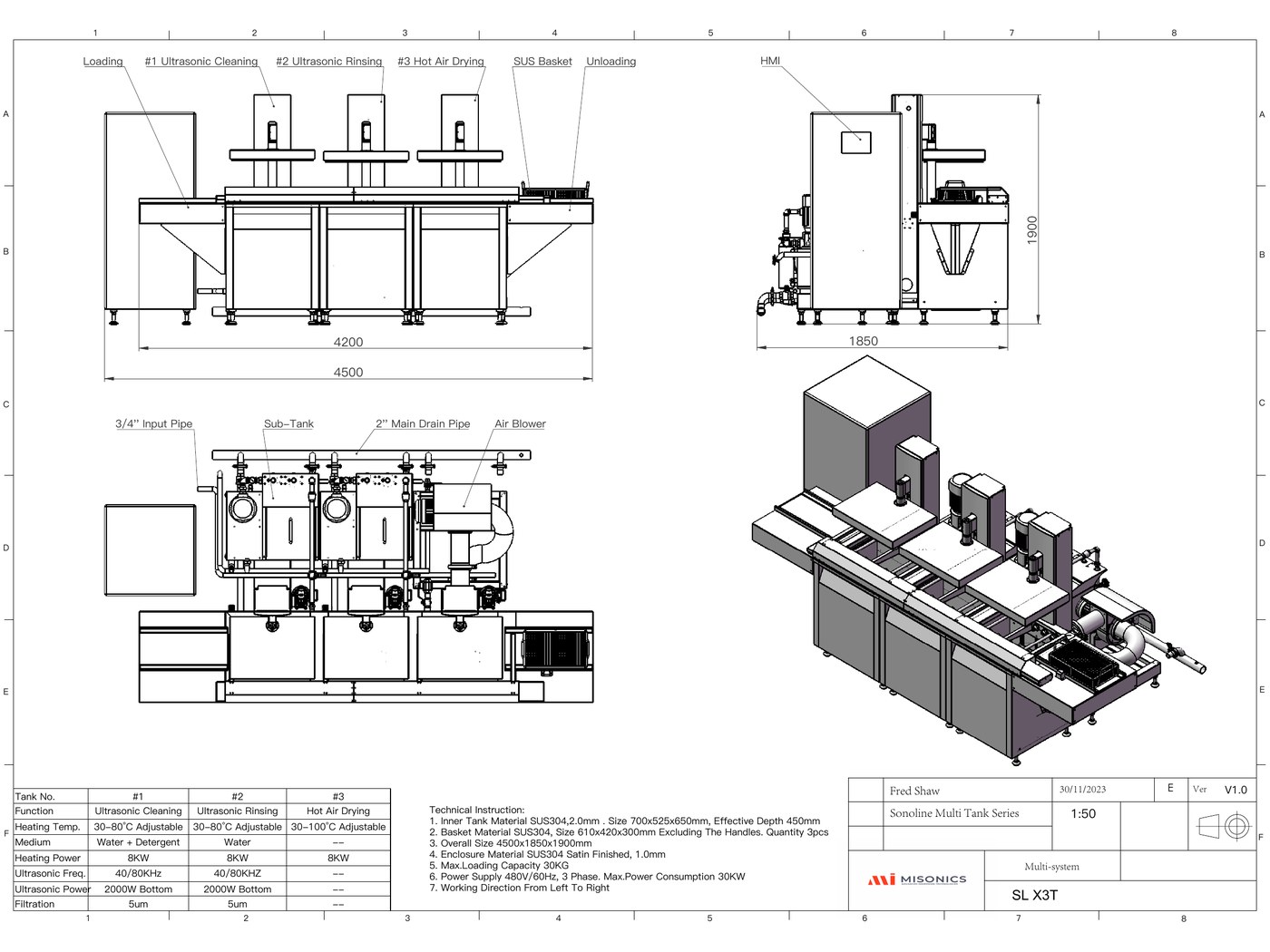
| Stage | Function | Notes |
|---|---|---|
| Tank 1 | Ultrasonic cleaning | Cooled; aqueous chemistry |
| Tank 2 | Ultrasonic rinse | Cavitation-assisted rinse |
| Tank 3 | Isopropyl dip | No ultrasonics, no heating, cooled — water displacement before dry |
| Tank 4 | Air drying | Fan-forced cool air |
| Handling | Automated platform transfer | Manual load/unload; 5–10 min intervals |
What the engineering answers
Hardware
Engineered multi-stage lines
When the catalogue does not fit, systems are engineered to requirement — tank count, cooling, transfer automation and drying built around the parts and the spec.
Talk to us about engineered systems →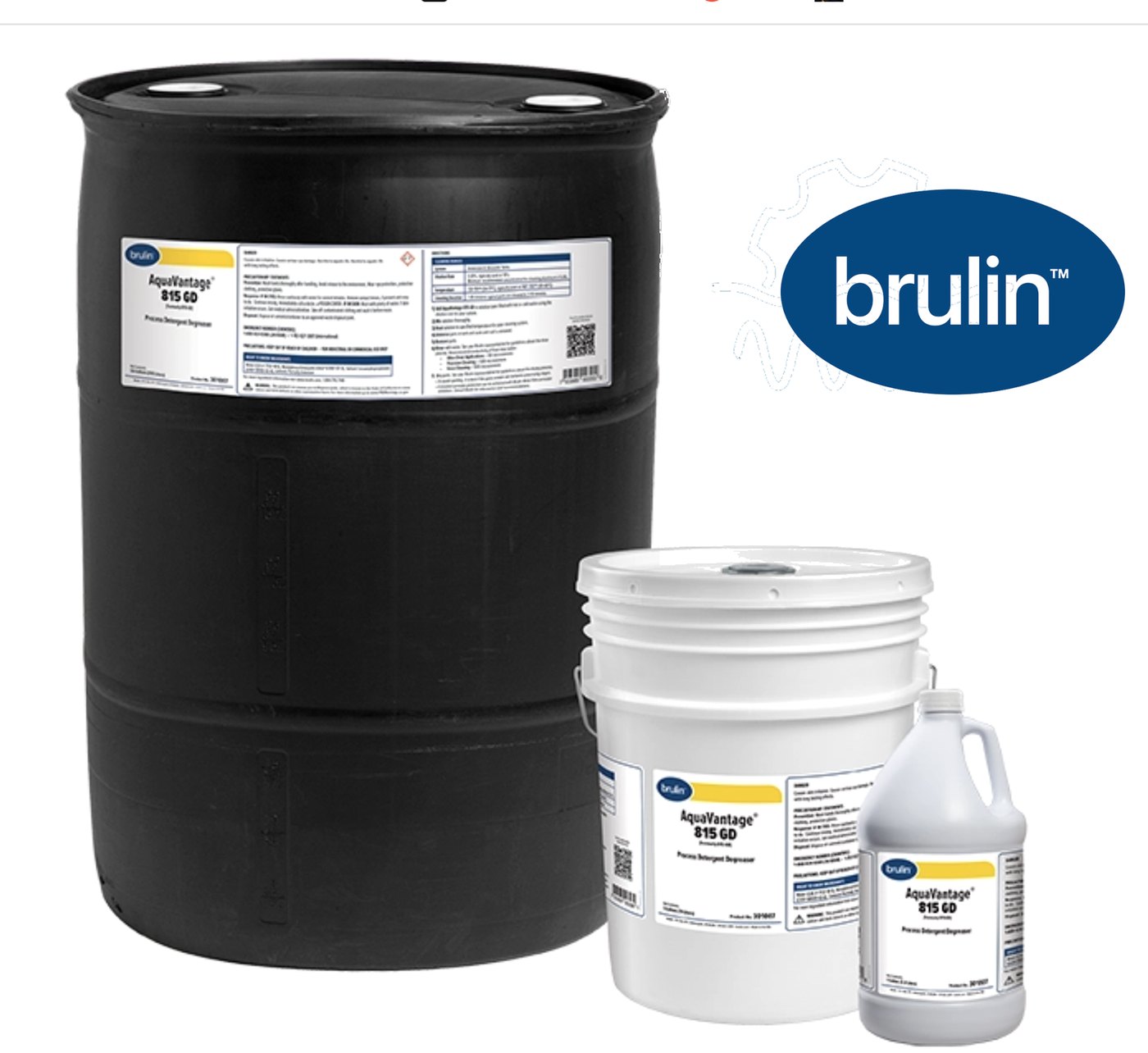
Aerospace chemistry
The Brulin aqueous range carries the approvals aerospace quality systems ask for — specified per process during system design.
View the aerospace range →From a cleanliness standard to a tank-by-tank specification.
Questions about this process
Why four tanks instead of one?
Why is the ultrasonic wash tank cooled?
How is the cycle kept repeatable?
Related: Multi-stage cleaning lines · Aerospace parts cleaning · All case studies
What are you cleaning?
Tell us what the part is, what comes off it, and what it has to pass. Technical sales will tell you whether ultrasonics is the right answer for that part and what it takes to run it on your own floor.