Instrument cleaning the autoclave can trust
Sterilisation only works on clean instruments — and hand scrubbing hinged, serrated, contaminated sharps is the slowest, riskiest step in the reprocessing room. A benchtop ultrasonic replaces the brush with ten unattended minutes.
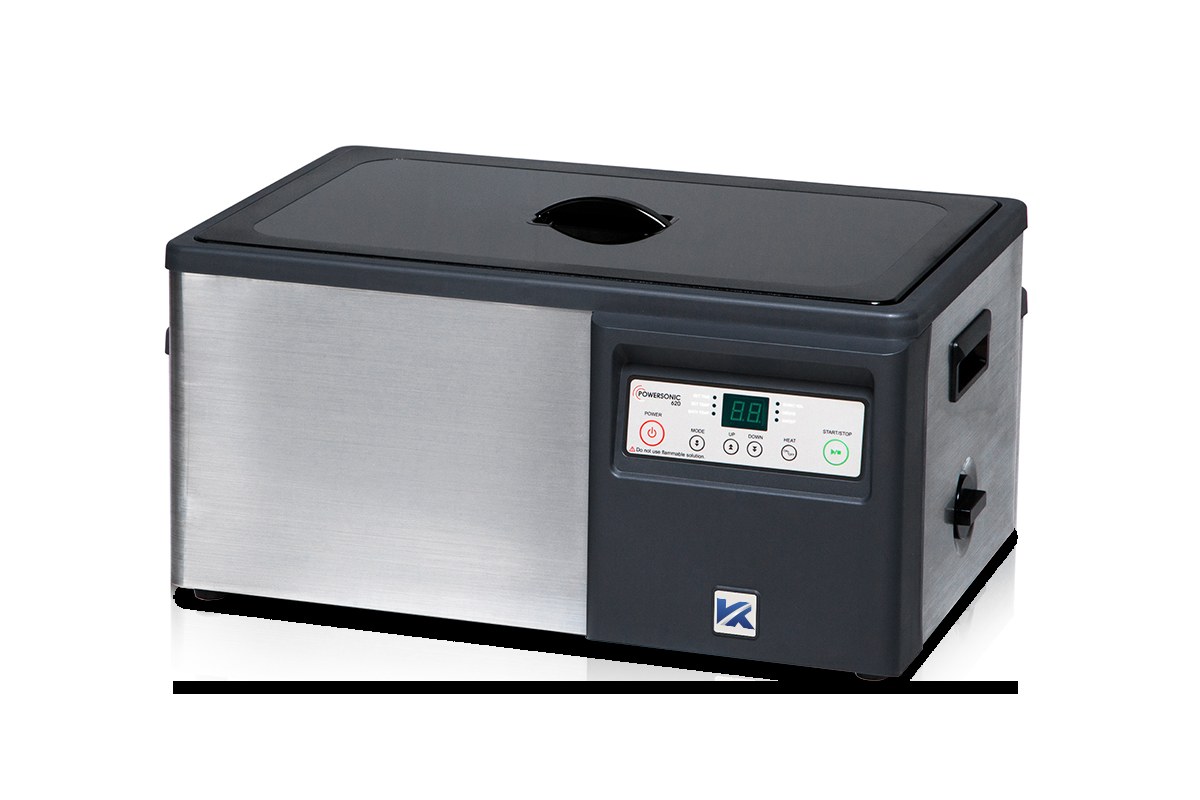
Where it sits in your reprocessing workflow
Instruments into the transport container as used — no pre-scrubbing at the chair, no drying of soils onto the steel.
Basket in, lid on, 5–10 minutes at Low–Med power in instrument-grade detergent. Cavitation clears box joints, serrations and lumens the brush never enters — with no hands on contaminated sharps.
Thorough rinse to remove detergent and freed soil; final rinse quality per your practice protocol.
Dry, inspect under light — visibly clean instruments, every time, documented as a repeatable step rather than an operator effort.
Into the autoclave. Cleaning is the step that makes sterilisation effective; ultrasonics is how the cleaning step becomes consistent.
What goes in the basket
Why practices switch from the scrub sink
Sharps safety
The single biggest WHS win in the steri room: staff stop scrubbing contaminated sharps by hand. The basket goes from transport container to tank untouched.
Repeatable, auditable cleaning
A set cycle at set chemistry is a documented process — not a judgement call that varies with how busy the afternoon got.
Instrument life
No brush wear on cutting edges, no abrasion on plated surfaces — cavitation cleans without contact, and instruments stay serviceable longer.
The machines practices buy
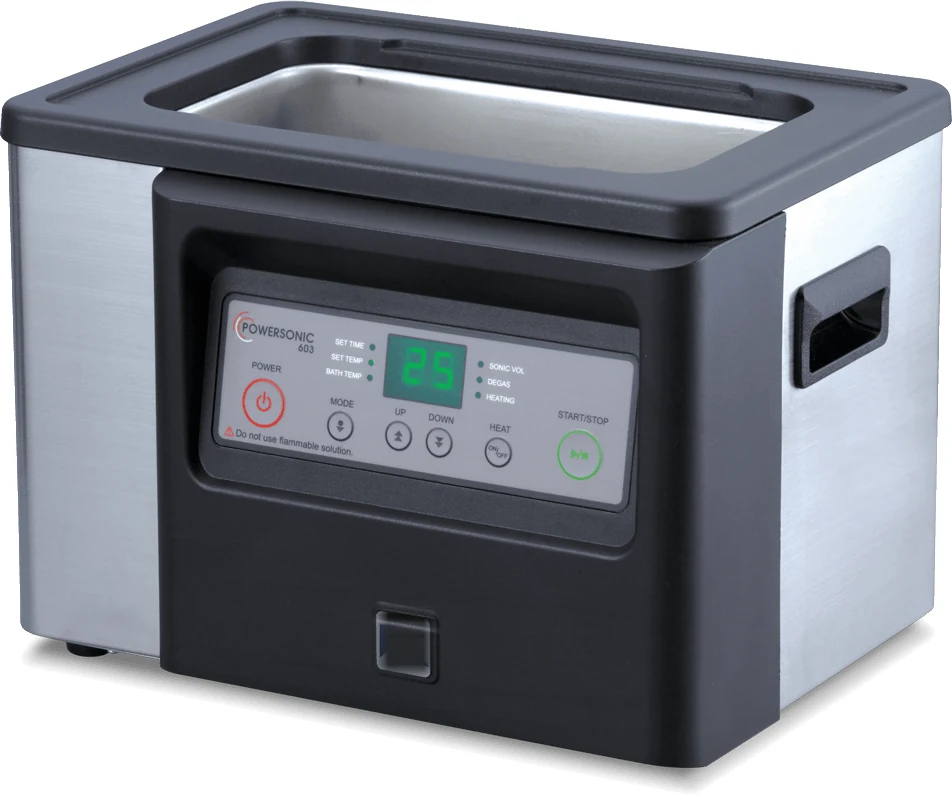
PS 603
Single-chair and small practice: a full kit tray in one cycle, footprint of a kettle.
View or buy →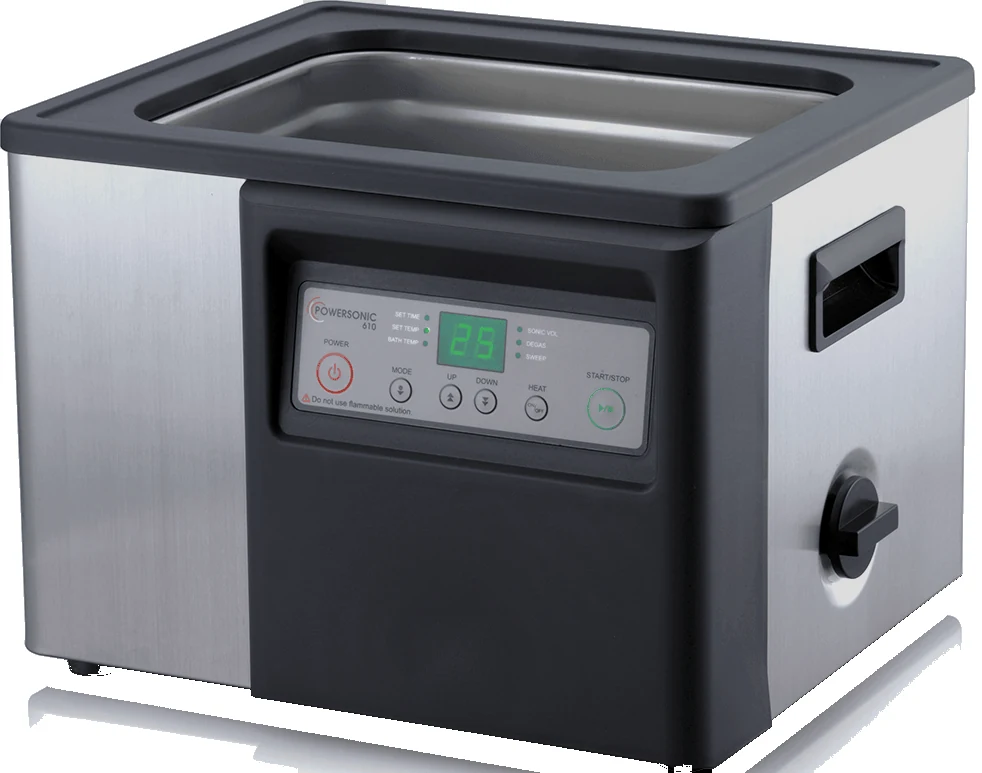
PS 610
Multi-chair practices and day clinics: 250 × 200 mm basket takes full cassettes and the afternoon's backlog.
View or buy →Larger clinics running continuous reprocessing step up to the MSX range — ask us.
Typical starting cycle — refined in your first week
| Chemistry | Brulin 815 GD instrument detergent — 10 L / 20 L practice packs. Never caustics or acids in these machines |
| Temperature | 40–45 °C (enzymatic ranges are temperature-sensitive — follow the label) |
| Power | Low–Medium |
| Time | 5–10 minutes |
| Then | Rinse · dry · inspect · sterilise |
Starting points only — part condition, chemistry and load set the final card. We help you dial it in.
Asked every week
Does the ultrasonic steriliser replace my autoclave?
Can hinged instruments go in closed?
What detergent should we use?
How do we validate the step?
Will it damage instruments?
What are you cleaning?
Tell us what the part is, what comes off it, and what it has to pass. Technical sales will tell you whether ultrasonics is the right answer for that part and what it takes to run it on your own floor.